Invisible Wars: Why Some Conflicts Get News, Others Don’t
Many global conflicts receive little to no media attention, allowing violence to persist without public pressure. A lack of diversity in newsrooms, audience fatigue with heavy topics, and a bias towards conflicts perceived as more relevant to Western audiences contribute to this 'invisible war' phenomenon. Amplifying local journalists' voices and embracing complex narratives are crucial steps to changing this.

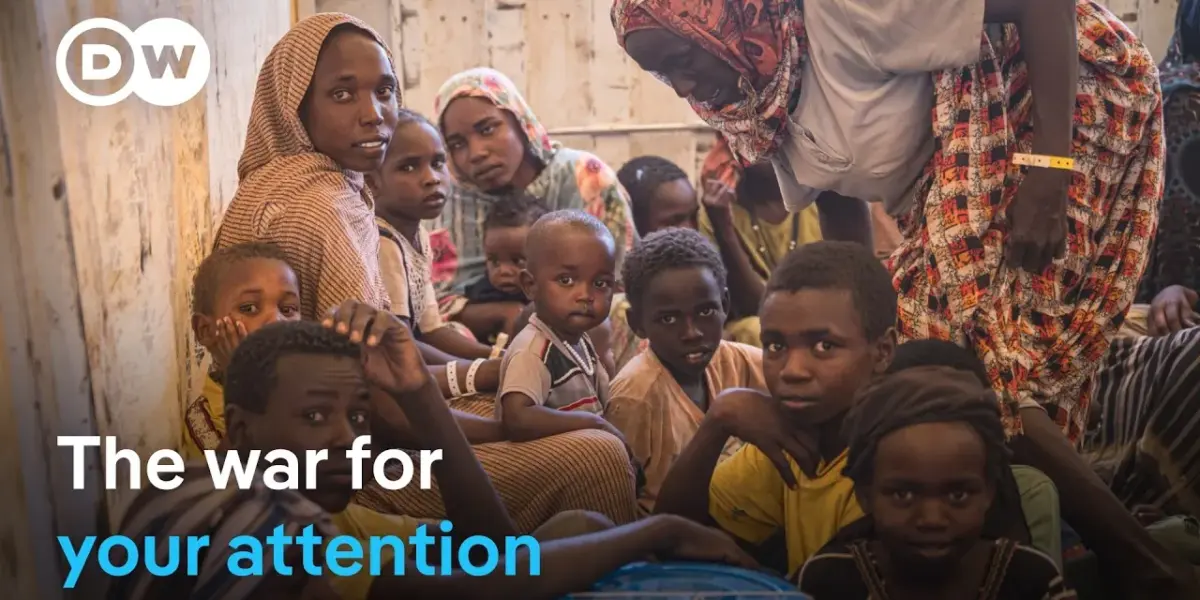
Why Some Wars Are Ignored
In today’s fast-paced world, media attention acts like a valuable currency. While conflicts like the one in Iran capture global headlines, dozens of other armed struggles are happening with little to no public awareness. This lack of visibility has serious consequences.
Without coverage, public pressure and diplomatic efforts often fail, allowing violence to continue unchecked. DW News explores why some wars become international stories while others remain hidden, and what it takes to bring a conflict into the news cycle.
Matthew Leak, a journalist and researcher at the Reuters Institute at Oxford University, has studied why certain conflicts struggle to gain international attention. He notes that in the past year alone, there were an estimated 60 state-based conflicts globally. Even avid news consumers might struggle to name more than a few, indicating that most conflicts fly under the radar.
Proximity and Audience Bias Shape Coverage
A major reason for this lack of coverage is proximity, according to Lyddia Mubiru, editor-in-chief of The Continent, a respected Pan-African publication. News about Africa is often reported by outsiders rather than by people living through the events. This outsider perspective limits the depth and nuance of the reporting.
News coverage is not always proportional to a conflict’s death toll. For instance, the war in Tigray, Ethiopia, claimed an estimated 600,000 lives, while the situation in Sudan has led to millions of deaths, displacements, and widespread starvation. The severity of these crises is often not fully conveyed through mainstream media coverage.
News editors often make decisions based on what they believe their audience wants to see. The general assumption is that people primarily care about their own interests and those who resemble them. Interest in distant or different populations tends to be short-lived, leading to news fatigue.
The Hierarchy of Visibility
Western news media, in particular, often operates with an unstated hierarchy of visibility. Victims of war who are perceived as culturally similar to white Western Europeans tend to receive more coverage.
Those seen as less culturally aligned often get less attention. This approach is based on outdated ideas about audience interests and their willingness to engage with unfamiliar situations.
A study found that conflicts between countries typically receive more coverage than internal civil wars. For example, an imagined conflict between the US and Iran would likely get more attention than a civil war in Africa. This is because interstate conflicts are assumed to have a greater impact on the global economy, which eventually affects households in the West.
However, this view can be dangerously simplistic and even immoral. The war in Sudan, for example, is not just an internal conflict but a proxy war involving regional powers like the UAE, Saudi Arabia, Egypt, and Chad. Accusations suggest some of these countries are funding warring factions, showing the conflict’s international reach.
Newsroom Diversity and Audience Fatigue
The makeup of newsrooms and the people who set the agenda also play a significant role. Global media often lacks the diversity needed to accurately explain complex situations. When diversity is attempted in the moment, it can lead to oversimplification or the amplification of the loudest voices rather than the most knowledgeable ones.
War is inherently a difficult and often depressing topic. Data from the Reuters Institute shows that about 40% of people sometimes or often avoid the news because it negatively affects their mood. This audience fatigue forces news organizations to constantly weigh the resources they dedicate to covering certain stories.
Effective storytelling is crucial in making these heavy topics accessible. Instead of relying on statistics, news organizations need to humanize the conflict. For instance, reporting on the everyday experiences of people, like attending a housewarming party amidst roadblocks, can reveal the ongoing reality of a war in a way that raw casualty figures cannot.
Amplifying Local Voices
One promising way forward is to prioritize voices from journalists on the ground in affected areas. Lydiana Mubiru’s team at The Continent actively promotes this approach. Their editorial decisions are driven by pitches from contributors within the countries experiencing conflict, ensuring that local perspectives shape the narrative.
Local journalists across Africa are essential for reporting the truth about what is happening on the continent. Western news coverage of African conflicts could be significantly improved by strengthening partnerships with these journalists. They possess a deeper understanding of the local nuances than outsiders.
As Mubiru emphasizes, Western news organizations need to support and partner with local journalists. These individuals are on the ground, understanding the complexities far better than those reporting from afar. Their voices need to be heard and amplified.
Attention is Not Neutral
Ultimately, media attention is not neutral. The wars we see and those we don’t shape public understanding and influence action.
Many conflicts are ignored not because they lack importance, but because attention is limited and unevenly distributed. This situation can change through sustained coverage, valuing local perspectives, and embracing the complexity of these global issues.
Source: Why some wars are ignored – and how that could change | DW News (YouTube)

Related Articles

UFO Conspiracy: Separating Fact from Fiction
Investigative journalist Ross Coulthart debunks the widespread claim that numerous American scientists have vanished due to UFO research ties. While some connections exist, he argues most deaths have simple explanations and media narratives often overstate the evidence, urging a focus on factual reporting and genuine transparency.

Military Leaders Clash With Trump Amid War Woes
Reports suggest growing unease within the military regarding President Trump's leadership and decision-making during wartime. Accounts highlight a disconnect between public confidence and private struggles, alongside significant personnel changes within the Pentagon. Public opinion is increasingly leaning against the ongoing conflict.


Protests vs. Press Dinner: Debate Erupts
Plans for protests outside the White House Correspondents' Dinner have sparked a debate. The event, also known as 'nerd prom,' is meant to be a night for journalists to set aside differences. This year's dinner is notable for President Trump's first appearance.