Trump’s Erratic Posts Spark Calls for 25th Amendment
Unusual late-night posts by Donald Trump have sparked widespread debate about his fitness for office, leading to calls for invoking the 25th Amendment. Congress is now considering legislation to establish a commission to assess presidential capacity, reflecting deep concerns both domestically and internationally.


Trump’s Late-Night Posts Ignite Concern Over Fitness for Office
The actions and statements of a president are always under intense scrutiny. Recently, a series of unusual late-night posts by Donald Trump have sparked significant concern and debate regarding his fitness to serve. These posts, which included attacks on international figures, controversial claims about current events, and personal reflections, have led to widespread calls for invoking the 25th Amendment to the U.S. Constitution.
Global and Domestic Reactions to Trump’s Behavior
The international community has taken notice, with social media accounts from various countries, including Iran, mocking the situation and questioning when the 25th Amendment would be invoked. They express worry about an individual with access to nuclear codes showing signs of instability. Domestically, the situation has also prompted action. Fifty House Democrats have introduced legislation to establish a commission. This commission would officially look into the president’s cognitive and physical abilities to carry out the duties of the presidency.
Congressional Action and the 25th Amendment
The proposed legislation, titled the “Commission on Presidential Capacity to discharge the powers and duties of the office act,” aims to create a formal body within Congress. This commission would be tasked with assessing the president’s capacity, considering factors like physical illness, mental illness, or substance use. The goal is to provide a legal framework for addressing situations where a president might be unable to execute their duties effectively.
Content of the Controversial Posts
The specific posts that have drawn attention include attacks on NATO, questioning its past and future support for the U.S. Trump also directed strong criticism at Pope Leo XIV, questioning his understanding of war and stating that Iran obtaining nuclear weapons is unacceptable. He also posted about a potential economic blockade on Iran, suggesting it could lead to starvation, while simultaneously claiming Iran desperately wanted a deal. These seemingly contradictory statements, made around midnight, have fueled concerns about his decision-making process.
“The report found serious problems and suggests new rules that would affect all holders.” (This is a placeholder for a direct quote or summary of findings from a report, as the transcript lacks specific report details.)
Personal and Bizarre Content
Beyond political statements, some posts were notably personal and unusual. Trump shared images of himself as a baby and referenced an article about his 2019 impeachment, suggesting it could be expunged. He also posted about an AI-generated image of himself as Jesus being thrown into hell, a move that some observers found deeply unsettling and sacrilegious.
Concerns from Allies and Critics
Even figures close to Trump have raised eyebrows. Dr. Oz, discussing Trump’s habits with Don Jr., mentioned Trump’s belief that diet soda is beneficial because it kills grass, implying it could kill cancer cells. This anecdote, shared on a podcast, has been cited as an example of the president’s unconventional reasoning. Meanwhile, political figures like Congresswoman Alexandria Ocasio-Cortez have voiced strong concerns, labeling Trump’s threats against Iran as genocidal and a violation of war crime laws. She emphasized that no president has the constitutional authority to wage war without congressional approval.
Historical Context and Precedents
The 25th Amendment, ratified in 1967, addresses presidential succession and disability. Section 4 allows the Vice President and a majority of the Cabinet to declare the president unable to discharge their duties, with Congress then deciding the matter. While it has never been fully invoked to remove a president, it has been used to temporarily transfer power, such as when President Reagan underwent surgery. Calls for its use are historically significant and indicate a deep level of concern among lawmakers and the public.
The Role of Media and Public Figures
Media outlets and public figures have played a crucial role in disseminating these events. Interviews and statements from lawmakers like Congressman Mendez and Congresswoman Ocasio-Cortez have amplified concerns about Trump’s mental fitness and his actions. Speaker Mike Johnson’s comments on Trump’s Jesus post, acknowledging that it was not received as intended and was subsequently removed, highlight the administration’s attempts to manage public perception. Senator JD Vance’s remarks, while seemingly aimed at mobilizing voters, have also been interpreted by some as subtly acknowledging the president’s decline.
Why This Matters
The ongoing debate surrounding Donald Trump’s fitness for office is more than just political theater. It touches upon fundamental questions about leadership, stability, and the checks and balances within the U.S. government. When a leader’s behavior is perceived as erratic or unstable, it can have significant implications for national security, international relations, and public trust. The calls for the 25th Amendment, while drastic, reflect a genuine fear among some that the president may not be capable of handling the immense responsibilities of the office. The public’s perception of a leader’s mental and physical well-being is crucial for maintaining confidence in the government’s ability to function effectively.
Implications and Future Outlook
The situation underscores a growing polarization in political discourse, where actions are interpreted through partisan lenses. While critics see clear evidence of decline, supporters often dismiss these concerns as politically motivated attacks. The legislative effort to establish a commission on presidential capacity, regardless of its immediate success, signals a potential shift in how Congress approaches questions of presidential fitness. Future outlooks will likely involve continued debates over the president’s behavior, potential legal challenges, and the ongoing impact on both domestic and international policy. The events highlight the importance of clear communication, stable leadership, and robust oversight mechanisms in a democratic society.
Source: Trump PANICS as World CALLS FOR 25TH AMENDMENT!!! (YouTube)

Related Articles


Trump’s Wild Claims Spark Fear Over Cognitive Health
Donald Trump's recent Fox News interview revealed statements causing concern over his cognitive health. He made questionable claims about midterm elections, war endings, and international threats. The analysis highlights factual inaccuracies and a potential detachment from reality, raising questions about his fitness for office.

Omar Urges Democrats to Welcome Ex-MAGA Figures
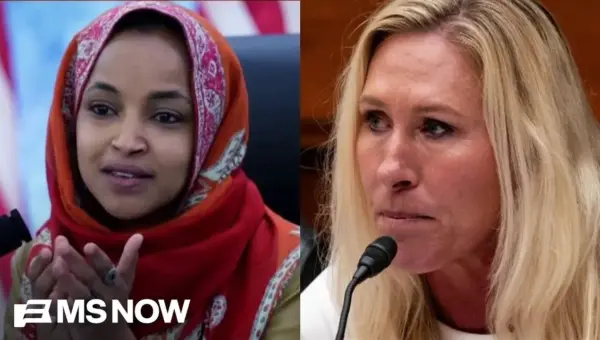
Rep. Ilhan Omar is urging Democrats to embrace former Trump allies like Marjorie Taylor Greene who are now breaking with the former president. Omar believes these individuals deserve credit for their "wake-up call" and should be welcomed to help save the country. This call comes as Democrats explore strategies to broaden their coalition and appeal to disillusioned Republicans.


Europe Builds Its Own NATO as Trump Threatens to Exit
As Donald Trump continues to threaten U.S. withdrawal from NATO, European nations are secretly planning their own defense alliance. This move reflects a growing desire for autonomy and a strategic pivot away from U.S. leadership. Meanwhile, Ukraine's military advancements and Saudi Arabia's reassessment of global ties further illustrate this changing international landscape.