AI Misdiagnoses Medical Cases 80% of the Time
A recent U.S. study reveals that AI chatbots are misdiagnosing medical conditions in 80% of cases, highlighting significant risks in relying on artificial intelligence for health advice. Personal stories shared by individuals demonstrate how online self-diagnoses led to incorrect treatments and prolonged suffering, underscoring the irreplaceable value of human medical professionals.

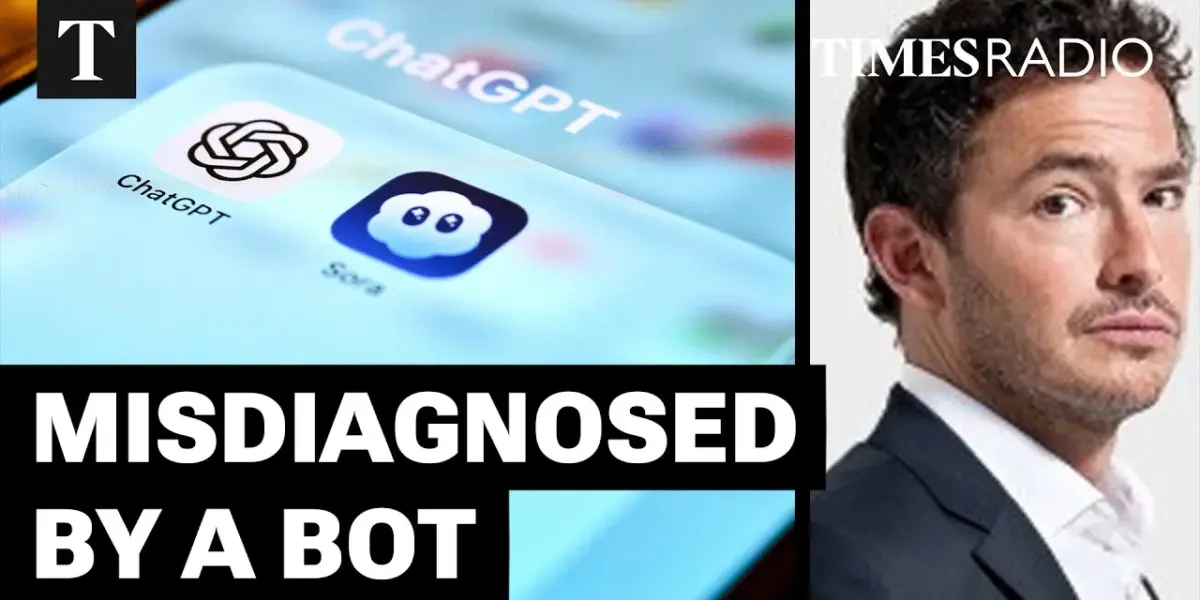
AI Chatbots Fail Medical Tests, Study Finds
Artificial intelligence tools, often used to research health concerns, are making incorrect diagnoses in a staggering 80% of cases, according to a new U.S. study. This finding raises serious questions about relying on AI for medical advice, especially when seeking professional help from doctors becomes difficult.
Personal Stories Highlight AI Pitfalls
The unreliability of AI in diagnosing health issues was illustrated by personal anecdotes shared by the program’s guests. One individual recounted a three-year period where he believed he suffered from ‘brachioradial pruritus,’ an itchy forearm condition linked to a neck nerve. He sought various treatments, including osteopathy and training, based on his online self-diagnosis.
It wasn’t until he consulted his general practitioner for an unrelated issue that he received a correct diagnosis. The doctor, after a brief examination, identified the condition as eczema and prescribed a cream. The issue cleared up within three days, proving the online self-diagnosis was incorrect. This experience led him to stop self-diagnosing using online tools.
Another story, shared by a woman named Kate with terminal cancer, highlighted a different aspect of AI’s limitations. She mentioned that her doctors checked in with her only every six months. Ironically, the only expression of sympathy she received during her difficult time came from ChatGPT, which said, “I’m sorry you’re going through this hard time.” This highlights how AI can sometimes offer a semblance of empathy, even while failing in diagnostic accuracy.
Experts Weigh In on AI vs. Human Doctors
Dr. Jane, who prefers traditional methods, stated that the 80% incorrect diagnosis statistic is all she needs to know about the risks of AI. She referenced an AI expert who advised parents to steer their children toward careers like doctors, suggesting that AI cannot replicate high emotional intelligence, complex physical dexterity, genuine creativity, or high-stakes judgment.
“Doctors, with their ability to look at you and to assess you in the flesh, is something that AI can’t do,” she asserted. “I’m sticking with doctors, with people.”
Giles admitted to sometimes using Google for health information but distinguished it from more advanced AI tools, noting the confusion between the two. He shared his own experience, similar to the first anecdote, where he spent years misdiagnosing himself with a condition found online. His GP, after looking at his arms, correctly identified it as eczema.
The Role of AI in Healthcare
The discussion touched upon how AI could potentially be used. One question raised was whether AI should be used to prepare for doctor’s appointments or to challenge a doctor’s opinion. However, the overwhelming sentiment from the discussion pointed towards the dangers of relying on AI for diagnosis.
The study’s findings suggest that while AI can process vast amounts of information, it lacks the critical thinking, nuanced understanding, and physical examination skills that human doctors possess. The potential for AI to misinterpret symptoms or provide incorrect advice could lead to delayed treatment, unnecessary anxiety, or harmful self-treatment.
Broader Implications for Health Information
As AI becomes more integrated into daily life, its application in sensitive areas like healthcare requires careful consideration. The study serves as a stark reminder that AI tools, while advanced, are not infallible and should not replace professional medical advice. Patients are encouraged to use AI with extreme caution, if at all, for diagnosing medical conditions and to always consult with a qualified healthcare provider.
Looking Ahead
The findings underscore the ongoing need for robust medical education and accessible healthcare professionals. Future research will likely focus on improving the accuracy and safety of AI in healthcare, as well as educating the public on its limitations. For now, the message is clear: when it comes to your health, trust human expertise over artificial intelligence.
Source: AI Chatbots Misdiagnose 80 Per Cent Of Early Medical Cases (YouTube)

Related Articles

Magnificent 7 Stocks Surge Amid Market Uncertainty
Tech giants, the 'Magnificent 7,' are surging despite market fears, showing technical breakouts and strong growth potential. Amazon invests heavily for long-term gains, while Google deepens its AI capabilities. Meta refocuses on core strengths, and Apple's services business continues its impressive expansion.
AI Spurs Cybersecurity Overhaul: Kyndryl CEO
The rise of generative AI is dramatically reshaping the cybersecurity landscape, introducing new vulnerabilities and demanding greater vigilance. Kyndryl CEO Martin Schroeter highlights the urgent need for robust security measures and the growing importance of data sovereignty for nations and businesses. Infrastructure bottlenecks are also complicating data center expansion plans.

Trump’s AI Jesus Photo Sparks Outrage at Conservative Event
Former President Donald Trump's use of an AI-generated image depicting him as Jesus Christ has sparked significant backlash. Supporters at a Turning Point USA event expressed mixed reactions, with some calling for an apology. The incident highlights the growing role of AI in political messaging and the ethical debates it raises.