Trump’s Ceasefire Claims Mask Growing War Crimes
Dozens of nations have jointly condemned Israel's alleged war crimes in Lebanon, yet Donald Trump's announcement of a 10-day ceasefire has dominated headlines. This analysis questions the sincerity and effectiveness of Trump's peace efforts, highlighting a history of broken promises and ongoing violence, while also noting international condemnation of actions against UN peacekeepers.


Global Outcry Ignored as Trump Declares Fragile Peace
Dozens of nations recently joined forces to demand Israel halt alleged war crimes in Lebanon. This significant international action has been overshadowed by Donald Trump’s announcement of a 10-day ceasefire between Israel and Lebanon. While any end to violence is welcome, doubts linger about the substance and longevity of deals brokered by Trump, given past experiences where tensions quickly resurfaced.
A History of Broken Promises
Past attempts at peace deals under Trump have shown a pattern of short-lived success. For instance, a supposed peace agreement between Israel and Gaza on his first day in office quickly dissolved, with hostilities resuming shortly after. This history makes it difficult to trust new pronouncements of peace, especially when they seem to ignore ongoing military actions.
International Condemnation Over UN Peacekeepers
A critical point often missed is the joint statement by 63 countries and the European Union condemning Israel’s actions against UN peacekeepers. These nations expressed deep concern over the humanitarian crisis in Lebanon, including civilian deaths, destroyed infrastructure, and the displacement of over a million people. The condemnation specifically addressed Israel’s alleged aggressive behavior, which led to the deaths of three Indonesian soldiers.
The 63 countries and the European Union as a whole expresses deep concern over the humanitarian situation in Lebanon, especially the significant civilian casualties, the extensive destruction of civilian infrastructure and the mass displacement of more than 1 million people.
Israel’s Ground Invasion and Escalating Operations
Adding to the conflict, Israel has been conducting a ground invasion in Lebanon since March 2026. This military operation appears to have been intensified, using the broader regional conflict as an opportunity to expand its reach. The situation highlights a persistent pattern in how Israel wages war, a method that critics argue is inconsistent with international law.
Pope Francis Calls for Peace and Moral Clarity
Amidst the turmoil, Pope Francis has issued strong messages promoting peace and condemning the manipulation of religion for political gain. His tweets, which have garnered millions of views, call for embracing neighbors as brothers and sisters, emphasizing a shared humanity. These sentiments offer a moral counterpoint to the ongoing conflict and political maneuvering.
Peace is not something we must invent. It is something we must embrace by accepting our neighbor as a brother or sister. We do not choose our brothers and sisters.
We must simply accept one another. We are one family inhabiting the same home, this wonderful planet that ancient cultures have cared about for over a millennia.
Trump’s Ceasefire: A Political Maneuver?
Trump’s recent announcement of a 10-day ceasefire, based on conversations with Lebanese President Joseph Aun and Israeli Prime Minister BB Netanyahu, is met with skepticism. He claimed these leaders agreed to the ceasefire and invited them to the White House for talks, the first in 34 years. However, critics argue this is an attempt to rebrand himself as a peacemaker after escalating the conflict.
The Cycle of Violence and Broken Deals
The pattern described is one of escalation followed by a grand ceasefire announcement, with little lasting impact. Trump has repeatedly announced impending ceasefires, only for fighting to continue. This cycle, where Israel strikes, Lebanon or Hezbollah retaliates, civilians suffer, and Trump declares a deal, seems to repeat endlessly.
Congressional Action on Arms Sales
In related news, the US Senate recently rejected a motion to block weapon sales to Israel. The vote was 59-40, with 40 out of 47 Democrats voting to block the sales. This indicates a division within the Democratic party, though a majority still seem to understand the stakes involved in continued arms support.
Why This Matters
The ongoing conflict between Israel and Lebanon, marked by alleged war crimes and a disregard for international law, demands greater global attention. The involvement of major powers like the United States, particularly through actions perceived as escalatory, has significant implications for regional stability and international relations. The repeated cycle of violence, coupled with diplomatic efforts that appear more performative than substantive, raises serious questions about accountability and the pursuit of lasting peace.
Implications and Future Outlook
The situation suggests a concerning trend where powerful nations may act with impunity, shielded by political rhetoric and complex international dynamics. The lack of widespread coverage on the international condemnation of alleged war crimes is a troubling sign of media selectivity or influence. Moving forward, increased transparency and adherence to international legal frameworks are crucial for preventing further suffering and achieving genuine peace in the region.
Historical Context
Criticism of Israel’s actions, especially concerning alleged war crimes, was once considered unthinkable on a global stage. The shift towards allowing common-sense criticisms, while simultaneously pushing back against antisemitism, marks a complex evolution in international discourse. This change allows for a more nuanced discussion about government actions versus broader religious or ethnic groups.
Looking Ahead
The upcoming White House talks, if they occur, will be a crucial test of whether genuine progress can be made or if they will simply be another step in a repeating cycle of conflict and superficial peace declarations. The world watches to see if these discussions will lead to a lasting resolution or further entrench the status quo of intermittent violence.
Source: He tried to hide this… (YouTube)

Related Articles
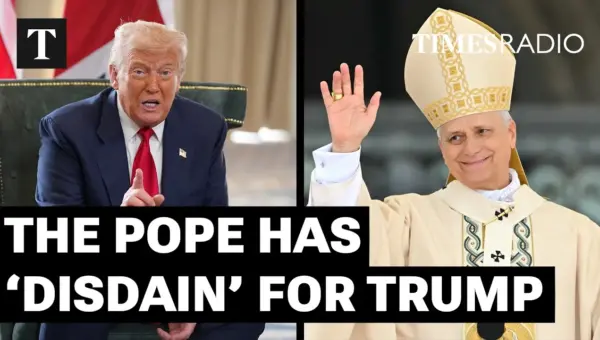
Pope’s Stance on Trump Hinders Peace, Says Adviser
Pastor Mark Burns, a spiritual adviser to Donald Trump, claims Pope Francis's criticisms of "tyrants" are personal attacks against Trump, hindering peace efforts. Burns argues the Pope should focus on global crises instead of his "disdain" for the former president. He defends Trump's strong stance on Iran as necessary for protecting innocent lives.
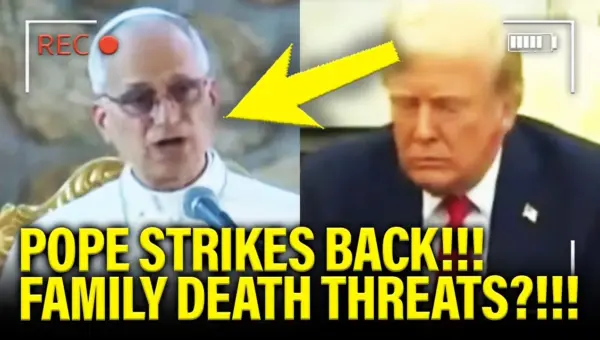
Pope Leo XIV Rebukes Trump’s ‘War Criminals’ Regime
Pope Leo XIV has directly challenged Donald Trump's administration, labeling it a "regime of war criminals." The Pope's strong words, delivered from Cameroon, come amid reports of death threats against his brother and accusations of intimidation from Trump's circle. This spiritual leader's stance ignites a debate on faith, politics, and moral authority.
Trump’s ‘Unhinged’ Actions Spark Backlash, Divide MAGA Base
Donald Trump's AI-generated image of himself as a healer has caused a stir, drawing criticism from the Pope and even some within his own MAGA base. Meanwhile, Democrats are urged to plan for future political power, and the disconnect between cultural events like Coachella and real-world crises is noted.