Virginia Votes on Redistricting: Could Impact House Control
Virginia voters are casting ballots on a redistricting referendum that could significantly impact the balance of power in the U.S. House of Representatives. Both supporters and opponents of the measure are actively campaigning, with voters expressing a range of motivations from seeking fairer elections to preserving existing representation.

Virginia Voters Decide on Redistricting Referendum
On Tuesday, Virginia voters headed to the polls to decide the future of voting in the state through a crucial redistricting referendum. This vote is part of a larger national debate over how electoral maps are drawn, a process that can significantly influence which party holds power in Congress. The referendum proposes a new congressional map that Democrats believe could help them gain as many as four additional seats in the House of Representatives.
The debate over the referendum has seen both Democrats and Republicans using powerful figures to make their case. Supporters of the referendum, including Democrats, have invoked words from former President Obama, who spoke about how political gerrymandering can drive parties further apart. They argue that the proposed map is a necessary step to create fairer elections and counter what they see as partisan map-drawing by Republicans in other states.
Conversely, opponents, largely Republicans, argue that the proposed map unfairly dilutes their party’s representation. They express concern that the new map is designed to benefit Democrats and question the need to change an existing map that they believe is already fair and bipartisan. The messaging around the vote highlights a clear division on how to best represent the people of Virginia.
Voter Perspectives on the Ballot Question
On the ground, reporters spoke with voters to understand their reasoning behind their choices. Many voters who supported the referendum, voting ‘yes,’ expressed a dislike for the concept of gerrymandering itself.
However, they felt compelled to vote ‘yes’ as a way to respond to actions taken by former President Trump in other states to redraw maps. These voters see the referendum as a temporary fix to level the playing field and believe it is critical for restoring balance and fairness in elections.
Voters who chose to vote ‘no’ were often Republicans troubled by the potential dilution of their party’s voting power. They pointed to the current map, which they believe is bipartisan and fair, and questioned the need to alter it. Some voters expressed a broader concern that changing maps in one state will lead to a continuous cycle of map manipulation across the country, believing it’s better to stop the practice by voting no.
Early voting numbers showed significant engagement, with nearly 1.4 million Virginians casting early ballots. This high turnout for a spring election indicates the importance voters place on this issue, even if they find the decision complex. The national spotlight on Virginia suggests that the outcome here could have a ripple effect on the balance of power in Washington.
Analyzing the Election Night Numbers
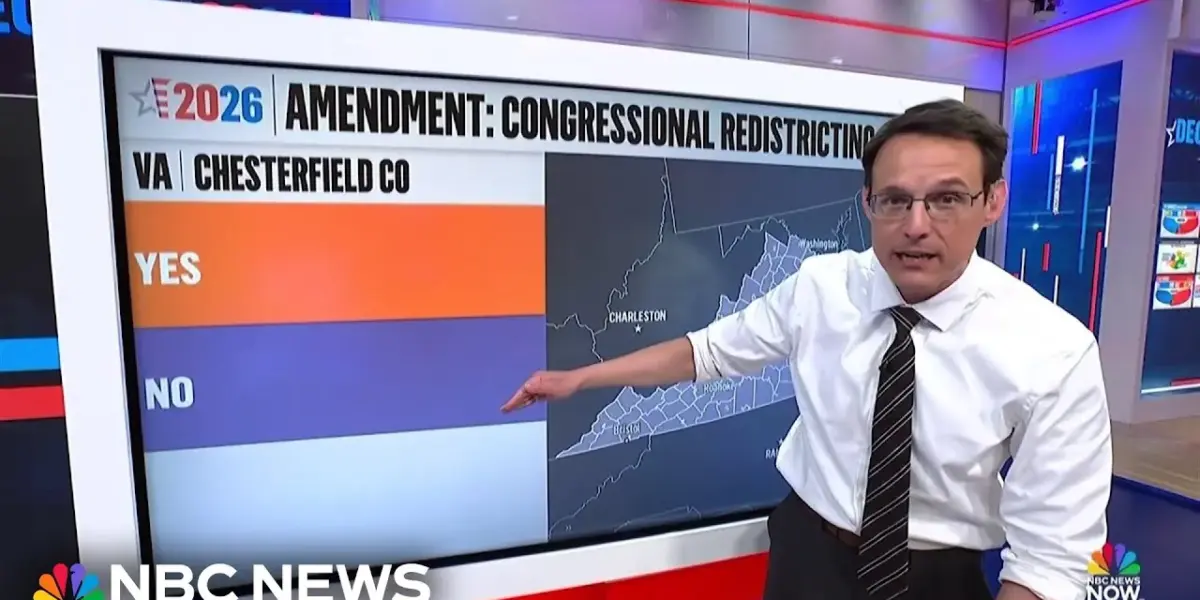
Political analysts are closely watching key areas across Virginia as the votes come in. Steve Kornacki, NBC News’ Chief Data Analyst, highlighted several regions crucial for understanding the referendum’s outcome. Southwest Virginia, a heavily Republican area, is being watched for turnout levels; lower turnout there could be an indicator of success for the ‘no’ side.
Swing areas like Virginia Beach, Chesapeake, and Chesterfield County are also critical bellwethers. These areas have shown the ability to vote for both Republican and Democratic candidates in recent elections.
The performance of the ‘no’ side in these counties, particularly winning by a significant margin, is seen as vital for their chances of defeating the referendum statewide. In contrast, Loudoun County, a reliably Democratic area, is expected to be carried by the ‘yes’ side, with results there potentially offering an early indication of the overall trend.
National Implications of the Virginia Vote
The stakes of the Virginia referendum extend far beyond the state’s borders, with potential implications for control of the U.S. House of Representatives. Analysts point out that in past elections, particularly in 2018, Democratic gains were largely concentrated in districts previously held by Republicans but won by Democrats in presidential elections. Currently, there are a limited number of such districts nationwide.
If the referendum passes in Virginia, it is projected to create four additional districts that would be Republican-held but would have been lost by Republicans under former President Trump’s winning margins. This shift could make it easier for Democrats to pick up seats, effectively providing them with more “low-hanging fruit” in future elections. The outcome in Virginia could therefore play a significant role in determining the partisan makeup of Congress.
Source: Kornacki: Virginia Democrats can win more ‘low-hanging fruit’ districts if they win referendum (YouTube)

Related Articles

GOP Strategists Gather as Trump’s Numbers Plummet
GOP strategists are holding emergency meetings as Donald Trump's public support appears to be collapsing before the midterms. Chief of Staff Susie Wilds is reportedly leading efforts to control the narrative and rally party unity. However, critics argue that the core problem lies with Trump himself, making any spin efforts futile.


Bulgaria’s Pro-Russian Leader Eyes EU Role Amid Instability
Bulgaria's recent election has brought a pro-Russian politician to the brink of becoming prime minister, sparking concerns within the European Union. Despite past criticisms of the EU and a desire to renew ties with Moscow, analysts suggest a rhetorical shift rather than a fundamental policy change is likely. The nation's long-standing political instability and corruption issues add complexity to its future role in Brussels.

Obama’s Redistricting Push Fuels Trump’s Impeachment Fears
Former President Barack Obama's support for a Virginia redistricting referendum has ignited fears in Donald Trump, who believes it's a plot to impeach him. The Virginia measure aims to create a significant Democratic advantage in congressional districts. Trump views this as a direct attack, while Obama's campaign calls it a necessary step to level the electoral playing field.