Trump Blinks: Iran Rejects Talks, Forces Ceasefire Extension
Iran has rejected U.S. negotiation offers, viewing the naval blockade as an act of war. President Trump has unilaterally extended a ceasefire deadline, a move Iran states it never requested, leading to a diplomatic stalemate and heightened regional tensions.

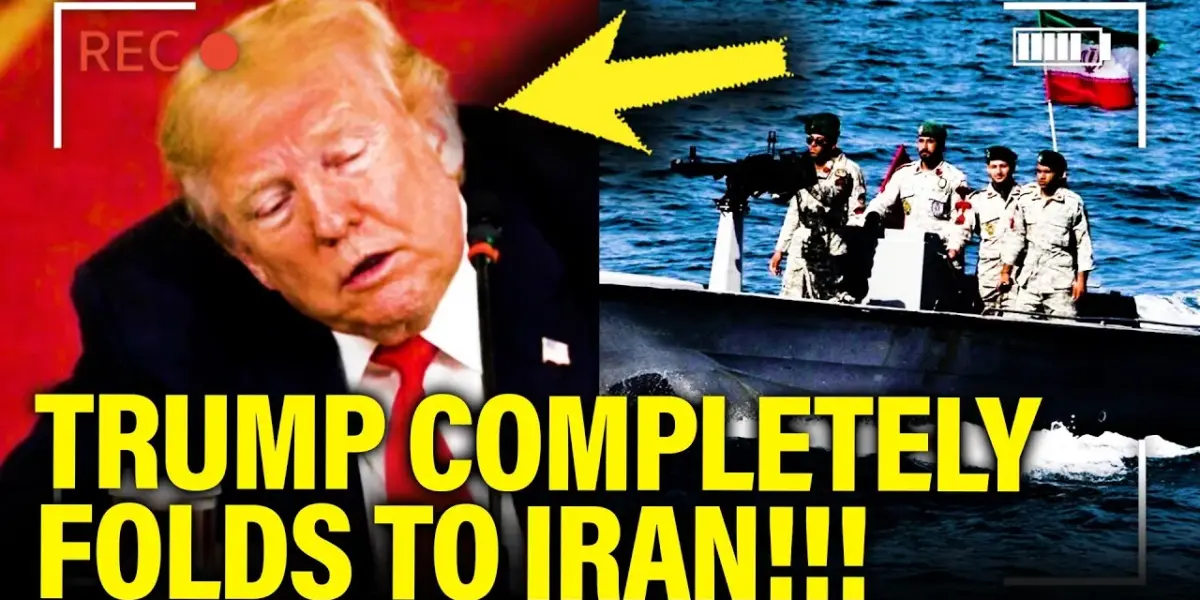
Trump Blinks: Iran Rejects Talks, Forces Ceasefire Extension
The recent diplomatic standoff between the United States and Iran has taken a sharp turn, with Iran refusing to engage in negotiations under current conditions. This has led to President Donald Trump unilaterally extending a ceasefire deadline, a move that Iran insists it never requested.
The situation began with a set ceasefire deadline that was nearing its expiration. President Trump had previously issued threats of military action, including targeting bridges and civilian infrastructure, and had established a naval blockade in the Persian Gulf. This blockade involved interdicting Iranian ships, which Trump used as leverage to pressure Iran into accepting U.S. terms.
Iran’s Stance on Negotiations
Iran’s position has been clear: they will not negotiate while the naval blockade remains in place. They view the blockade as a violation of ceasefire terms and an act of war. Iran has expressed frustration with President Trump’s contradictory statements, which oscillate between threats of destruction and promises of favorable deals.
“We need clarity in these discussions,” was the sentiment from Iranian officials. They stated that as long as the blockade persisted and their negotiating positions were misrepresented, they would not attend talks in Islamabad, Pakistan. This stance was communicated through mediators like Pakistan.
A Shifting Diplomatic Landscape
The planned discussions in Islamabad, initially set for the previous week, failed to materialize. Despite President Trump’s claims that Iran had agreed to all U.S. terms, essentially “surrendering,” the reality on the ground proved different. This discrepancy appears to have been an attempt to influence market sentiment.
President Trump then announced an indefinite extension of the ceasefire, blaming Iran’s disorganization for the delay. However, Iranian leadership quickly countered, stating they had not requested an extension. They maintained their commitment to a previously negotiated 10-point framework, emphasizing that they would only participate in talks if the U.S. agreed to negotiate within that framework and respected their non-negotiables.
Accusations and Counter-Accusations
Iran’s perspective, as reported by Iranian media, is that President Trump’s extension of the ceasefire is a unilateral action. They believe it is an attempt to buy time, possibly for a surprise attack, and that Iran currently holds the strategic initiative. Iranian officials indicated that they do not consider the situation favorable for negotiations under duress.
“We are just holding firm on the 10-point framework we previously negotiated with the Trump regime. If they want to agree that we negotiate within our framework and they agree to our non-negotiables, we’ll show up in Pakistan. But if not, we’re not going to show up, waste our time, and then have Donald Trump use our appearance to further psychologically distort the reality on the ground and manipulate the media.”
This sentiment highlights a deep distrust, with Iran feeling that engaging with the U.S. under current circumstances would be counterproductive and manipulative.
Historical Context and International Relations
Historically, the United States has been a central player in global diplomacy, with many nations seeking engagement. The current situation, where Iran is hesitant to be in the same room as U.S. representatives, signifies a notable shift in perceived international standing. This is seen by some as a reflection of a less dominant U.S. foreign policy approach.
The U.S. statement, attributed to President Trump, cited a “seriously fractured” Iranian government and a request from Pakistani officials for the ceasefire extension. However, Iran’s official media has pushed back, stating they did not request the extension. This suggests a significant divergence in how the events are being perceived and reported by each side.
Iran’s Demands and the Strait of Hormuz
A key sticking point remains the U.S. naval blockade. Iran has made it clear that the Strait of Hormuz will not reopen as long as the blockade continues. They have also indicated a willingness to forcefully break the blockade if necessary, suggesting a firm resolve to protect their interests and sovereignty.
The situation is further complicated by the U.S. Pentagon budget request, which includes a substantial increase in military spending. While this occurs, Iran perceives the U.S. as attempting to perpetuate a “shadow of war” to destabilize its economy and politics. The closure of the Strait of Hormuz is presented as a direct consequence of U.S. actions.
Why This Matters
This diplomatic deadlock has significant implications for regional stability and international relations. The U.S. strategy of applying pressure through blockades and threats, met with Iran’s firm refusal to negotiate under such conditions, creates a volatile environment.
The public disagreement over the ceasefire extension and the underlying reasons for Iran’s refusal to negotiate underscore a breakdown in communication and trust. This could lead to further escalation or a prolonged period of heightened tension, impacting global trade and security, particularly concerning oil supplies through the Strait of Hormuz.
Future Outlook
The indefinite ceasefire extension, without a clear path forward for negotiations, leaves the situation uncertain. Iran’s stance suggests that any resolution will require a significant shift in U.S. tactics, particularly the removal of the naval blockade and a more consistent, transparent approach to diplomacy.
The coming days will reveal whether either side is willing to compromise. Iran’s ability to enforce the closure of the Strait of Hormuz and its continued resistance to perceived bullying will be critical factors. The U.S. faces a choice: continue with a strategy that has thus far failed to bring Iran to the negotiating table, or adapt its approach to de-escalate tensions.
The Iranian Ambassador to Pakistan, Resa Mogadam, stated, “It is a truth universally acknowledged that a single country in possession of a large civilization will not negotiate under threat and force.” This sentiment encapsulates Iran’s core objection, suggesting that a fundamental change in U.S. strategy is necessary for any meaningful progress.
Source: Trump BLINKS on IRAN as DEADLINE STRIKES!!! (YouTube)

Related Articles

Trump’s Cabinet: A ‘Wimp’ Problem or a Mirror?
A report suggests Donald Trump feels his cabinet members lack 'manliness.' This focus on outward toughness may overshadow actual competence and effective governance. The discussion highlights evolving expectations for leadership beyond traditional notions of strength.


Trump Extends Iran Ceasefire, Blockade Continues Amid Talks
President Trump has extended the ceasefire with Iran indefinitely, but the U.S. naval blockade remains in place, hindering peace talks. Meanwhile, dangerous wildfires rage across the South due to extreme drought conditions. The broadcast also covered legal battles, including a defamation suit against The Atlantic and a criminal investigation into OpenAI.

Trump’s ‘Grand Conspiracy’ Probe Faces Setbacks Amid Skepticism
A Justice Department investigation into alleged "manufactured intelligence" by the Obama administration is reportedly stalling, with key subpoenas withdrawn and prosecutors reassigned. Previous extensive inquiries, including the Durham probe, found the origins of the Russia investigation were properly predicated, yielding no significant criminal charges against officials like former CIA Director John Brennan.