Semenya Condemns Olympic Transgender Ban as Human Rights Issue
Olympic runner Caster Semenya has strongly criticized the IOC's new rules for transgender athletes, calling them a human rights issue and deeply disrespectful to women. She questions why athletes must prove their worthiness to compete. Semenya believes these policies violate diversity principles and create an unfair burden on competitors.


Semenya Criticizes IOC Transgender Rules
Olympic runner Caster Semenya has strongly criticized the International Olympic Committee’s (IOC) new rules regarding transgender athletes in women’s sports. She argues that these regulations are a violation of human rights and undermine the principles of diversity that organizations like the IOC claim to uphold. Semenya expressed her frustration, questioning why women athletes are subjected to such scrutiny to prove their eligibility.
“Why would you allow women to take part in sports if you’re going to question them?” Semenya asked in a recent statement. She views the testing and questioning of athletes’ gender as deeply disrespectful. It feels as though women athletes are forced to prove they are ‘worthy’ to compete, a burden Semenya believes is unacceptable.
Concerns Over Athlete Eligibility and Discrimination
The core of Semenya’s argument centers on the idea of inherent human rights and the right to participate in sports. She believes that any organization promoting diversity should act in a way that reflects those values. The current testing and eligibility requirements for transgender athletes, and by extension, for athletes with differences in sex development (DSD), are seen as discriminatory.
“We are talking about human rights. We are talking about diversity,” Semenya stated.
The implication is that excluding or heavily scrutinizing certain groups of athletes goes against the very idea of inclusivity. She highlighted the absurdity of demanding proof of one’s identity or biological makeup to simply participate.
The Disrespectful Nature of Current Policies
Semenya feels that the current approach by sports governing bodies is disrespectful to women athletes. The need to undergo invasive testing or face constant questioning about one’s identity creates an environment of suspicion. This, she argues, detracts from the spirit of sport and the celebration of athletic achievement.
“It’s like now we need to prove that we are worthy as women to take part in sports,” Semenya explained. This sentiment suggests that the burden of proof is unfairly placed on the athletes themselves. It creates a barrier that many may find demoralizing or impossible to overcome, especially those who do not fit traditional biological categories.
Broader Implications for Women’s Sports
The debate surrounding transgender and DSD athletes in women’s sports has been ongoing for years. Rules have evolved, with different sports federations implementing varying policies. The IOC’s updated framework, released in November 2021, moved away from a one-size-fits-all approach, encouraging individual sports to set their own criteria based on specific sport science and evidence.
However, Semenya’s comments highlight the persistent unease and perceived injustice felt by many athletes. The focus on biological factors and eligibility criteria can overshadow the athletic abilities and dedication of competitors. Critics argue that these policies can lead to the exclusion of talented athletes and create a hostile environment.
Semenya’s Personal Experience
Caster Semenya herself has been at the center of such debates. As an athlete with naturally high testosterone levels due to a DSD condition, she has faced restrictions in competing in certain women’s events. World Athletics has implemented rules requiring athletes with DSD and specific testosterone levels to medically lower their testosterone to compete in the female category in events ranging from 400 meters to a mile.
Semenya has been a vocal advocate against these rules, viewing them as discriminatory and a violation of her right to participate in the sport she loves. Her activism extends beyond her personal struggles, aiming to challenge what she sees as systemic unfairness in sports governance. Her recent remarks reinforce her long-standing position against policies that question or limit female athletes based on their biological makeup.
The Path Forward
The ongoing discussion about inclusion in sports is complex, involving scientific, ethical, and human rights considerations. As sports organizations continue to develop policies, the voices of athletes like Semenya are crucial in shaping a more equitable and respectful future for competition. The challenge remains in balancing fairness, inclusion, and the integrity of women’s sports categories.
Moving forward, athletes and advocacy groups will likely continue to push for policies that prioritize inclusivity and respect for all participants. The focus will remain on how sports bodies can adapt to evolving scientific understanding and societal values while ensuring fair competition.
Source: Semenya slams Olympic transgender athlete ban | DW News (YouTube)

Related Articles

Germany Warns Israel: Death Penalty Law Violates Human Rights
Germany has strongly condemned Israel's new death penalty law, stating it violates human rights and the rule of law. The law, which appears to apply only to Palestinians killing Israelis, is seen as discriminatory. Germany, alongside allies like France and the UK, is urging Israel to reconsider this policy.
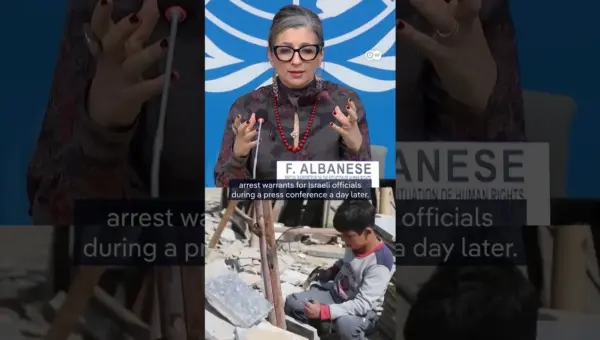
UN Expert: Israel Uses Torture as State Policy Against Palestinians
A UN expert has accused Israel of turning torture into state policy against Palestinians following the October 7th attacks. Francesca Albanese's report details widespread allegations of brutal treatment and deprivation. Israel has vehemently denied the claims, calling the report politically motivated.

Iran’s People Suffer Amid War and Brutal Crackdown
Iranians are suffering immensely, caught between external war and internal government crackdowns. With the internet largely shut down, journalists rely on conflicting sources to report the truth. Secretly filmed footage reveals defiance, while state media shows government-approved narratives, painting a grim picture of daily life under threat.