NASA Mars Mission Failure Cost $327 Million
A simple unit conversion error caused NASA's Mars Climate Orbiter to disintegrate in the atmosphere, costing $327 million. This costly mistake highlights the critical need for precision and standardized communication in complex projects.


NASA Mars Mission Failure Cost $327 Million
A simple mix-up in measurement units led to the loss of a $327 million NASA spacecraft, making it one of history’s most costly errors. The Mars Climate Orbiter, launched in 1999, was designed to study the Red Planet. However, its mission ended abruptly when it disintegrated in the Martian atmosphere.
Nine months into its journey, as the spacecraft neared Mars, it entered the atmosphere at a much lower altitude than planned. Instead of approaching at the calculated 140 kilometers, the Orbiter came in at just 57 kilometers. This critical miscalculation caused the spacecraft to burn up and break apart.
The Root of the Error: Units Mismatch
The cause of this catastrophic failure was a fundamental inconsistency in measurement units used by different teams working on the mission. One team at NASA used the Imperial system of measurement, which is commonly used in the United States. This system uses units like feet, miles, and pounds.
The other team, however, used the metric system. This system is used in most other parts of the world and relies on units like meters, kilometers, and kilograms. This difference in measurement units, often referred to as a “unit conversion error,” went unnoticed for nearly nine months.
What Went Wrong?
Engineers used the Imperial system to calculate the trajectory and speed of the spacecraft. This data was then fed into the navigation system.
However, the software controlling the spacecraft was expecting data in the metric system. Imagine trying to follow a recipe that calls for cups but you only have a scale that measures grams; the results would be wildly inaccurate.
This mismatch meant that the thrusters firing to correct the Orbiter’s course were making adjustments based on faulty information. The spacecraft gradually drifted off course, heading for a much lower and hotter entry into Mars’ atmosphere than anticipated. The error was so significant that it was not caught until the spacecraft was already very close to Mars.
Market Impact and Investor Takeaways
While this event did not directly impact financial markets in the way a stock market crash would, it is a clear reminder of the importance of precision and clear communication in complex, high-stakes projects. For investors, the principle extends beyond space exploration to any venture involving significant capital investment and technical execution.
This costly mistake highlights the potential for seemingly small oversights to lead to massive financial losses. It highlights the need for rigorous quality control, cross-team verification, and standardized procedures. Businesses, especially those in technology, engineering, and manufacturing, must ensure that all systems and personnel are operating with consistent data and protocols.
The $327 million loss represents not only the cost of the spacecraft but also the lost opportunity to gather valuable scientific data about Mars. This lost data could have potentially informed future missions or even led to discoveries with commercial applications. The incident also led to significant changes in NASA’s internal processes to prevent similar errors.
Lessons for Project Management
The Mars Climate Orbiter failure is a case study in project management and systems engineering. It shows how a lack of integration and communication between different parts of a project can have devastating consequences. Investors can draw parallels to large-scale corporate projects where different departments might use different software or reporting standards.
Ensuring that all parties involved understand and use the same units of measurement, reporting formats, and technical specifications is crucial. This applies to everything from software development to construction projects. A failure to standardize can lead to costly rework, delays, and outright project failure, directly impacting a company’s bottom line and investor returns.
NASA’s subsequent investigation led to the implementation of stricter checks and balances. These included mandatory unit conversions and verification steps at multiple stages of mission planning and execution. Such diligence is essential for any organization managing complex operations and significant budgets.
Looking Ahead
The loss of the Mars Climate Orbiter occurred in 1999, but the lessons learned remain highly relevant. Future missions to Mars, like the Perseverance rover launched in 2020, benefit from the enhanced safety protocols developed after such expensive mistakes. These protocols ensure that scientific endeavors are conducted with the highest level of accuracy.
For investors, the key takeaway is the critical importance of oversight and standardization in any business. Understanding the potential for error in complex systems, whether in space or on Earth, helps in evaluating the management quality and operational efficiency of companies.
NASA continues its exploration of Mars with advanced missions, building on decades of experience and stringent safety measures implemented after incidents like the Mars Climate Orbiter’s loss.
Source: The Most EXPENSIVE Mistake In History! 🌎 (YouTube)

Related Articles


NASA Aims for Permanent Moon Base in $20 Billion Plan
NASA is planning to build the first permanent human base on the Moon within seven years, a $20 billion project that shifts focus from lunar orbit stations. This ambitious goal aims to send astronauts for scientific research and use the Moon as a stepping stone for Mars exploration.

Webb Telescope Reveals New Cosmic Secrets
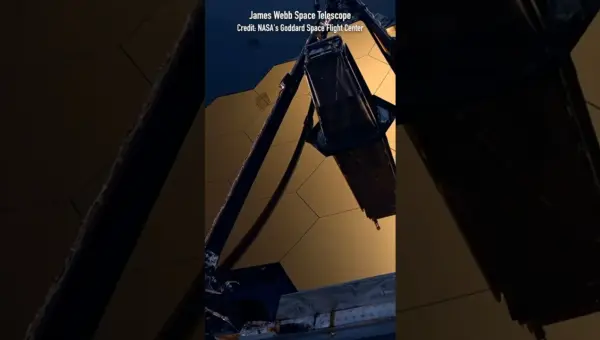
The James Webb Space Telescope has selected its next batch of scientific projects, promising new insights into alien worlds and the early universe. Researchers will use Webb to study exoplanet atmospheres, investigate distant galaxies, and explore objects within our own solar system.
NASA Reveals Ambitious Moon Mission Updates
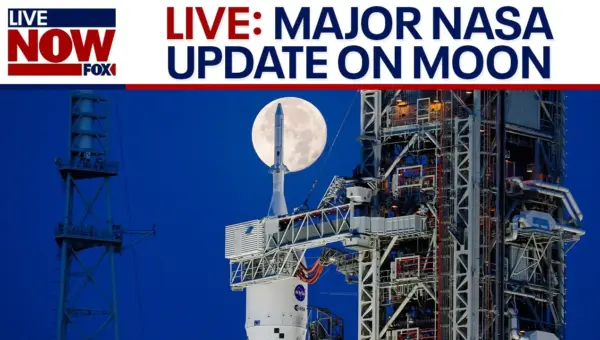
NASA held a significant public event on March 24 to update its plans for returning astronauts to the Moon by 2028. Key announcements included progress on establishing a permanent lunar base and advancements in nuclear propulsion for space travel. The agency detailed its strategy for sustained lunar presence and future Mars missions.