Iran’s Strait of Hormuz Tensions Flare Amid Peace Talks
Tensions between the US and Iran escalate in the Strait of Hormuz amidst crucial peace talks in Pakistan. Meanwhile, a US investigation probes the mysterious deaths of national security insiders, and new hope emerges for mental health treatment with expanded psychedelic drug research.

Iran’s Strait of Hormuz Tensions Flare Amid Peace Talks
The past 72 hours have seen serious questions arise about the possibility of a quick peace deal between the US and Iran. This comes as naval activity in the Persian Gulf has intensified. The situation is made more complex by Iran’s fractured leadership, making it unclear which voice truly speaks for the nation.
The country seems divided. One faction, appearing open to a deal, declared the Strait of Hormuz open for ships. Many vessels made the crossing.
However, this optimism faded quickly. Another faction, strongly against any compromise with the US, reversed the decision, declaring the strait closed again.
US Navy Responds to Blockade Challenges
As ships in the Strait of Hormuz slowed to a standstill, the US Navy responded by increasing its own blockade. In the last two days, the US Navy turned back over 50 ships. Tensions rose sharply when one cargo ship attempted to evade the blockade.
The vessel Tosca was warned to vacate its engine room, with threats of disabling fire if it did not comply. A six-hour standoff ensued.
Despite the warnings, the ship’s crew apparently challenged the US Navy’s blockade. The guided missile destroyer USS Spruance then opened fire, damaging the engine room as threatened.
Marines then boarded the ship, seizing it and its cargo. This incident occurred despite confident statements about victory from President Trump.
However, the markets reacted calmly. Oil prices saw a slight increase but remained below $90 a barrel, and the Dow Jones Industrial Average showed little change.
Pakistan Hosts Crucial Peace Talks
All eyes are currently on two key events. The first is the Serena Hotel in Islamabad, Pakistan, where peace talks are scheduled to resume. The second is the ticking clock towards the expiration of the current ceasefire.
President Trump announced he is sending a US negotiation team, led by Vice President Vance, who was expected to arrive in Pakistan. However, Iran has sent mixed signals regarding its participation. Iran’s president posted on social media, accusing the US of not trusting and failing to uphold its commitments.
This criticism comes from a regime with a history of deceit and delays, which has required significant effort from UN teams to sort through. Meanwhile, talks between Israel and Lebanon reportedly restarted following a 10-day ceasefire. This conflict had been a hurdle for broader peace deals involving Iran.
Controversy Surrounds Israeli Soldier’s Actions
Public outrage in the region is not focused on the ongoing fighting but on a photograph showing an Israeli soldier attacking a statue of Jesus with a sledgehammer. Israeli Prime Minister Benjamin Netanyahu has apologized to Christians worldwide. The Israeli Defense Forces have promised to hold those involved accountable.
Expert Analysis on Iran’s Stance and Military Capability
Retired General Chuck Wald, former deputy commander of US European Command, discussed the potential intentions behind the Iranian ship’s actions. He suggested that if the ship’s captain intended to test the US naval blockade, he received a clear, albeit failed, test.
General Wald believes Iran’s ability to retaliate is limited, given what they have already shown. While they can harass shipping and threaten to mine the Strait of Hormuz or use fast boats and drones, he feels their capabilities have been largely displayed. He expressed confidence in the US military’s ability to handle any challenges Iran might present.
Maya Maleki, senior fellow at the Foundation for Defense of Democracies and an Air Force veteran, addressed Iran’s mixed messages about attending peace talks. She suggested that the economic reality in Iran, including high inflation and unemployment, makes a deal essential for the regime. Maleki believes Iran’s rhetoric is an attempt to shape perception while their economy desperately needs relief.
She noted that Iran has historically returned to negotiations when pressured. Maleki also commented on the Iranian president’s warning against submitting to force.
She believes the regime’s concern about public image stems from a need to maintain support among its core base of 10-15%. Giving up core principles, like nuclear enrichment, could delegitimize the regime in their eyes.
The Defense Intelligence Agency reported that Iran still possesses thousands of missiles and attack drones. General Wald expressed some surprise at these numbers, suggesting potential imports from China or Russia, or domestic production. However, he believes Iran would likely be using these capabilities if they were as effective as implied, considering them largely “wasted” at this point.
Enriched Uranium: A Sticking Point in Negotiations
The Trump administration’s focus on nuclear weapons and the opening of the Strait of Hormuz is evident. Iran’s recent declaration that it will never give up its enriched uranium, calling it “sacred,” is significant.
Maleki pointed out that Iran did give up 97% of its enriched uranium under the Obama deal. She views Iran’s current stance as a negotiating tactic, typical of Middle Eastern bazaars, where one shows no interest in a deal and maintains a strong public message of refusal to compromise.
She recalled that even after the US killing of Qassem Soleimani, Iran returned to negotiations with the Biden administration. Maleki believes that under continued pressure, Iran will do whatever is necessary to survive, including making concessions.
Security Measures for Pakistan Peace Talks
Extraordinary security measures are in place in Pakistan for the peace talks. The Serena Hotel in Islamabad has been cleared of all guests. Thousands of armed forces are surrounding the hotel to ensure what Pakistan’s foreign minister calls “foolproof security.” Vice President Pence was scheduled to arrive the following day.
John Bolton on Iran’s Leverage and Trump’s Strategy
Former US Ambassador to the UN and National Security Advisor John Bolton discussed the ongoing situation. He believes both US and Iranian teams will attend the talks in Islamabad.
Bolton noted that Iran has the flexibility to make a last-minute decision on whether to attend, depending on confirmation of Vance’s travel. With the ceasefire set to expire soon, he suggested there’s limited time for substantive negotiations, especially given the 21 hours spent in previous talks without agreement.
He stated that Iran likely doesn’t want to be blamed for the talks breaking down by not showing up. However, he expressed skepticism about Iran’s commitment to any agreements made, citing their history of reneging on promises. Bolton suggested Iran perceives “panic” in the White House, believing President Trump wants to exit the conflict for domestic political reasons, especially concerning gas prices and the upcoming elections.
Bolton believes Trump faces a dilemma: making a deal that resembles the Obama deal could be politically damaging if it appears as a retreat without victory. He suggested Trump is playing for time but faces a difficult situation. Extending the ceasefire again, Bolton argued, would signal that Trump’s primary goal is simply a deal.
Bolton described Trump’s strategy as potentially a “madman strategy,” but one that differs from Henry Kissinger’s approach with China. Unlike Kissinger’s aim to leverage Nixon’s anti-communist credentials, Trump’s strategy seems to be based on appearing unstable and insulting. Bolton questioned whether this blustering and boasting would be taken seriously or dismissed as lacking follow-through.
He predicted that Iran would likely engage in prolonged talks, aiming to extend the ceasefire deadline and see Trump’s ultimate decision. Bolton concluded that the pressure is currently on Trump due to the ceasefire deadline, more so than on Iran.
Allegations of Iranian Arms Trafficking in the US
The report also touched upon allegations of Iranian intelligence activities within the United States. Shamim Mafi, an Iranian woman with a US green card, was arrested at Los Angeles International Airport on suspicion of trafficking weapons for Iran.
Authorities stated she has long-standing ties to Iran’s intelligence community. She allegedly facilitated millions of dollars in arms deals, including coordinating shipments of Iranian-made drones. Financial records indicated her firm received over $7 million in 2025 alone, with funds routed through Turkey and the UAE to avoid US sanctions.
Investigators uncovered intercepted communications between Mafi and an officer tied to Iran’s Ministry of Intelligence and Security. She is accused of brokering weapons sales between Iran and Sudan, a country experiencing a devastating civil war. Neighbors expressed disbelief at her alleged involvement in such high-stakes activities.
Investigation into National Security Insiders’ Disappearances
The program also highlighted an investigation into the disappearances and deaths of at least 10 national security insiders with reported links to top nuclear secrets. The House Oversight Committee is looking into these cases.
Congressman Eric Burlison expressed concern that these deaths and disappearances could pose a grave threat to US national security. He noted that foreign actors have historically targeted scientists to disrupt or acquire their work, citing examples like China’s Operations Fox Hunt and Skynet.
Burlison finds the circumstances of four individuals who left their homes without personal belongings and vanished within a year highly mysterious. These individuals were all working on sensitive projects related to aerospace, materials for hypersonic missiles, and advanced propulsion for the Air Force.
He suggested that adversaries like China, Russia, or Iran could be behind these disappearances, aiming to neutralize or recruit top US scientists. Burlison emphasized that these scientists, lacking security details, would be easy targets.
He has requested briefings from the FBI, NASA, the Department of Energy, and the Department of War. Burlison also mentioned that while the President has stated the White House is looking into the reports, he has not directly communicated with the White House.
Regarding the potential release of UFO files and videos, Burlison expressed hope that the President would be forceful in obtaining information from agencies like the CIA and the Department of Energy. He has seen some of the requested videos, describing footage of metallic orbs and objects with immediate acceleration that defy known physics.
Potential for Psychedelic Drug Research Expansion
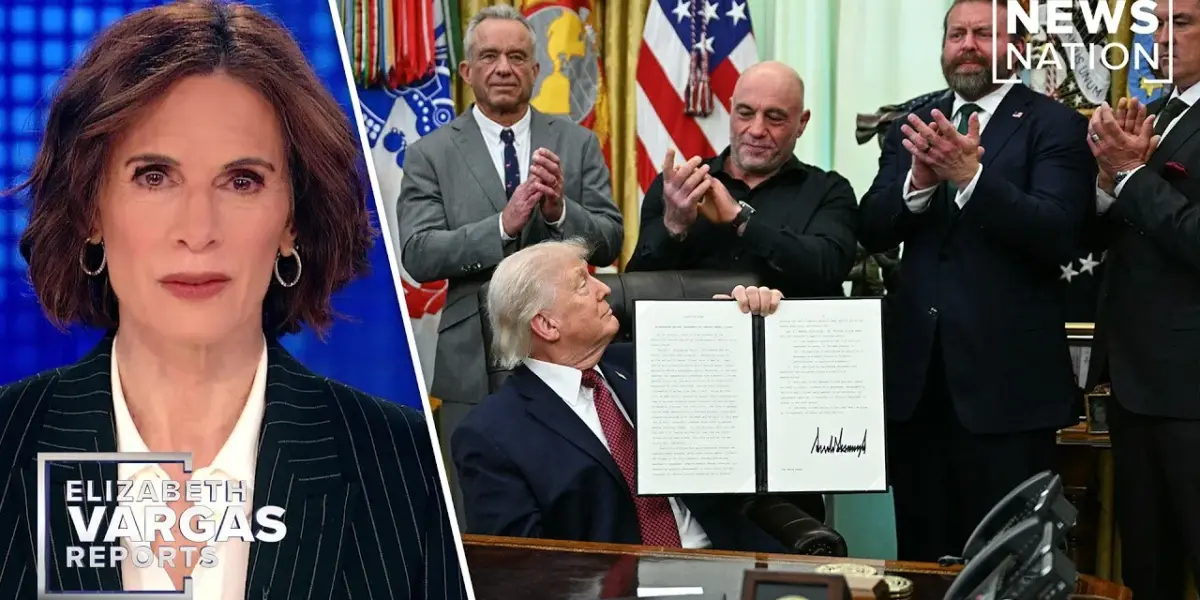
Finally, the report touched upon President Trump signing an executive order to expand research into psychedelic drugs as emerging therapies for mental health conditions. This move is seen as a potential source of hope for individuals struggling with mental health issues.
The order specifically mentions the potential benefits for veterans, citing a 2024 Stanford University study. This study found that 30 special operations veterans with traumatic brain injuries who underwent ibogaine treatment experienced an 80-90% reduction in symptoms of depression and anxiety within one month.
Early research suggests that ibogaine may alter neural pathways, potentially improving mental health conditions and addressing the ongoing crisis of veteran lives lost to suicide and mental illness. The report highlighted Matthew “W” as a guest who personally understands the deadly toll of this crisis.
Source: Vet approves push for Ibogaine treatments; Peace talks in Pakistan | Vargas Reports Full Show 4/20 (YouTube)

Related Articles


Trump Issues Stark Warning to Iran Amid Nuclear Fears
President Trump has issued a firm deadline to Iran for nuclear deal negotiations, warning of "total devastation" if terms are not met. Meanwhile, the mysterious deaths and disappearances of US scientists are under investigation, raising national security concerns. A controversial election in Michigan also highlights ongoing debates about political discourse and foreign policy.
Iran Smells Fear: Trump’s Iran Strategy Falters
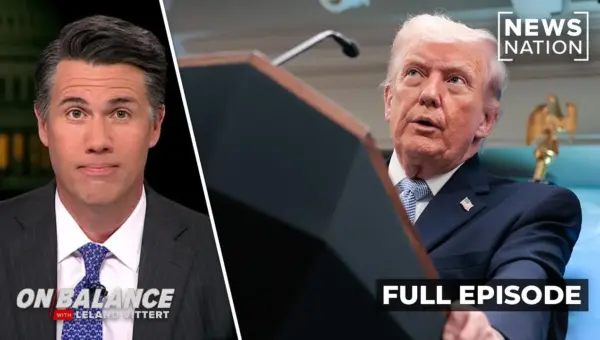
President Trump faces a complex situation with Iran, marked by shifting strategies and mixed messages. Meanwhile, California's Democratic party struggles to find a gubernatorial candidate, with Republicans leading the polls. Experts debate Iran's intentions and the U.S.'s best path forward, emphasizing strength and consistency.
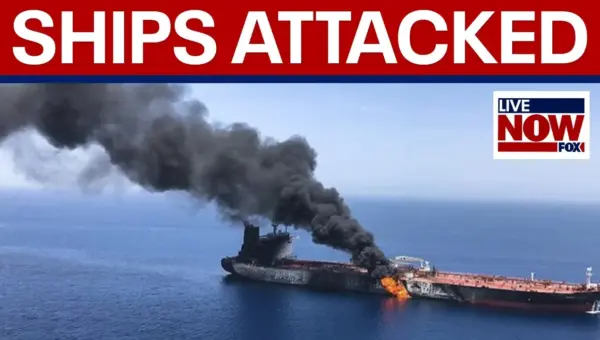
Iran Attacks Ships in Strait of Hormuz Amid Ceasefire Concerns
At least two ships have been attacked in the Strait of Hormuz, a critical shipping lane, raising new questions about ongoing efforts to de-escalate tensions. Iran's paramilitary Revolutionary Guard has reportedly attacked a third vessel. This news comes as a ceasefire between the US and Iran was extended, creating a confusing picture of the current situation.