Iran Regime Lacks Flexibility for US Demands, Expert Says
High-level talks between the U.S. and Iran, involving Vice President JD Vance, have ended without agreement, according to expert Farzin Nadimi. Nadimi stated the Iranian regime's inflexibility on demands like halting uranium enrichment and support for regional proxies prevented a breakthrough. While dialogue continues, significant progress remains unlikely in the near future.

Iran Regime Lacks Flexibility for US Demands, Expert Says
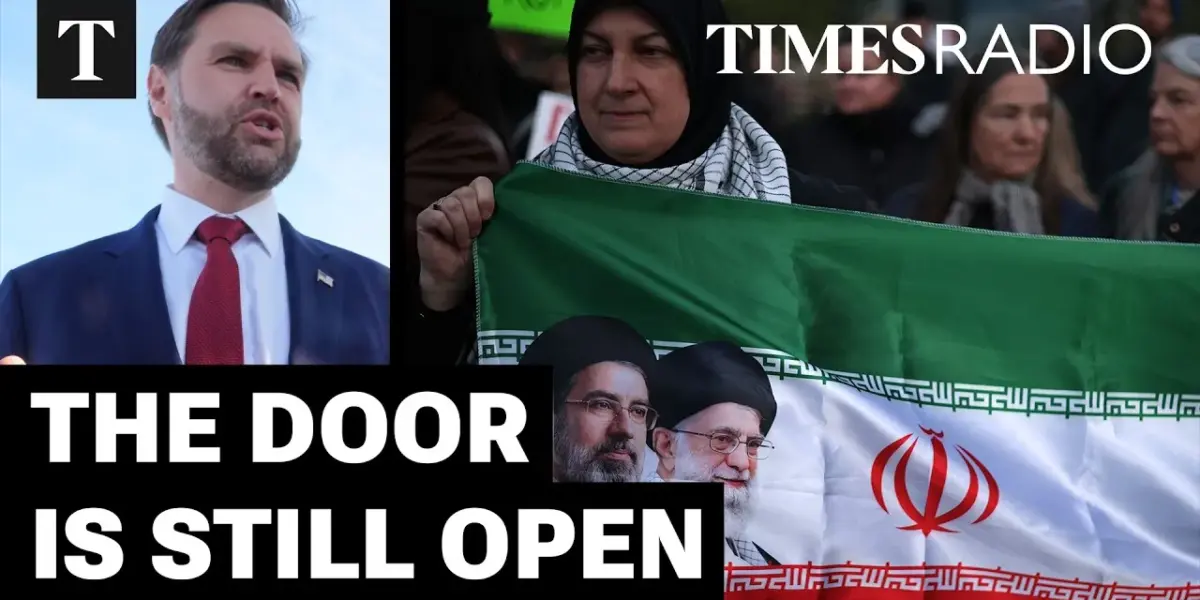
High-level talks between the United States and Iran have concluded without a breakthrough, according to Farzin Nadimi, a senior fellow at the Washington Institute for Near East Policy. The discussions, which involved Vice President JD Vance on the U.S. side, reportedly faltered because the Iranian regime was unwilling or unable to meet key American demands. While dialogue channels remain open, Nadimi suggests that fundamental disagreements will likely prevent significant progress.
Vance Leads High-Stakes Talks
Vice President JD Vance recently participated in what are described as the highest-level talks between the U.S. and Iran in nearly five decades. The Iranian side reportedly requested Vance’s involvement, possibly believing his known opposition to prolonged conflicts would lead to a more productive negotiation. They may have felt more comfortable dealing with someone who had expressed skepticism about endless wars.
However, the outcome suggests that Vance’s participation did not fundamentally alter the dynamics of the negotiation. The talks ultimately failed to bridge the gap between the two nations’ positions. This outcome raises questions about the willingness of both sides to compromise on critical issues.
Key Demands Remain Unmet
According to Nadimi, the core of the disagreement lies in Iran’s inflexibility regarding several major points. The U.S. administration, under President Trump, has demanded that Iran cease its uranium enrichment program entirely. This demand directly addresses concerns about Iran’s potential to develop nuclear weapons.
The U.S. is seeking an end to Iran’s support for regional proxy groups, often referred to as its “axis of resistance.” This includes groups like Hezbollah, which Iran funds and arms to exert influence in the Middle East. Such support is seen by the U.S. as a major destabilizing factor in the region.
Missile Program and Maritime Freedom
While not always explicitly stated in public comments, Iran’s ballistic missile program was also a significant topic of discussion. The U.S. views Iran’s long-range missile capabilities as a serious threat. Even in previous administrations, this issue was a constant underlying concern, Nadimi explained.
The freedom of navigation in the Strait of Hormuz was another crucial point. This vital waterway is essential for global oil transport. Recent incidents, including a Chinese-linked tanker crossing the strait amidst U.S. blockades, highlight the ongoing tensions and challenges to maritime traffic.
A Standoff in the Strait of Hormuz
The situation in the Strait of Hormuz has become a focal point of U.S.-Iran friction. Vice President Vance accused Iran of engaging in “economic terrorism” by interfering with maritime traffic. He warned that the U.S. possesses significant military and economic advantages, suggesting a potential for retaliation.
This exchange represents a challenging back-and-forth between the two nations. The crossing of the strait by vessels, including a Chinese-linked tanker, signals a direct challenge to U.S. actions. The effectiveness and duration of such challenges remain a key question.
Dialogue Continues, But Flexibility Lacking
Despite the lack of immediate breakthroughs, Nadimi stressed that the dialogue is far from over. Communication channels remain open, and as long as Iran has internet access, messages can be exchanged with the American administration. Discussions will likely continue on some level.
However, Nadimi expressed doubt about the Iranian regime’s willingness to show the flexibility the U.S. seeks. He suggested that even in the event of significant internal changes, such as the hypothetical death of the supreme leader, the emerging military elements within Iran may not be in a position to compromise. This points to a deep-seated resistance to concessions.
Looking Ahead
The ongoing tensions in the Strait of Hormuz and the unmet demands from the U.S. indicate a continued period of strategic maneuvering between the two countries. Future developments will likely depend on whether Iran’s leadership can be persuaded to alter its stance on nuclear enrichment, regional activities, and its missile program. The U.S. approach, as indicated by Vance’s comments, suggests a readiness to counter Iranian actions while keeping diplomatic doors ajar.
Source: Iranian Regime ‘Not Flexible Enough’ To Meet US Demands | Farzin Nadimi (YouTube)

Related Articles

Trump Attends UFC Fight Amidst Iran Peace Talks
While Vice President JD Vance engaged in critical peace talks with Iran, President Trump attended a major UFC 'Light Heavyweight Championship' fight in Miami. This choice has drawn attention due to its timing during significant diplomatic efforts. The contrast highlights the ongoing scrutiny of political leaders' priorities and public appearances.

US Blocks Strait of Hormuz, Sparking Global Concern
The United States has begun blocking ships in the Strait of Hormuz, a crucial global oil transit route. This move follows a previous six-week blockade by Iran and is seen as a pressure tactic by the Trump administration. Analysts express concern over potential escalation and global economic fallout.


Germany Faces Energy Crisis Amid Iran Tensions
Germany is implementing a temporary 17-cent per liter fuel tax cut to combat rising energy costs amid Middle East tensions. The government is also emphasizing continued diplomatic engagement, particularly within the European Union, following the breakdown of recent U.S.-Iran talks. This dual approach aims to address immediate economic pressures while pursuing long-term stability.