GOP’s Strange Tactics Mirror Leader’s Decline
Commentary suggests the GOP's actions are mirroring Donald Trump's perceived decline, leading to unusual messaging and defense tactics. The analysis draws parallels to cult behavior and critiques the party's propaganda efforts. Discussions also touch upon societal trends like falling fertility rates.

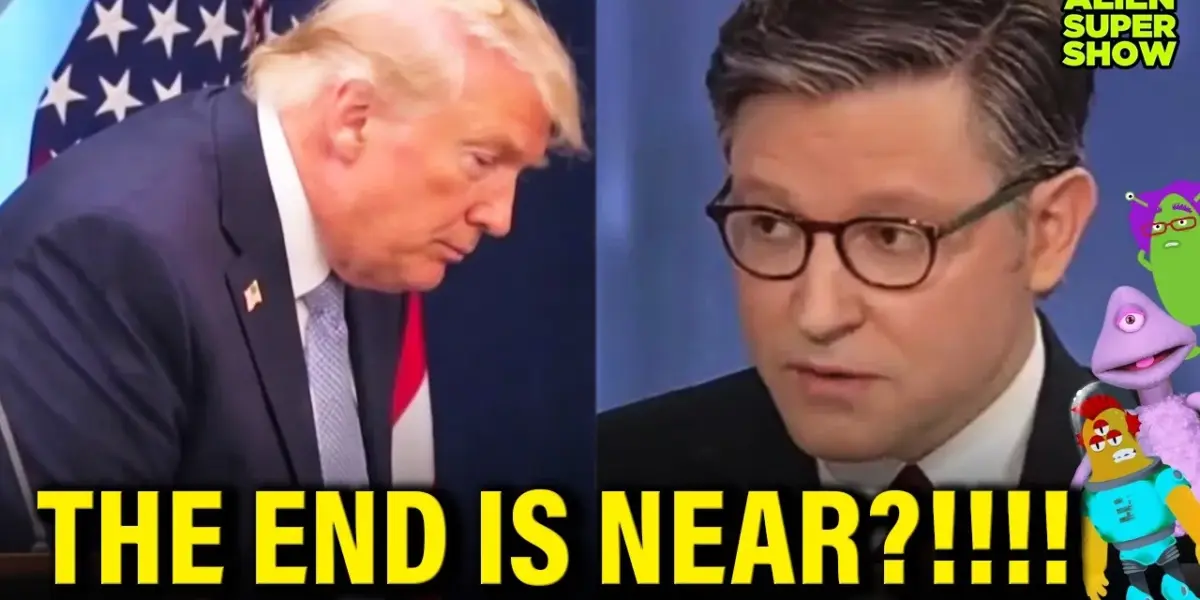
GOP’s Strange Tactics Mirror Leader’s Decline
Recent political commentary suggests a Republican party in disarray, with its actions seemingly mirroring the perceived struggles of its leader, Donald Trump. Approval ratings have been compared unfavorably to historical figures, sparking debate about the party’s direction and messaging.
This situation has led to accusations that the party’s propaganda efforts are a distraction. Critics claim these efforts aim to mask what they see as Trump’s cognitive and physical decline, as well as his peculiar behavior. This narrative suggests a party struggling to adapt to its leader’s perceived weaknesses.
The “Cult” Analogy
One perspective draws parallels between the GOP’s current state and the behavior of other groups when facing the downfall of a leader. This view posits that such groups often escalate their strange or extreme actions to match their leader’s collapse. It’s a way to make sense of destruction and loss within the group.
This perspective points to media personalities and their on-air behavior as examples. Some commentators highlight specific instances of what they describe as bizarre actions and statements. The argument is that this escalation is a direct response to the perceived weakening of their central figure.
Spiritual Advisors and Unusual Claims
Adding to the commentary are figures like Paula White-Cain, described as Trump’s senior spiritual advisor. Her background and public statements have drawn scrutiny, with some labeling her a “grifter” involved in “weird stuff.” Her practice of speaking in tongues, a form of religious expression, is presented as an example of the unusual.
White-Cain has held press conferences where she made claims about Trump’s faith and his connection to divine will. These statements, such as calling him a “godly man” and part of a divine “awakening,” are presented as examples of the unusual justifications being offered for his actions and leadership.
“Tough Negotiator” Defense
Some Republican figures, like Congress member Stzman, have defended Trump’s rhetoric, including controversial statements about threats to entire civilizations. They describe him as a “tough negotiator” whose words are meant to convey seriousness and strength.
The argument is that such strong language is a tactic to make adversaries understand he “means business.” This is presented as a normal, albeit aggressive, negotiation style, even when the words themselves are alarming. The intent, they claim, is not literal but strategic.
Media Satire and Absurdity
The perceived oddities within political discourse have also become fodder for satire. Comedians and actors, like Martha Kelly, have used their platforms to comment on the strange situations. Kelly, in particular, has discussed playing roles that comment on political figures and their actions.
Discussions often revolve around the absurdity of political figures being asked about controversial topics in unexpected settings. The portrayal of politicians attempting to distance themselves from problematic statements or appearing out of touch with everyday concerns is a recurring theme. This highlights a perceived disconnect between political leaders and the public.
Critiques of Political Messaging
There’s a strong critique of how political figures handle difficult questions, especially when confronted with evidence of their own statements. The tactic of claiming not to have seen or fully understood something, even when it’s presented to them, is highlighted.
This is compared to a child’s level of lying, where simple denial is used to avoid responsibility. The inability or unwillingness to engage with the substance of an issue, even when directly confronted, is seen as a sign of weakness or evasion.
Economic and Social Commentary
Broader societal issues are also brought into the discussion, often through analogies. The rise in energy prices is linked to geopolitical events, with a sarcastic tone suggesting a hope for resolution. This commentary uses hyperbole to emphasize the perceived severity of the situation.
The conversation then shifts to social trends, specifically the declining fertility rate in the U.S. The low birth rate is presented with alarm, and there’s a critique of the idea that younger individuals should be encouraged to have children before they are financially stable or have found a suitable partner.
Concerns Over Youth and Fertility
There’s a specific focus on the declining fertility rate among teenagers and young adults, aged 15 to 19. This trend is viewed with concern by some, who believe it indicates a societal problem.
The idea of encouraging young people to have children, even in unstable situations, is presented as a way to “encourage the cycle of poverty.” This is contrasted with the desire for a stable, two-child-per-family average, suggesting a need to “reboot” shows like “16 and Pregnant.”
Generational Differences in Behavior
A distinction is drawn between past generations and Gen Z regarding youthful behavior. While previous generations might have been focused on parties and rebellion, the current younger generation is described as more emotionally mature and less inclined towards seeking out stereotypical “adult” activities.
This perceived lack of “moral decay” is framed ironically as a negative, suggesting that the absence of rebellion is itself a sign of societal decline. The episode concludes with a humorous exchange about the desire for more television and the potential for future content.
Why This Matters
The commentary highlights a perceived disconnect and growing strangeness within a major political party. By comparing the GOP’s actions to the decline of a leader and using satire, it questions the party’s messaging and strategic direction. The discussion of unusual spiritual advisors and the defense of aggressive rhetoric suggests a party operating under unusual pressures.
The inclusion of social issues like declining fertility rates and generational shifts shows how political discourse can intertwine with broader societal anxieties. The critique of specific political viewpoints on family and youth reflects deeper cultural debates about values and the future.
Implications and Future Outlook
This style of commentary suggests a political environment where perceived leadership struggles lead to increasingly bizarre public relations efforts. The reliance on unusual justifications and the defense of controversial language could alienate moderate voters while energizing a base that responds to extreme rhetoric.
The future outlook may involve continued focus on the perceived personal failings of leaders, with political analysis becoming more intertwined with satire and cultural critique. The ability of a party to adapt its messaging and strategy in the face of leadership challenges will likely remain a key point of discussion.
Historical Context
The comparison to Richard Nixon’s approval ratings taps into historical memory of political scandal and downfall. Nixon’s resignation due to the Watergate scandal remains a significant event in American political history, often cited as a benchmark for presidential unpopularity and crisis.
The discussion of “cult behavior” also has historical parallels, referencing groups that have exhibited intense loyalty and extreme actions in response to the perceived threats to their leaders or ideologies. This historical lens provides a framework for understanding the dynamics of group behavior under pressure.
Looking Ahead
The conversation ends with a lighthearted note, but the underlying themes of political absurdity and societal trends persist. The upcoming release of new episodes for shows like “Euphoria” and the promotion of “Carol and the End of the World” offer a contrast to the serious political analysis.
The focus remains on how political figures attempt to control narratives and how these attempts are perceived and critiqued by commentators and comedians alike. The effectiveness of these strategies and their long-term impact on public perception will continue to unfold.
Source: GOP in FULL COLLAPSE as Trump’s TERM IS ENDING FAST!!! | Alien Super Show (YouTube)

Related Articles

Trump’s Iran Talk Sparks Alarm Over War and Economy
Former President Trump's recent interview statements about the Iran conflict and the economy have drawn significant attention. His claims of the war being over contrast with troop deployments, while his predictions on oil prices and the impact on fertilizer costs raise economic alarms.


Trump Faces Legal Battle Over Presidential Records
A legal fight is underway to preserve presidential records, with organizations suing Donald Trump to ensure compliance with the Presidential Records Act. Concerns about potential destruction have led to a motion for a preliminary injunction, seeking to prevent any loss of historical documents.
Trump’s Revenge Plot Backfires, Threatens Fed Pick
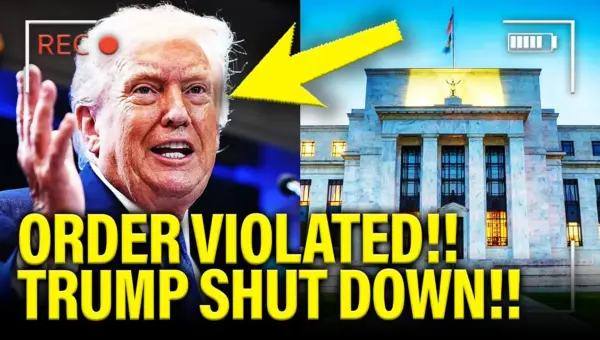
Donald Trump's continued pursuit of a defunct criminal probe against Fed Chair Jay Powell is backfiring, jeopardizing his own nominee for Fed chair. Senator Tom Tillis has vowed to block the confirmation until the baseless investigation is resolved, creating a significant hurdle for Trump's agenda. This situation underscores concerns about political interference in independent institutions.