AI Unleashes New Shockwaves Across Software Sector
New AI models like Claude are rapidly disrupting the software industry, challenging traditional business models and impacting stock valuations. Investors are shifting focus from software companies to the underlying AI infrastructure and cloud services powering these advancements. The trend suggests a significant revaluation of software assets as AI takes over human-driven workflows.


AI Agents Trigger Major Software Industry Shifts
Artificial intelligence is rapidly changing the software industry, with new AI tools systematically impacting various sectors. This trend has led to significant market reactions, with investors questioning the future value of traditional software companies. The speed and breadth of these changes suggest a fundamental shift is underway.
In recent months, AI advancements have directly affected major industries. In January, an AI legal plug-in led to a $300 billion drop in legal software stocks. February saw the release of Opus 4.6, which contributed to a trillion-dollar decline in the Software as a Service (SaaS) market.
Cybersecurity stocks experienced a downturn in March, even before a potentially dangerous AI model named Mythos was officially released. Most recently, the launch of Claude Design has impacted stocks like Adobe, Figma, and Wix.
Anthropic’s Claude Accelerates Disruption
Anthropic, an AI company, has been at the forefront of these market movements. Their AI models are evolving from simple assistants to tools that can produce tangible work. Claude Design, for instance, can generate usable design assets like landing pages or pitch decks in seconds, which can then be edited or exported.
While professional designers might view Claude Design as a basic tool, its market impact stems from a larger pattern. The AI is not necessarily replacing top-tier professionals immediately. Instead, it’s challenging the economic model of software companies that rely on per-seat licensing for human users.
The “SAS Apocalypse” and Shifting Business Models
The market’s reaction, termed the “SAS apocalypse,” reflects a core question: if AI can perform tasks within software, why do companies need so many expensive user licenses? This concern emerged after Claude Co-work was launched in January, offering AI capabilities across various business functions including HR, design, and financial analysis.
The subsequent introduction of Claude Code Security in February further intensified this concern. This AI can scan code for vulnerabilities and suggest fixes, directly impacting the cybersecurity sector. The market realized that AI agents capable of performing security tasks could reduce the need for extensive human teams and expensive consultants.
Mythos Leak and Design Tools Intensify Pressure
The leak of Claude Mythos in March, an advanced cybersecurity AI, caused further stock sell-offs. The model’s capabilities were so significant that Anthropic deemed it too dangerous for public release, yet its existence alone moved the market. This was followed by Project Glasswing in April, where advanced AI models were shared with major tech companies, revealing significant software exploits.
The launch of Claude Design on April 17th is the latest event in this rapid sequence. The market is reacting not to a single product’s current capabilities, but to a consistent timeline of AI advancements targeting different software categories. This rapid release cycle puts pressure on established software companies to adapt quickly.
Market Impact: What Investors Should Know
The core disruption is not about AI creating superior software products. Instead, AI is bypassing the need for human interaction within existing workflows. Tools like Claude Design don’t need to be better than Figma to impact its stock; they just need to handle the initial stages of design work.
This means that founders, product managers, and marketers who previously relied on design teams or multiple tools for initial drafts and mockups can now use AI. By absorbing the early stages of these workflows, AI tools can disrupt the pricing models of entire software categories. The same logic applies to cybersecurity, where AI can identify vulnerabilities and generate patches without needing extensive human oversight.
The Future of Software Pricing and Investment
Traditional SaaS business models, built on predictable per-seat revenue, are being challenged. While usage-based pricing might become more common with AI, it introduces complexity and uncertainty in costs. If software companies cannot adapt their pricing to the AI era, their market value could significantly diminish.
The disruption is not limited to one company. Google’s Stitch and OpenAI’s Codex represent similar efforts to own entire workflows through AI. These platforms aim to become the primary interface for work, routing tasks to various underlying tools and services while capturing more value.
Identifying Resilient Software Companies
Not all software companies are equally exposed. Those with repetitive, per-seat-based workflows in less regulated industries are most vulnerable. Examples include customer support, sales, project management, and basic design tasks.
Conversely, companies with deep proprietary data, strong regulatory compliance, critical real-world operations, or that act as essential “systems of record” are better positioned. These include areas like healthcare data, financial compliance, and advanced cybersecurity platforms. Even as AI evolves, these companies may see their platforms become more valuable as AI agents utilize them more frequently.
Investing in the AI Infrastructure Wave
The real opportunity for investors may lie in the infrastructure powering these AI advancements. As AI agents perform more complex tasks, the demand for computing power, memory, and cloud services increases dramatically.
Companies like Nvidia, which provides AI data center solutions, are seeing massive revenue growth driven by AI demand. Micron is crucial for memory, as AI models require faster and larger memory access for complex tasks. Cloud providers such as Amazon (AWS), Microsoft (Azure), and Google Cloud are also benefiting as they offer the necessary platforms and services for enterprises to build and deploy AI solutions without massive upfront investment.
The Shifting Investment Landscape
The trend suggests a move away from owning software companies solely based on their past growth or interface appeal. Instead, investors should focus on companies that benefit from the increased compute, data processing, and cloud services required by AI agents.
The next 257 days in 2026 will likely see AI continue to target various software categories. The crucial question for investors is whether to bet on the software companies being disrupted or the underlying infrastructure and platforms enabling this AI revolution. Companies like TSMC, ASML, and Broadcom are also critical players in manufacturing the advanced semiconductors and components needed for this AI build-out.
The disruption is not about AI killing software, but about AI redefining how software is used and monetized. The value is shifting from human interaction within software seats to the computational resources and infrastructure that power AI agents. This ongoing evolution presents a dynamic and potentially lucrative landscape for forward-thinking investors.
The market will continue to grapple with these questions as AI capabilities expand. Understanding the underlying economics and the flow of value in the AI era will be key to navigating this transformative period in the technology sector.
Source: Claude Just Killed Adobe Stock (These Stocks Are Next) (YouTube)

Related Articles

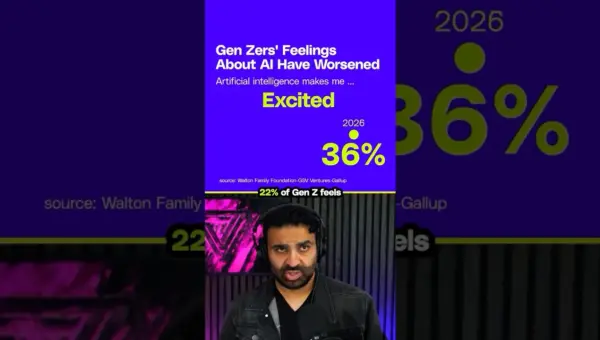
Gen Z’s AI Enthusiasm Dips Sharply
New data shows Gen Z's excitement for AI has sharply declined, with anxiety and anger on the rise. This contrasts with AI experts' high optimism about the technology's impact on jobs. Bridging this perception gap is crucial for AI's future.


Tech CEOs Lose Public Trust, Mirroring Healthcare Leaders
Tech leaders are losing public trust, drawing comparisons to healthcare CEOs. This shift stems from a feeling of exploitation and helplessness fueled by AI and perceived arrogance. Ultimately, product experience will reveal the truth about these companies.


Markets Rally as Panic Fades, Banks Set Upbeat Tone
Stock markets have reached new record highs as investor panic subsides, bolstered by strong bank earnings and improving economic data. Strategists believe the market has found its bottom, with recent positive news easing concerns. The ongoing impact of AI is seen more as an opportunity for efficiency and new job creation rather than widespread disruption.