Russian CEOs Criticize Putin’s Grip on Power
Russian business leaders and youth are expressing growing discontent with President Putin's leadership, citing economic woes and a disconnect from reality. The head of a chemical plant, Cherepovets Azot, directly criticized the Kremlin following a Ukrainian drone strike on his facility. This sentiment of pessimism about Russia's future is reportedly widespread among younger generations, who feel stifled by internet restrictions and economic hardship.

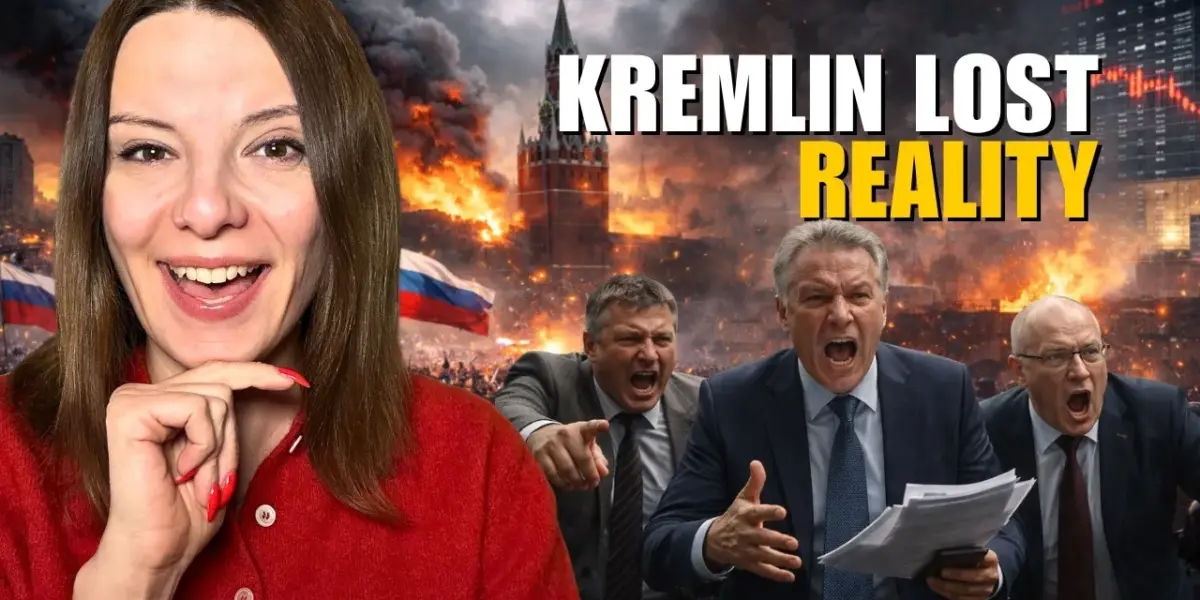
Russian Business Leaders Voice Dissent Over Kremlin’s Direction
A notable shift in sentiment appears to be brewing within Russia, with prominent business figures openly criticizing President Vladimir Putin’s leadership. This dissent comes amid ongoing Ukrainian drone strikes targeting Russian industrial sites. One such incident involved the Cherepovets Azot chemical plant, a major producer of ammonia and explosives, which was recently struck by Ukrainian drones.
Instead of solely blaming Ukrainian forces, the head of Cherepovets Azot, identified as Mr. Boglayev, used the occasion to condemn the Kremlin’s handling of the nation’s affairs. He spoke at length about the perceived degradation of the Russian Federation and the leadership’s disconnect from reality. This sentiment is reportedly shared by many other businessmen across the country.
Youth Express Pessimism About Russia’s Future
The dissatisfaction extends beyond business circles, reaching the younger generation. Conversations observed in various Russian cities reveal significant pessimism among young people regarding Russia’s future.
Many expressed uncertainty about the nation’s continued existence in the coming years. This outlook contrasts sharply with that of older generations, some of whom still harbor nostalgia for the Soviet Union and express more positive views.
The current mood suggests that a significant portion of proactive individuals, including businessmen and the youth, hold deeply negative views about the internal situation in Russia. They largely attribute these problems to Vladimir Putin’s nearly 26-year rule, suggesting that maintaining dynamism and relevance over such a long period is a significant challenge for any leader.
Cherepovets Azot Attack Highlights Broader Discontent
The attack on the Cherepovets Azot plant, which occurred around April 13th, caused significant damage to production facilities. While the plant is crucial for Russia’s war effort, its leader focused his criticism on the broader economic and political situation. He did not dwell on the lack of air defense or the Ukrainian attack itself, instead emphasizing a general degradation within the Russian Federation that he believes is impossible to conceal.
The fact that Mr. Boglayev has not been detained or faced repercussions, unlike some previous critics of the Kremlin, may indicate a growing tolerance, or perhaps an inability to silence, dissenting voices within the business community. This situation suggests that more journalists, politicians, and business leaders might feel emboldened to share similar opinions.
Putin’s Disconnect From Reality Alleged
A central theme emerging from these accounts is the accusation that President Putin is out of touch with the current reality and unwilling to acknowledge failures. The narrative suggests that by focusing on costly military operations, such as the destruction of Ukrainian infrastructure, and potentially ignoring domestic issues, the Kremlin believes it can mask underlying problems.
However, reports indicate that serious economic challenges, internet disruptions, rising taxes, struggling businesses, and visible damage from explosions are creating a sense of crisis among the Russian populace. These factors contribute to a feeling that the country is on unstable ground, a sentiment particularly felt by the youth and business owners.
Internet Restrictions Fuel Youth Discontent
Historically, Russian youth have been perceived as apolitical, a trait inherited from previous generations. The lack of a robust political and public discussion culture in Russia is seen as a significant factor. Unlike Ukraine, where diverse political views are openly discussed, Russia has struggled to foster such an environment, which some argue has historically enabled authoritarian rule.
Recent actions, such as the blocking of Telegram and the implementation of internet shutdowns, appear to have galvanized younger Russians. These measures, combined with other growing problems like business closures and travel restrictions, have heightened their pessimism. Many young people are now expressing a belief that it is impossible to turn Russia into a closed state like North Korea, despite perceived efforts by the leadership.
Calls for Dissolution and Regional Autonomy
The vastness and diversity of Russia are cited as reasons why replicating a North Korean model is unfeasible. Some individuals and groups, such as Viliam Osipov in Sakha and Rajana Dugar-De Ponte, advocate for the liberation of their regions. These movements suggest a desire for greater autonomy or independence following the potential dissolution of the current Kremlin regime.
This perspective suggests that when Putin’s control weakens, the dissolution of the Russian Federation could become a natural process. Many believe this process was interrupted in 1991, leaving regions like Tatarstan, Bashkortostan, and Siberia under central control. The current perceived instability, a stark contrast to the stability often associated with past regimes, is seen as unsustainable by younger generations.
Geopolitical Impact and Economic Warfare
From a Ukrainian perspective, the perceived weakness and miscalculations of the Russian leadership, particularly since February 2022, are seen as contributing factors to Russia’s current struggles. The targeting of Russian oil export infrastructure in March is highlighted as an effective strategy to cripple Russia’s war machine by impacting its economy.
The author expresses disappointment with decisions like the lifting of sanctions on Belarus by the White House, viewing them as counterproductive. Despite such geopolitical moves, Ukraine continues to develop strategies aimed at paralyzing Russia’s export capabilities. The inability of Russia to protect key sites, manage its economy, and allow open discussion is seen as evidence that collapse is inevitable, forcing a choice between the dissolution of the federation or the fall of the Kremlin regime.
The article concludes by emphasizing the importance of spreading truth and supporting Ukraine in its fight for freedom. The author encourages readers to share information and stand in solidarity with Ukraine.
Source: PUTIN DISCONNECTED FROM REALITY: BUSINESS CEOS SHOCKED Vlog 1384: War in Ukraine (YouTube)

Related Articles

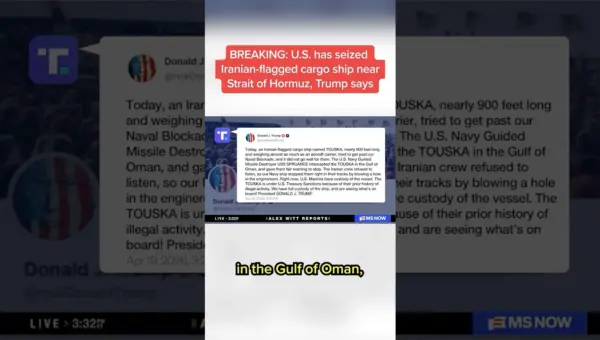
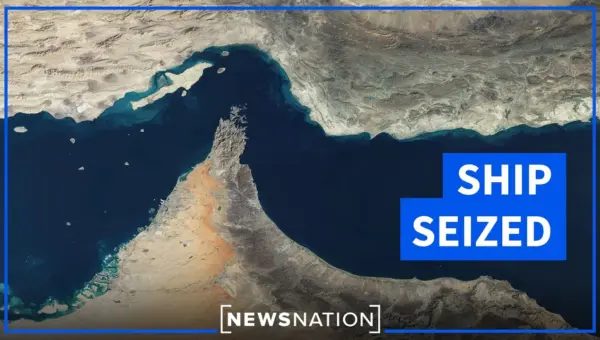
US Navy Seizes Iranian Ship Near Hormuz Strait
The U.S. Navy has seized an Iranian-flagged cargo ship near the critical Strait of Hormuz. Former President Donald Trump announced the interception on Truth Social, stating the vessel damaged its engine room while attempting to pass a blockade. The incident raises concerns about regional stability and global oil supply routes.
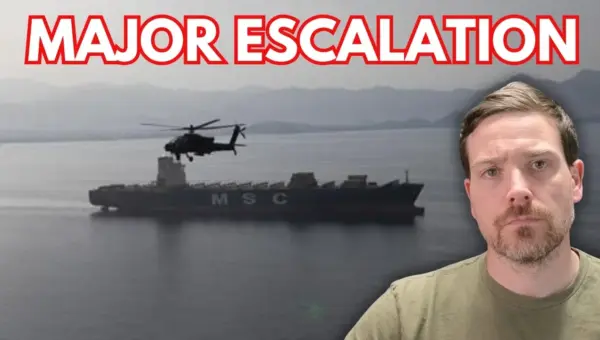
US Navy Seizes Iranian Ship, Igniting Tensions
The US Navy seized an Iranian cargo ship, the Tusca, in the Gulf of Oman, escalating tensions. This action occurred as peace talks seemed possible, but Iran's expected retaliation and the volatile situation in the Strait of Hormuz cast doubt on diplomatic progress.
Navy Seizes Ship, Tightens Grip on Iran’s Economy
The U.S. Navy has seized an Iranian-flagged cargo ship in the Gulf of Oman, with President Trump highlighting the action as a consequence of Iran's refusal to heed warnings. This move is part of a broader strategy of economic pressure, using a naval blockade to gain leverage over Iran.