Gerrymandering War: How Democrats Outmaneuver GOP
A Virginia court blocked a Democratic-favored congressional map, sparking debate on gerrymandering. Experts suggest Democrats are currently more successful in this practice. The discussion also covered widespread government bureaucracy and waste within the HHS.

Gerrymandering War: How Democrats Outmaneuver GOP
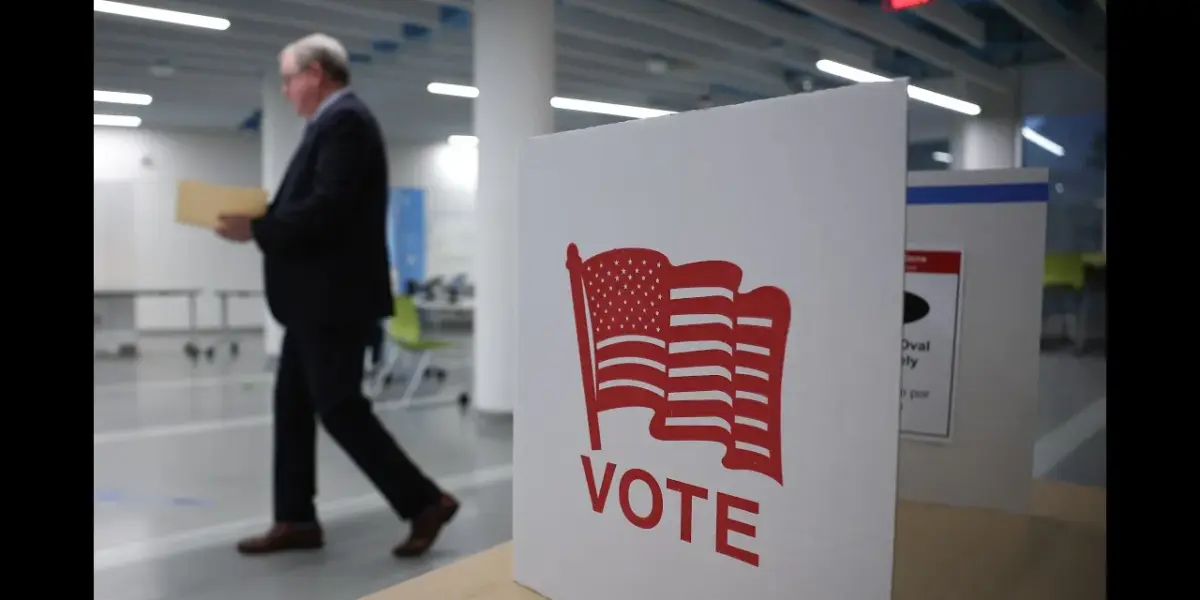
A recent court ruling in Virginia temporarily blocked a new congressional map, which was approved by voters but heavily favored Democrats. This decision highlights the ongoing battle over how political districts are drawn, a practice known as gerrymandering.
The Virginia judge called the new map unconstitutional. However, Democratic strategist Jason Palmer believes the state Supreme Court will likely overturn this ruling.
He points out that 12 states are redrawing maps mid-decade, a first. Palmer thinks the court will honor the vote, stating, “the people have spoken.”
Republican strategist Matt Klink agreed that the case might go to the Virginia Supreme Court. He finds it hard to believe the court would ignore a voter decision, no matter the map’s flaws. Klink noted that the referendum language was somewhat ambiguous, asking if the state constitution should be changed “to restore fairness.”
President Trump criticized the ballot language as deceitful, saying even he didn’t understand it. Many Republicans argue the wording was unclear.
However, Klink, drawing from his experience in California, believes voters weren’t truly confused. He stated that significant money was spent on the vote, and while the “yes” side didn’t get as many votes as the current governor, it was still enough for 51.3% of Virginians to approve it.
Klink added, “I’m a believer in elections and the people voted on this.” He feels it’s too late for Republicans to complain after the vote. Palmer, however, sees this as a fairness issue, especially after Republican-led redistricting battles in Texas. He acknowledges that gerrymandering has been a part of U.S. elections since the 1800s.
Palmer wishes districts were drawn based on where people actually live and form communities. He described current districts as misshapen, like “lobster-shaped” or oddly combined areas. “It is the reality of our politics,” he admitted, noting that increased polarization leads to more gerrymandering.
Democrats’ Ruthless Strategy
Palmer then made a strong claim: Democrats have been much more ruthless and successful in partisan gerrymandering. He cited the example of New England states having no Republican representatives despite a significant Republican voter base. Palmer also pointed to Virginia and California as current examples of this strategy.
He argued that Republicans face media backlash for blatant political moves. “But guess what? If you win, it’s very easily forgotten,” Palmer said.
He believes Democrats are currently far ahead in redistricting efforts, which could lead to a net loss of seats for Republicans in 2026. Without Republicans becoming more aggressive, he predicts continued losses.
Government Bloat and Waste
The discussion then shifted to government waste and bureaucracy, a topic with bipartisan agreement. The Trump administration has focused on reducing government bloat.
Health and Human Services Secretary Robert F. Kennedy Jr. testified about plans to cut waste within his department.
Kennedy highlighted the extensive duplication within HHS. He mentioned nine separate offices for women’s health, eight for minority health, and numerous programs for issues like HIV, behavioral health, and maternal health. He also pointed to 41 Chief Information Officers and 100 communications offices, none of which communicate with each other.
Palmer agreed that government bloat is a serious problem. “We have way too much government bureaucracy and we do need to slim our government down,” he stated.
He cited the national debt, now at $37 trillion, as unacceptable. However, Palmer expressed concern that a restructuring under Kennedy might ignore scientific progress, like the success of vaccines.
Klink also agreed on the need to reduce government waste. He stated, “A healthy America is a strong America.” He doesn’t oppose funding, but wants the money to be spent wisely. He noted an argument where a program costing $73 million helped 300,000 taxpayers, questioning if that was a good investment.
Klink believes that cutting federal employees, as the Trump administration has done, is only part of the solution. “The challenge is that each one of these programs has a constituency somewhere,” he explained.
He called it a “Washington D.C. Swamp problem” that requires an end to Congress’s “addiction to pork.”
Palmer cautioned that cutting HHS is complex because it includes popular programs like Medicare and Medicaid. While Medicaid needs reform, he believes cutting Medicare is unlikely. He also noted that only 6% of federal spending goes to employees, suggesting the real waste lies elsewhere, like in Medicaid and defense spending.
Why This Matters
The debate over gerrymandering and government waste touches on fundamental aspects of American democracy and governance. Gerrymandering, the practice of drawing electoral districts to favor one party, has a long history in the U.S. It directly impacts representation, potentially leading to outcomes where the party controlling the map gains more seats than their vote share would suggest. This can disenfranchise voters and lead to less competitive elections.
The current situation in Virginia, where a voter-approved map is being challenged in court, exemplifies this tension. It raises questions about the power of the judiciary versus the will of the voters and the role of state constitutions in shaping electoral maps. The differing strategies employed by both parties highlight a growing trend of aggressive political maneuvering in redistricting.
Similarly, the discussion on government bloat and waste at the Department of Health and Human Services is crucial for fiscal responsibility. The sheer scale of government spending and the complexity of its operations mean that identifying and eliminating inefficiencies is a constant challenge. The bipartisan agreement on the existence of waste, contrasted with disagreements on how to fix it, shows the difficulty in enacting meaningful reform.
Implications and Future Outlook
The aggressive gerrymandering tactics, particularly those attributed to Democrats, suggest a strategic advantage for the party in upcoming election cycles. Republicans face the challenge of adapting their strategies to counter this. The long-term implication could be continued partisan advantage in representation, potentially exacerbating political polarization.
On the issue of government waste, the focus on HHS, the largest federal department, indicates a broader concern about bureaucratic inefficiency across government agencies. Future efforts to cut waste will likely face political hurdles, as many programs have established constituencies and congressional support. The debate over how to spend taxpayer money efficiently will continue to be a major issue in American politics.
Historical Context
Gerrymandering is not a new phenomenon. The term originated in 1812 when Massachusetts Governor Elbridge Gerry signed a bill to create a partisan district that resembled a salamander.
Since then, it has been a recurring tool used by political parties to gain an advantage in elections. The practice has evolved with technology and data analysis, allowing for more precise and effective manipulation of district boundaries.
The issue of government bureaucracy and spending has also been a consistent theme throughout American history. Debates over the size and scope of the federal government, as well as the efficient use of taxpayer funds, have been ongoing since the nation’s founding. Different administrations have approached these issues with varying degrees of success and political will.
The current discussions reflect these historical patterns, with modern tools and political dynamics shaping how these age-old issues play out. The upcoming election cycles and budget negotiations will likely see these debates intensify.
The next redistricting cycle after the 2030 census will be another critical period for gerrymandering battles.
Source: Gerrymandering Has Been Going on Since 1800s; Democrats Have Been Far More Ruthless, Successful, Ove (YouTube)

Related Articles


AOC Hits Back: GOP Cries Foul Over Redistricting They Started
Alexandria Ocasio-Cortez pushed back against Republican complaints about Virginia's redistricting. She argued that Republicans have a history of partisan gerrymandering and are only upset because Democrats are now fighting back. The debate highlights the ongoing struggle for fair representation in elections.


Republicans Cry Foul on Redistricting They Started
Donald Trump's claims of a "rigged election" in Virginia reveal a Republican party unwilling to accept electoral losses when they don't benefit. This analysis argues that Democrats are now fighting back against partisan gerrymandering, a tactic long used by Republicans, to level the playing field and ensure fairer representation.

Democrats Fight Back Against Gerrymandering, Warn Florida Governor
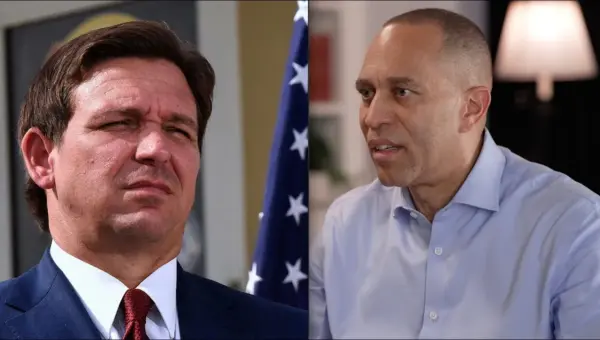
Democrats are signaling a new, aggressive strategy against gerrymandering, warning Florida Governor Ron DeSantis against redrawing congressional maps. Following recent victories, the party is prepared to fight back harder than ever to ensure fair elections.