Author Kaveh Akbar Explores Identity and Loss in ‘Martyr!’
Kaveh Akbar's acclaimed novel 'Martyr!' delves into the complex identity of Cyrus, an Iranian-American grappling with addiction, sexuality, and his heritage. The book uses lyrical prose to explore themes of death, loss, and the human capacity for empathy, drawing parallels to real-world conflicts. Akbar emphasizes art's role in bridging cultural divides and humanizing the impact of war.

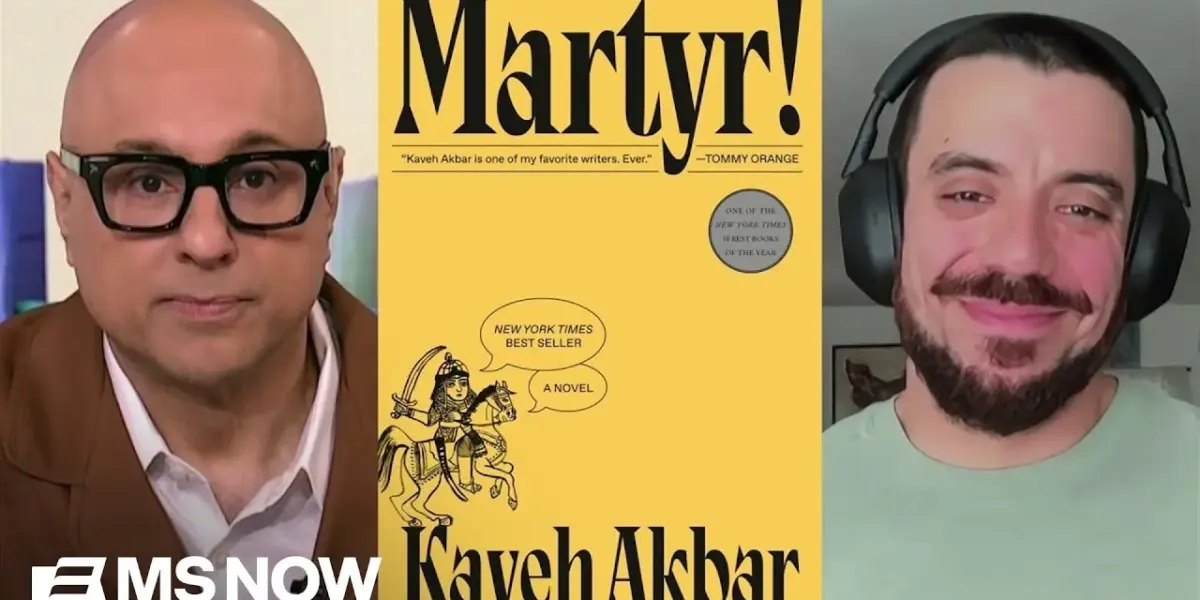
Kaveh Akbar’s Novel ‘Martyr!’ Becomes a Must-Read
Kaveh Akbar’s first novel, ‘Martyr!’, is quickly becoming a cultural sensation. It has been recognized as a finalist for the National Book Award and a bestseller from The New York Times.
The book opens with a moment of crisis for its main character, Cyrus, who wonders if divine intervention or simply bad wiring caused a light bulb to flicker. This moment sets the stage for his deep search for meaning and a chance to start over.
Cyrus, who moved to the U.S. from Iran as a baby with his father, is a young man trying to understand his dual identity as both Iranian and American. He is a complex character, described as verbose and seeking purpose.
The novel digs into his struggles with addiction, his sexuality, and a deep sense of depression. The author, Kaveh Akbar, is a poet, and this background shines through in ‘Martyr!’, which is filled with lyrical, funny, and dreamlike passages that masterfully explore emotion.
Themes of Death and Identity in ‘Martyr!’
The novel’s title, ‘Martyr!’, hints at its exploration of death and mortality. These themes are central to Cyrus’s life story. He never knew his mother, who died shortly after his birth when Iran Air Flight 655 was accidentally shot down by a U.S. warship over the Persian Gulf.
This tragic event, a real historical incident, deeply impacts Cyrus. His father, an industrial chicken farmer, has also passed away, leaving Cyrus to navigate his life alone.
“You want to be a martyr?” Cyrus’s sponsor asks him. “I guess. Yeah, actually something like that.”
The book has gained a new, somber relevance with the recent U.S. and Israeli actions involving Iran. ‘Martyr!’ is now recommended reading for those seeking to understand the suffering of Iranians, especially in the context of the ongoing war. It offers a way for Americans to connect with their Iranian counterparts, who are experiencing profound hardship through no fault of their own.
Finding Meaning in Shared Humanity
Cyrus discovers a word, ‘sonder,’ on a website, which describes the realization that every random person encountered is living a life as vivid and complex as one’s own. This concept resonates deeply with the novel’s themes, highlighting the shared human experience. Akbar emphasizes that naming something, like ‘sonder,’ does not diminish its impact but can be a starting point for understanding.
In his conversation with host Ali Velshi, Akbar discussed the similarities between Americans and Iranians, noting that both groups deeply love their families and desire safety and happiness for their children. He stressed the importance of recognizing this fundamental sameness, especially in times of conflict. The inability to feel the reality of others’ suffering, Akbar suggested, is a human tendency that art can help to overcome.
Art as a Bridge in Times of Conflict
Akbar highlighted how abstract casualty figures can dehumanize conflict, making it difficult to grasp the true horror. He pointed to the Iran Air Flight 655 incident, a major event in Iranian memory but largely forgotten in the U.S., as an example.
He stated that art and narrative can bring back the human element, showing the profound loss of individual lives. By focusing on one person’s story, like Cyrus’s, the stakes of conflict become clearer and more tangible.
The author explained that art can help bridge the gap in understanding between different cultures and nations. He believes that narratives can return a sense of embodied reality to the suffering caused by war, making it more relatable. This is especially important when populations face immense loss, like the displacement of a million people or the bombing of civilian areas.
The Immigrant Experience and Identity
A significant part of ‘Martyr!’ also explores the immigrant experience, reflecting Akbar’s own journey. Cyrus grapples with being born in Iran and raised in the American Midwest, facing the challenges of fitting in and understanding where differences and similarities matter. Akbar shared his personal experience of moving often and not encountering many other Iranians or Muslims in the small towns where he grew up.
He found solace and a connection to his other self, the one still living in Tehran, through books. This allowed him to discover lives that mirrored aspects of his identity, bridging the gap between his American experiences and his Iranian heritage. The novel offers a rich mix of threads, inviting readers to explore these complex themes further.
Kaveh Akbar, a poet, professor, and author, joined the Velshi Banned Book Club to discuss his remarkable novel, ‘Martyr!’. The conversation highlighted the book’s power to connect readers to universal human experiences and to foster understanding across cultural divides, especially in the face of global conflict.
Source: Velshi Banned Book Club: ‘Martyr!’ by Kaveh Akbar (YouTube)

Related Articles


Sex vs. Gender: The Public’s Confused Debate
A recent online discussion revealed widespread confusion surrounding the terms 'sex' and 'gender.' While sex is biological, gender is a social concept based on presentation. This distinction is crucial for understanding transgender identities and building a more inclusive society.


Iranian-American Comedian Uses Humor to Bridge Divides
Iranian-American comedian Max Amini is using his sold-out shows and growing platform to foster understanding amidst the ongoing war with Iran. He recently made history headlining Madison Square Garden, where he broke his usual silence on politics to address the protests within Iran. Amini aims to bridge cultural divides and challenge misconceptions about his heritage through humor and authentic storytelling.


Stars Slam “Wigger” Trend: “Just Be You!”
Black celebrities are speaking out against the trend of white people adopting Black slang and mannerisms, often referred to as "wigger" behavior. Stars emphasize authenticity and urge individuals to embrace their own identities rather than imitating others. The discussion also covered the problematic use of the n-word and the importance of cultural respect.