Artemis II Crew Nears Earth After Lunar Flyby Mission
NASA provided a detailed update on the Artemis II mission as the Orion spacecraft and its four-person crew near Earth after completing their journey around the Moon. Astronauts conducted final experiments and system checks, while mission control reviewed preparations for re-entry and splashdown. A joint NASA-military team is on standby for the safe recovery of the crew and capsule.

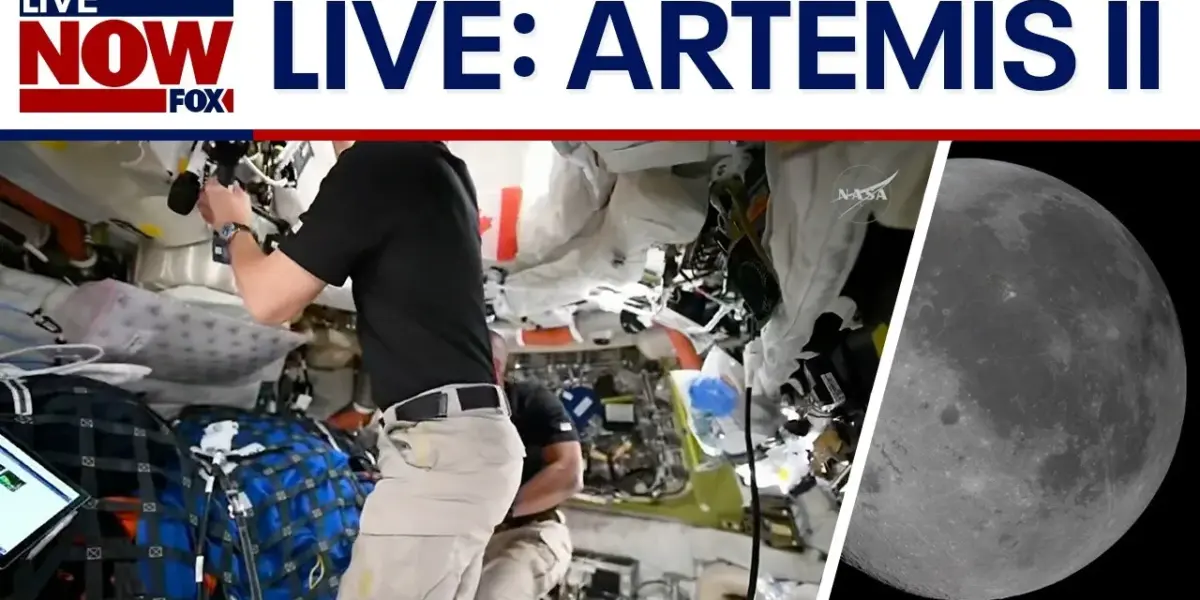
NASA Provides Artemis II Mission Update as Crew Returns
NASA officials shared critical updates on the Artemis II mission, detailing the final days of the crew’s journey around the Moon and their preparations for a return to Earth. The four astronauts aboard the Orion spacecraft are nearing the end of their historic test flight, which marks the first time humans have traveled beyond lunar orbit in over 50 years.
Astronauts Complete Final Experiments
As the Artemis II crew approached the end of their mission, they focused on completing crucial science and system checks. Astronauts Reed Wiseman and Christina Koch conducted tests using an orthostatic intolerance garment. This specialized suit applies compression to the lower body, helping astronauts adjust to standing after extended periods in microgravity, a common challenge that can cause dizziness.
Canadian Space Agency astronaut Jeremy Hansen also participated in exercise routines. These activities are vital for maintaining crew health during long-duration spaceflight. The mission control team in Houston monitored these operations closely, ensuring all systems functioned as expected.
Orion Spacecraft Performance and Data Collection
Throughout the mission, the Orion spacecraft has performed exceptionally well. Mission leaders highlighted the successful collection of imagery, including a stunning photograph of the Milky Way taken by the crew, free from Earth’s atmospheric interference. This visual data provides a unique perspective on our galaxy.
Engineers are analyzing extensive data from the mission’s science experiments, such as the immune biomarker experiment and standard measure activities. These studies aim to understand how the deep space environment affects human health, providing vital information for future lunar bases and journeys to Mars. This type of health data was not collected during the Apollo missions.
Preparing for Re-entry and Splashdown
The final phase of the mission involves rigorous preparations for re-entry into Earth’s atmosphere. Mission control is carefully planning the sequence of events, including the separation of the crew module from the service module approximately 20 minutes before entry interface. A final maneuver, the crew module raise burn, may be performed to fine-tune the spacecraft’s trajectory.
The crew will don their launch and entry suits and seal their visors as they prepare for the intense re-entry phase. This process includes navigating through a six-minute communications blackout period caused by plasma buildup around the spacecraft. Following blackout, drogue and main parachutes will deploy to slow the Orion capsule for a controlled splashdown in the Pacific Ocean.
Recovery Operations Underway
A joint NASA and U.S. military team, stationed aboard the USS John P. Murtha, is ready to execute the recovery operations. Divers will assess the capsule’s safety after splashdown before assisting the crew out onto an inflatable raft, known as the “front porch.” The Orion capsule will then be towed to the recovery ship.
Navy helicopters will transport the astronauts to the medical bay on the ship for immediate post-flight checkups. The entire recovery process, from splashdown to the crew reaching the medical bay, is expected to take less than two hours. The recovery team is confident in their procedures, building on the successful recovery of the uncrewed Artemis I mission.
Lessons Learned and Future Missions
Artemis II is a critical test flight, and NASA is learning valuable lessons that will inform future missions, including Artemis III. While some planned demonstrations, like parts of the radiation shielding test, were modified to optimize time for entry preparations, key objectives were still met. For example, the airflow through suit umbilicals for potential shelter scenarios was successfully tested.
Officials confirmed that the Orion spacecraft systems are healthy and performing nominally, with no major concerns identified from external inspections of the crew and service modules. Data collected, including a record 122 gigabytes downloaded in a single day via the optical communication system, is crucial for refining spacecraft design and operational procedures for missions to the Moon and beyond.
Looking Ahead: Splashdown Imminent
The Artemis II crew is on track for splashdown, bringing an end to this foundational mission. The successful completion of this flight test will enable future Artemis missions, including the return of humans to the lunar surface and eventual journeys to Mars. All eyes will be on the Pacific Ocean as the Orion capsule makes its final descent.
Source: LIVE SOON: NASA update on Artemis II mission as crew makes return to Earth (YouTube)

Related Articles


Artemis 2 Mission: Billions Fund Moon Journey, Toilet Costs Millions
The Artemis 2 mission has sent four astronauts further from Earth than ever before, with estimated launch costs exceeding $4 billion. This includes a $23 million titanium toilet, which the crew successfully repaired after a minor issue. The program, part of NASA's larger lunar exploration plan started in 2017, has already cost $93 billion.


NASA Shares Stunning Far Side Moon Photos From Artemis II
NASA has released stunning new photos of the moon's far side captured by the Artemis II crew. These historic images, taken during the first human flyby of the moon's entire far side, echo the impact of past lunar missions. The mission highlights the value of public investment in scientific discovery and technological advancement.

NASA’s Orion Captures Stunning New Moon Photos
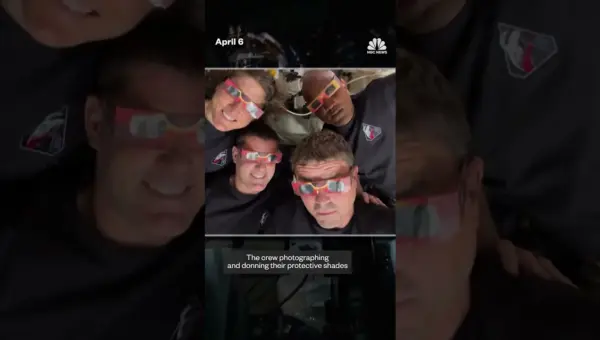
NASA's Orion spacecraft has returned spectacular new photos from its lunar fly-by, revealing never-before-seen details of craters and a distant view of Earth. The crew also witnessed a 53-minute solar eclipse. They are now preparing for a splashdown off the coast of San Diego on Friday.