Professors Turn to Oral Exams to Combat AI Cheating
Cornell University professor Chris Schafer is using oral exams to combat AI cheating. Students submit problem sets but are then tested verbally on their work. This method aims to ensure students truly understand the material and provides valuable one-on-one feedback.


Professors Seek New Ways to Test Students Amidst AI Rise
As artificial intelligence, or AI, becomes more advanced, some college professors are changing how they test students. Instead of traditional written tests, some are bringing back oral exams. This method aims to make sure students truly understand the material and are not just using AI to get answers.
Cornell Professor Switches to Oral Exams
Chris Schafer, a professor of biomedical engineering at Cornell University, is one such educator. He recently started requiring his students to take oral exams.
Schafer explained that this change became necessary after seeing how well AI could solve the complex problems he assigned. He found that AI could produce almost perfect answers to his take-home problem sets.
“This is where they really learn how to work on hard and difficult problems. And ever since the release of generative AI, I’ve been giving our problem sets to generative AI each year. And it was in August of 2025 that generative AI had near perfect solutions to the problems and to these questions.”
Chris Schafer, Cornell University Professor
How Oral Exams Work in Schafer’s Class
Professor Schafer still gives his students problem sets to work on at home and submit. However, these submitted solutions are no longer graded.
Instead, students must schedule a one-on-one oral exam with a teaching staff member after submitting their work. During this exam, students are asked to explain their choices in solving a problem or answer conceptual questions about the course topics.
The teaching staff member evaluates the student’s understanding and ability to explain their reasoning during this conversation. This process helps ensure that the work submitted reflects the student’s own knowledge and effort.
Impact on Student Performance and Learning
Schafer noted that student performance on final exams has remained the same since the switch to oral exams. He believes this shows that the new testing method does not hurt academic achievement.
The oral exams also offer a valuable chance for personalized feedback. Each student has a 20 to 30-minute conversation about their understanding six times per semester.
This structured interaction allows professors to discuss how students are learning and applying the course material. It provides a deeper insight into each student’s grasp of the subject matter than written assignments alone might offer.
Student and Staff Reactions
Professor Schafer initially worried that students might be nervous about the oral exams. However, his fears were largely unfounded. While some students may have felt anxious for the first exam, by the end of the class, both students and the teaching staff found the new method to be a positive experience.
This approach not only helps combat the misuse of AI but also encourages better communication and deeper learning. It highlights a growing effort within academia to adapt traditional teaching methods to meet the challenges of new technologies.
The Future of Testing in the Age of AI
As AI continues to evolve, educators worldwide are exploring various strategies to maintain academic integrity. Oral exams are one method gaining traction, but other approaches may also emerge. Universities and professors are tasked with finding effective ways to assess student learning that AI cannot easily replicate.
The conversation around AI in education is ongoing. Institutions will likely continue to adapt their policies and assessment methods to ensure a fair and meaningful learning experience for all students. The focus remains on fostering genuine understanding and critical thinking skills.
Source: College professors turn to oral exams to combat AI (YouTube)

Related Articles


AI, Oil Shocks, and Tariffs Fuel 2026 Investment Opportunities
Major economic shifts in 2026, driven by AI advancements, Middle East conflicts impacting oil prices, and new tariffs, are creating significant investment opportunities. Experts highlight AI's impact on jobs, surging energy demands, critical resource strains like helium, and the traditional appeal of real estate and gold. A strategy of consistent buying during market downturns is advised for long-term investors.


Education Key to Tackling Obesity Crisis, Says Nutritionist
Nutritionist Monica Price argues that education, not just restrictions, is key to tackling obesity in towns like Ebbw Vale. She believes current government strategies are failing by not equipping people with essential cooking skills and understanding of nutrition. Price emphasizes that informed choices, rather than forced diets, are crucial for long-term health improvements.

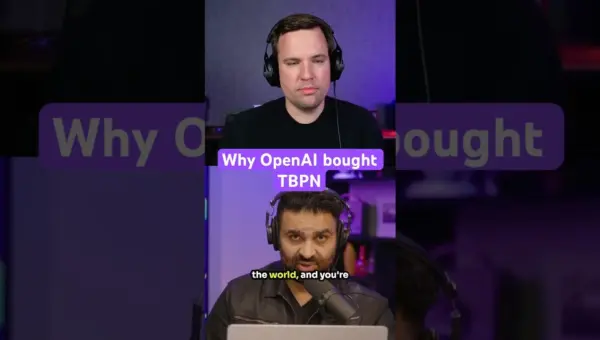
OpenAI Buys Tech Podcast Network to Boost AI Chat
OpenAI has acquired the Tech Brothers Podcast Network (TBPN) in a move to shape public conversation around AI. The company aims to foster constructive dialogue, though critics argue that product quality, not just marketing, is key to public acceptance.