Artemis II Crew Shares Historic Moon Journey Views
The Artemis II crew has conducted the farthest interview in history from the Orion capsule, sharing their awe-inspiring views between the Earth and Moon. They described the unique perspective of Earth in eclipse and the Moon in daylight, highlighting the mission's historic significance and the challenges overcome. This journey is a crucial test for future lunar exploration.

Artemis II Crew Shares Historic Moon Journey Views
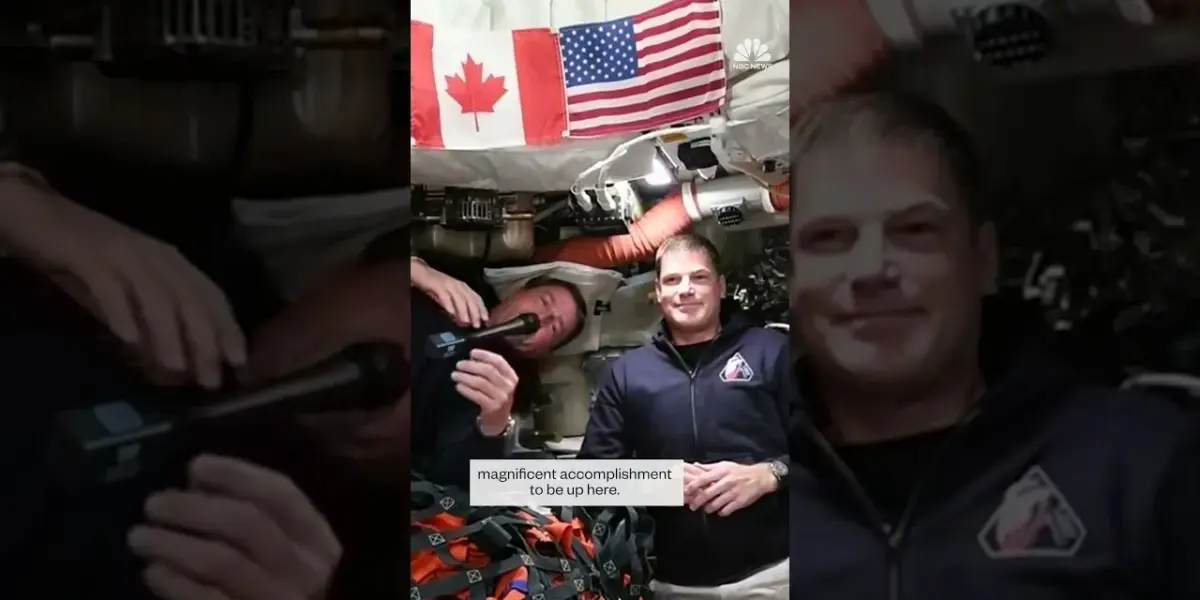
The four astronauts of the Artemis II mission have spoken with NBC News from the Orion capsule, marking the farthest interview ever conducted. This historic conversation offers a rare glimpse into the experiences of humans traveling farther from Earth than any have in over 50 years. The crew shared their awe and the profound challenges of their lunar voyage, emphasizing the dedication of the teams supporting them from the ground.
Commander Reid Wiseman, Pilot Norman Thagard, and Mission Specialists Christina Koch and Victor Glover are currently on a mission that has taken them beyond the Moon. They are the first humans to journey into deep space since the Apollo era concluded in 1972. This mission is a crucial test flight for future lunar exploration and potential Mars missions.
A View Unseen for Decades
Astronauts described the view from their capsule as simply unbelievable. They are positioned between the Earth and the Moon, a unique vantage point not experienced by humans since the Apollo 17 mission. This specific location offers a spectacular sight: the Earth appears almost fully eclipsed, while the Moon is bathed in nearly complete daylight.
“It is unbelievable that we in 1972 just being up here and seeing how difficult this is and how hard the team is working,” one crew member shared, reflecting on the historical significance and the effort involved. The vastness of space and the celestial bodies viewed from their unique position are described as truly inspiring. The slight echo on their communication was noted, with efforts made to minimize it during their conversation.
The Significance of Artemis II
The Artemis program aims to return humans to the Moon and establish a sustainable presence there. Artemis II is a critical step in this ambitious plan.
It is testing the Orion spacecraft’s life support systems, navigation, and communication capabilities in the harsh environment of deep space. The success of this mission is vital for enabling future lunar landings and scientific research.
This mission’s crew is comprised of experienced astronauts, each bringing unique skills to the journey. Their ability to live and work in space for an extended period, far from Earth, is being closely monitored. The data gathered from Artemis II will inform the design and operation of subsequent missions, including Artemis III, which plans to land astronauts near the Moon’s south pole.
Challenges and Teamwork
The journey is not without its difficulties, as acknowledged by the crew. Traveling so far from Earth presents significant engineering and physiological challenges.
The astronauts highlighted the immense effort and hard work of the ground support teams. These teams are responsible for monitoring the spacecraft, managing mission operations, and ensuring the crew’s safety at every stage.
The collaboration between the astronauts in space and the personnel on Earth is a cornerstone of space exploration. This mission highlights the complex coordination required for such endeavors. The astronauts’ ability to conduct this interview from such a distance is proof of advancements in communication technology and mission planning.
Looking Ahead
The information and experiences gained from this voyage will be invaluable. They will directly influence the next steps in NASA’s lunar exploration goals and the broader objective of human spaceflight beyond low Earth orbit.
As the crew continues their journey, the world watches, inspired by their courage and the ongoing pursuit of knowledge. The data collected and the human experience shared will shape the future of space exploration for generations to come.
Source: Artemis II crew speaks with NBC News from Orion capsule (YouTube)

Related Articles

Artemis II Mission Soars: Updates on Crew, Systems, and Lunar Flyby
NASA's Artemis II mission is making significant progress, with the Orion spacecraft's systems performing nominally. Officials provided updates on the crew's well-being, ongoing system checks, and preparation for the upcoming lunar flyby. The mission continues to gather valuable data for future lunar exploration.
NASA’s Orion Spaceship Heads to Moon After Engine Burn
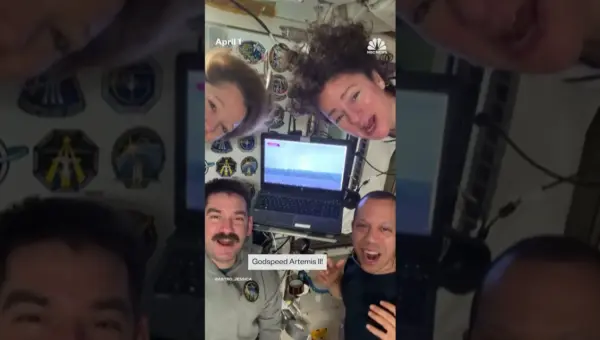
NASA's Orion spacecraft is now en route to the Moon after a successful trans-lunar injection burn. The four astronauts aboard are undertaking a 4-day journey, covering 234,000 miles at high speed. This follows a widely celebrated Artemis launch, though a minor water storage precaution was issued for the crew.


Aspiring Astronaut Shares Awe of Artemis II Launch Moment
Aspiring astronaut Adrian described the Artemis II launch as an incredible sight, emphasizing the human emotion witnessed. The mission represents a significant step in NASA's program to return humans to the Moon and inspire future generations of explorers.