Middle East War Explodes: Iran, Allies Strike Israel, US Bases
The Middle East war has dramatically escalated as Iran, Hezbollah, and allied forces launch widespread attacks on Israel and U.S. bases. The conflict, now in its third day, has seen a significant rise in casualties, regional infrastructure disruptions, and divided global reactions following the reported death of Iran's Supreme Leader.

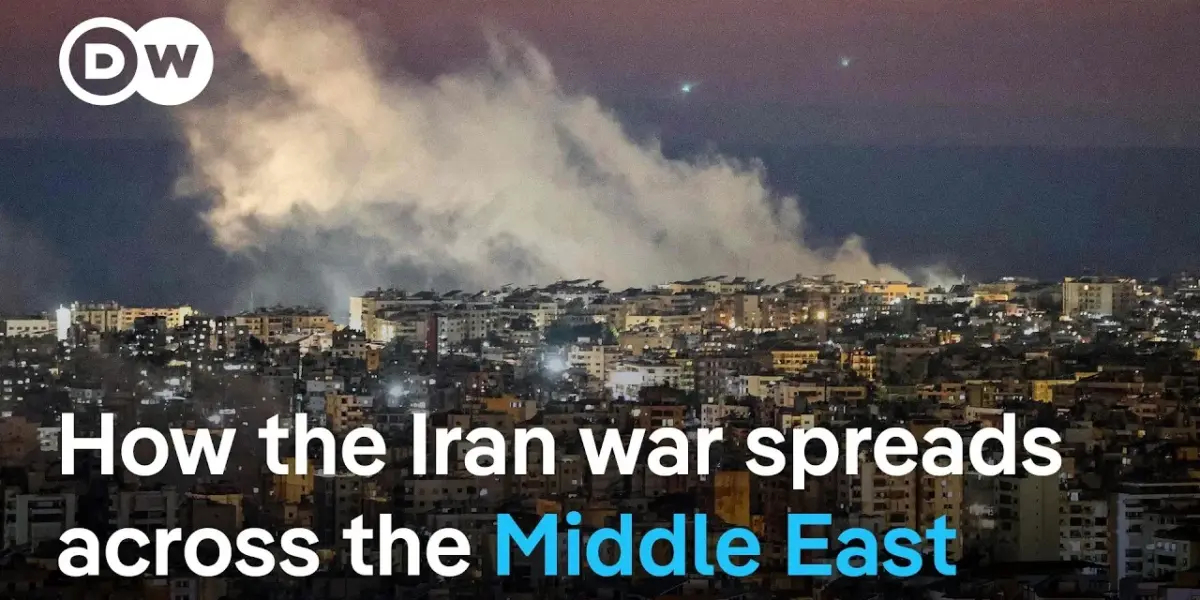
Regional Conflict Escalates Dramatically as Iran and Allies Launch Widespread Attacks
The long-simmering tensions in the Middle East have erupted into a full-blown regional conflict, with Iran and its allied forces launching coordinated strikes against Israel and U.S. bases across multiple neighboring countries. The escalating hostilities, now in their third day, have drawn in key players like Hezbollah, significantly widening the scope of the war and raising fears of a complete regional conflagration.
Hezbollah Joins the Fray, Lebanon Declares Military Activities Illegal
Overnight, the Lebanon-based militia Hezbollah launched cross-border attacks into Israel, marking a significant escalation. This move has been met with strong criticism from the Lebanese government, which has declared all of Hezbollah’s military activities illegal in a remarkable and unprecedented step. The government’s decision aims to distance Lebanon from the conflict and curb potential Israeli retaliation, while also seeking to protect state institutions and infrastructure.
“The government is seeking to curb Israel’s response and ongoing hostilities in Lebanon while also working to protect state institutions and public infrastructure like the airport and other strategic facilities from Israeli bombardment,” explained correspondent Muhammad Fet from Beirut. He added that this designation effectively means the party’s military wing and militants are now considered outlaws, with clear orders issued to the armed forces to take necessary measures, including confiscating weapons and arresting those involved in sending rockets towards Israel.
Despite the government’s stance, the practical implications for Hezbollah remain uncertain. “Hezbollah is organically connected to Iran’s Revolutionary Guard. It is equipped and funded by Iran and adheres to a very strict religious ideology,” Fet noted. Previous attempts by the Lebanese state to persuade Hezbollah to lay down its weapons have failed, and with Iran itself under attack, the likelihood of disarmament through peaceful means is considered virtually zero.
Israel and US Intensify Strikes Amidst Growing Casualties
In response to the widespread attacks, the United States and Israel have intensified their own bombardments. U.S. President Trump warned that the campaign could last for several more weeks. In Israel, air raid sirens have become a constant reminder of the ongoing threat, with millions of people across the region living under constant alert.
Tanya Kramer, reporting from Jerusalem, described the atmosphere as “tense, quiet.” She noted that even Jerusalem, which was historically less of a target, has experienced frequent missile attacks. “People get these alarms on their phones and then they have to go next to a shelter. So this is a bit the rhythm right now,” Kramer said. Schools remain closed, and only essential workplaces are permitted to operate, reflecting the pervasive impact of the conflict on daily life.
The Israeli military has mobilized over 100,000 reservists to reinforce its borders with Lebanon, Syria, and to prepare for potential developments on multiple fronts. The conflict has not been confined to border areas; Israel has continued striking targets within Iran, including in its capital, Tehran. Casualties are mounting, with reports of at least 19 people injured in one incident in Be’er Sheva, a city in southern Israel, after a missile was not intercepted.
Regional Infrastructure and Economy Under Strain
The widening war is also having a significant impact on regional infrastructure and the global economy. In Saudi Arabia, an oil refinery experienced a partial shutdown following a drone strike, leading to a sharp surge in oil prices as traders assessed the disruptions.
Kuwait reported an incident where three American fighter jets were mistakenly shot down by friendly fire during an Iranian attack, although all crew members were safely recovered. Smoke was also observed over the U.S. embassy in Kuwait. Furthermore, Iranian drones reportedly reached a British Air Force base in Cyprus, which the UK has authorized the U.S. to use for defensive strikes against Iranian missile sites.
Mixed Reactions to Iran’s Supreme Leader’s Demise
The conflict has been further complicated by the killing of Ayatollah Ali Khamenei, Iran’s Supreme Leader, in the U.S. strikes. The news has elicited sharply divided reactions globally. Many exiled Iranians are celebrating what they see as the potential end of a tyrannical theocracy, while others, particularly Shia Muslims, are expressing outrage.
Protests erupted in several countries. In Iraq’s city of Basra, demonstrators chanted “Death to Israel.” In Baghdad, police used tear gas to disperse crowds attempting to enter the U.S. embassy. Pakistan also witnessed violent protests, particularly in Karachi, where dozens were killed or injured. Conversely, in the United States and Europe, many Iranians celebrated the strikes and the demise of the Iranian regime, expressing gratitude to President Trump.
Expert Analysis: A Decapitation Strike, But the Apparatus Remains
Benam Ben Talibu, Senior Iran Program Director at the Foundation for Defense of Democracies, described the strike on Khamenei as a “critical move” and a “successful decapitation operation.” However, he cautioned that the Islamic Republic’s decentralized defense doctrine means the fight continues.
“This should have forced minds even during the 12-day war because it was a highly dubious claim that an 86-year-old theocrat in a bunker with no electronic communications was administering the day-to-day targeting of the war,” Ben Talibu stated. He emphasized that while the removal of the “head of the snake” provides significant relief, the underlying apparatus, including the military, security services, and decision-making structures, must be addressed to prevent the regime from continuing its actions.
Ben Talibu also highlighted the internal situation in Iran, noting that despite government attempts to portray unity, widespread happiness and celebrations have been observed following Khamenei’s death. He pointed to the decade-long protests within Iran, where citizens have consistently called for systemic change. He suggested that political leadership for the revolutionaries might emerge from outside the country, and urged Washington and Jerusalem to support the creation of a post-Islamic Republic Iran.
Regarding potential U.S. strategies, Ben Talibu cautioned against applying a Venezuela-like blueprint to Iran. “Venezuela is not Iran and Iran is not Venezuela,” he asserted. He argued that Iran’s society, state, and military capacities are vastly different. The Iranian state did not collapse with the decapitation of its leader, and its society has a history of mass protests and facing severe repression, unlike Venezuela. He stressed that true peace and stability in Iran would require systemic change, not just a reshuffling of elites.
Looking Ahead: The Path to De-escalation or Wider War?
As the conflict intensifies, the world watches anxiously. The coming days will be critical in determining whether diplomatic efforts can de-escalate the situation or if the region plunges further into widespread war. The focus will remain on the actions of Iran, Israel, the United States, and the complex web of alliances and proxies that define the Middle East’s volatile landscape.
Source: Iran war spills over into wider Middle East | DW News (YouTube)

Related Articles
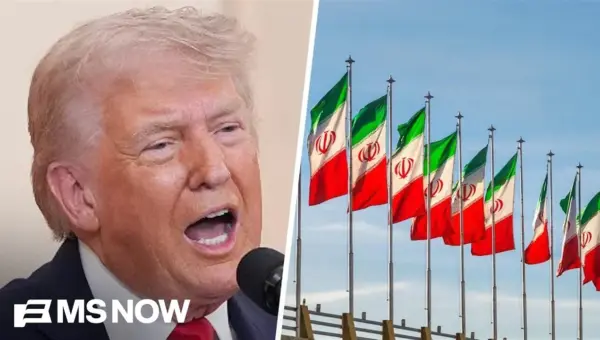
Iran War Disliked, But Public Outrage Muted: Analysts Weigh In
Despite widespread disapproval of the Iran war, public protests remain muted in the US. Analysts cite fear of reprisal, the prolonged nature of anti-war movements, and America's energy independence as key factors. The conflict's economic impact and the lack of clear objectives continue to fuel public skepticism, though widespread suffering is not yet felt domestically.
Iran War Costs Mount, Deal Prospects Dim
The war in Iran is costing the U.S. billions daily, impacting inflation and healthcare costs. While military gains are noted, concerns remain about Iran's nuclear ambitions and the lack of a clear diplomatic path. A "grand bargain" is sought, but the economic and human costs at home are rising.
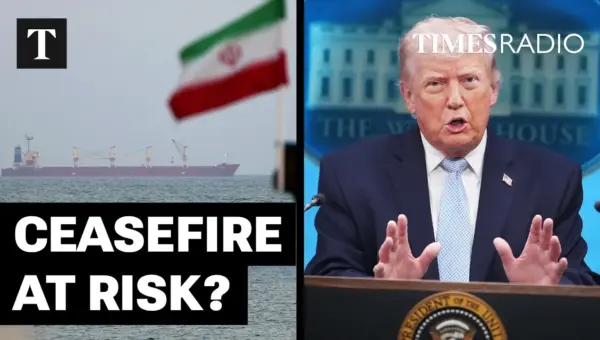
Iran Ceasefire Risks Spiraling Out of Control Amid Talks
A fragile ceasefire between Iran and the US, expiring in two weeks, faces major risks of collapse. Ongoing back-channel talks are attempting to bridge gaps, but experts warn that even minor incidents could easily escalate. The US naval blockade adds another layer of tension, with China watching closely but appearing hesitant to intervene.