Trump’s Jesus Meme Sparks Outrage Among Religious Supporters
Donald Trump's sharing of a meme depicting him as Jesus Christ has ignited backlash from religious supporters, who also cite his feud with Pope Francis. This has led some to feel "duped," questioning his motives and fitness for leadership.

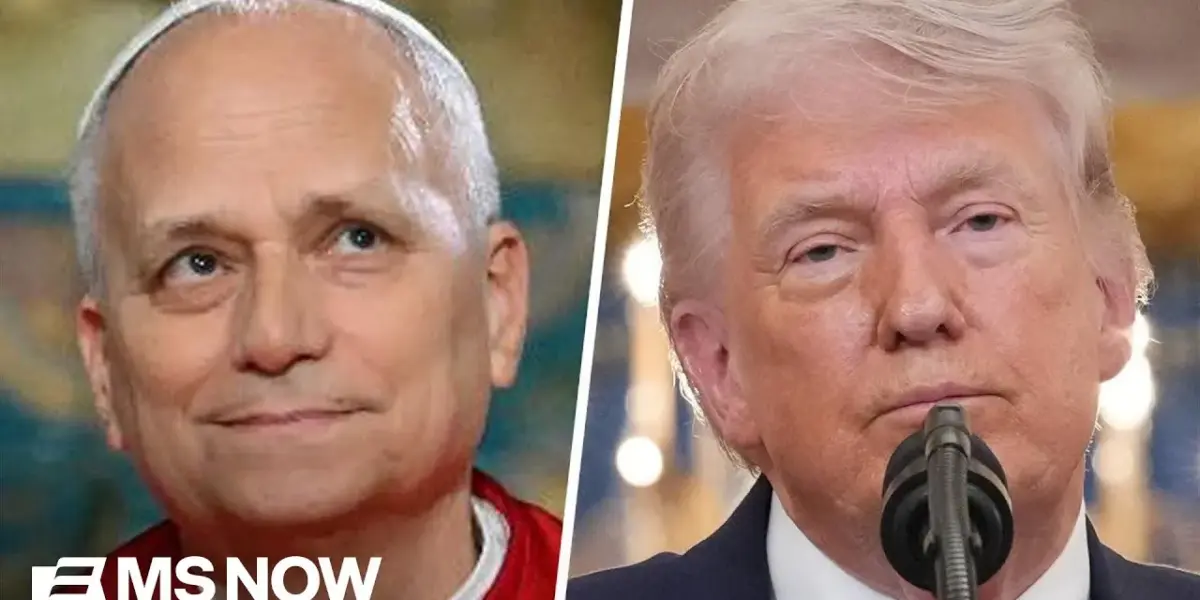
Trump’s Jesus Meme Sparks Outrage Among Religious Supporters
Former President Donald Trump’s recent decision to share a meme depicting himself as Jesus Christ has deeply offended many religious Americans, including some of his own supporters. This controversial image, coupled with Trump’s escalating feud with Pope Francis, has led some to question his fitness and even his motives, creating a crisis of faith for parts of his political base.
A Divine Comparison Sparks Outrage
The meme, which showed Trump with a halo and the caption “The Chosen One,” has been widely condemned as blasphemous and a sign of extreme ego. For many Christians, comparing themselves to Jesus Christ is considered sacrilegious. This sentiment is particularly strong among Catholics, who have historically been a key voting bloc for Republican candidates.
McKay Coppins, a staff writer for The Atlantic and contributor to MSNBC, noted the profound impact of the meme. “If you are a Christian, you’re a Catholic, any kind of person of faith really, you recognize that for what it is,” Coppins explained. “Maybe it’s his moral fitness, but the fact that in these final years of his political career, he seems to be becoming more grandiose, more obsessed with, you know, his own legacy, his sense of kind of immortality.”
Coppins shared that numerous individuals, including Christian Trump supporters and moderate Christians who had previously supported him, expressed their offense. “I can’t tell you how many people I have spoken to… who have told me in the last 24, 48 hours how much it offended them to see that meme,” he said. This reaction suggests a significant disconnect between Trump’s self-image and the values held by many of his religious followers.
Feud with the Pope Deepens Concerns
The Jesus meme is not an isolated incident; it follows a period of public criticism directed at Pope Francis by Trump and his allies. Critics have accused the Pope of not understanding theology and have suggested that certain religious doctrines justify war. This attacks on the head of the Catholic Church have further alienated religious voters.
Stu Stevens, senior advisor for the Lincoln Project, highlighted the historical importance of Catholic voters in presidential elections. “We looked at these voters carefully every day,” Stevens recalled, referring to the 2004 Bush-Cheney race. “And in the end of the day, Bush won the Catholic vote 54 to 46. And had he not, he would have not been elected president.” The current conflict with the Pope risks alienating this crucial demographic.
A Feeling of Being ‘Duped’
For some, the combination of the Jesus meme and the attacks on the Pope has led to a feeling of betrayal. “There’s been some tweets about it as well and I wonder if calling him something that extreme… gives a helps justify their support for him up until now,” Coppins mused. “Well, he he was we were fooled, it was the devil fooling us and this man came and he promised us so much but maybe this was it’s not my fault necessarily maybe this was a very clever trick that he’s been running on all of us.”
This sentiment suggests a potential shift in perception, moving from viewing Trump as a divinely chosen leader to considering him a deceptive figure. “That’s interesting that basically there’s a kind of swinging of the pendulum from thinking of him as God’s anointed leader to now I have to think of him as you know the devil incarnate or the antichrist,” Coppins added. While cautioning against labeling any political figure as the Antichrist, he acknowledged the “feeling of being duped” that is becoming more prevalent.
Policy Decisions and Religious Interpretation
Compounding these issues are recent policy decisions, such as the initiation of conflict with Iran. This action is seen as particularly unpopular, even among Trump’s base, and contradicts his past promises of non-interventionism.
“The decision to go to war with Iran is profoundly unpopular,” Stevens stated. “It’s unpopular with the American electorate in general. It’s much less popular with Trump supporters than most of the policy decisions he makes.” The contradiction between Trump’s rhetoric on ending “forever wars” and his actions in Iran, combined with his god-like self-portrayals, has caused many religious supporters to question their understanding of him.
Surrounded by Controversial Figures
Trump’s inner circle also faces scrutiny. Figures like Pete Hegseth, who has expressed a desire for “Crusades,” and J.D. Vance, who campaigned in Hungary for a politician opposing mixed-race marriages (a stance that would affect his own family), are seen by some as “freaks and weirdos.” Stevens suggested that these individuals are engaged in a “bidding war over who can praise Trump the most.” Such associations raise questions for Republicans about how to build an election strategy around these controversial figures.
Navigating Loyalty and Faith
The situation presents a complex challenge for religious politicians, particularly those who are also staunch Trump supporters. Mike Johnson, the Speaker of the House and a deeply religious individual, faces the difficult task of balancing his faith with political loyalty.
“I’m reminded when I see that clip and when I see, uh, you know, the comments that, that, uh, Vice President J.D. Vance has made who is a Catholic,” Coppins observed. “I’m reminded of the Sermon on the Mount when Jesus taught that no man can serve two masters.” He believes many politicians are trying to serve both God and Trump, a difficult tightrope to walk.
“What inevitably happens when political leaders try to walk that tightrope for too long is that they fall off it because people see it for what it is,” Coppins concluded. “They don’t respect political leaders who are trying to, you know, cozy up to their party boss while also maintaining a sheen of religiosity. You really have to pick.” This dilemma highlights the growing tension between political expediency and spiritual integrity within certain segments of the American electorate and its leaders.
Source: 'Feeling of being duped': Reaction to Trump supporters disgusted by attacks on pope (YouTube)

Related Articles

FBI Docs Contradict Melania’s Epstein Introduction Claims
Newly surfaced FBI documents challenge Melania Trump's recent claims about not being introduced to Donald Trump by Jeffrey Epstein. Witness testimony suggests Epstein facilitated the introduction, contradicting Melania's public statements and raising questions about her associations and those of figures like Paulo Zampoli.
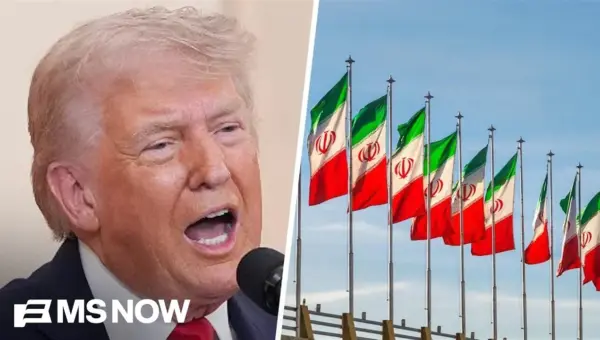
Iran War Disliked, But Public Outrage Muted: Analysts Weigh In
Despite widespread disapproval of the Iran war, public protests remain muted in the US. Analysts cite fear of reprisal, the prolonged nature of anti-war movements, and America's energy independence as key factors. The conflict's economic impact and the lack of clear objectives continue to fuel public skepticism, though widespread suffering is not yet felt domestically.

Trump’s Blockade Fails, Allies Shun Mission: A Pattern?
A reported failure of Donald Trump's blockade of the Strait of Hormuz, with ships passing through unimpeded, raises questions about policy effectiveness. This incident, coupled with allies' reluctance to join the mission, suggests a pattern of unintended consequences and strained international relations.