Global Economy Faces Deep Uncertainty Amid Middle East War
World financial leaders are gathering amid growing fears of a global economic crisis. The conflict in the Middle East is creating significant uncertainty, disrupting supply chains and rattling energy markets. The IMF warns of a potential sharp slowdown, with growth possibly falling to levels seen only during major global recessions.

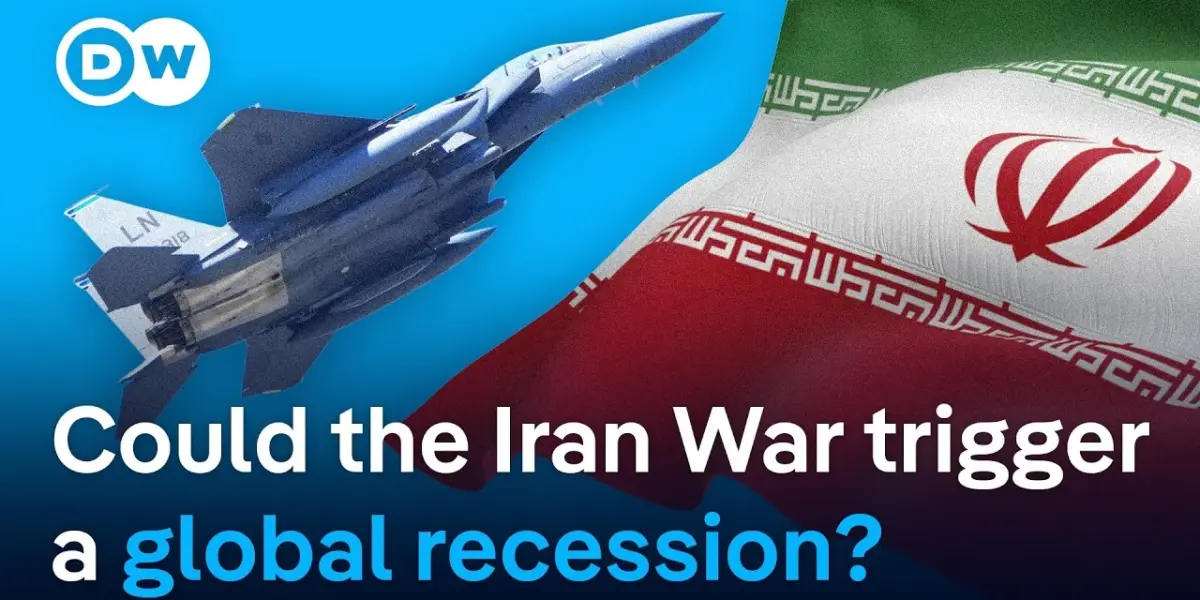
Global Leaders Convene Amidst Rising Crisis Fears
World financial leaders are meeting in Washington D.C. for the International Monetary Fund (IMF) and World Bank Spring Meetings. They are gathering at a time of growing concern about the global economy. The ongoing conflict in the Middle East has cast a significant shadow. This war is creating enormous uncertainty about how long it will last and how deeply it will affect the world. It is disrupting supply chains, causing major swings in energy markets, and increasing the risk of a sharp slowdown in global economic growth.
IMF Forecasts Show Potential for Sharp Downturn
The IMF’s research department, represented by Deputy Director Petya Koeva Brooks, has outlined several possible economic futures. The baseline forecast predicts global growth of 3.1% for the current year. However, a more severe scenario paints a grim picture. In this scenario, global growth could drop to just 2%. This level is dangerously close to a global recession. Such low growth rates have only occurred a few times in recent decades, including during the 2008 financial crisis and the COVID-19 pandemic.
War’s Impact on Global Outlook
Before the recent conflict, the global economy had shown resilience despite previous shocks. The IMF was even preparing to slightly improve its growth forecast to about 3.4%. However, the outbreak of war changed everything. “There is just enormous uncertainty about the duration and the magnitude of the shock that the war would bring,” Brooks stated. To address this uncertainty, the IMF developed multiple scenarios. The reference forecast shows growth slowing to 3.1%. An adverse scenario, involving a larger and longer-lasting oil price shock, higher inflation expectations, and financial market reactions, could bring growth down to around 2.5%. The most severe scenario, with a prolonged and significant commodity shock, rising inflation expectations, and strong financial market turmoil, could see global growth fall to about 2%.
Forecasting Challenges and Inflation Concerns
Making accurate economic forecasts has become extremely difficult. Factors like gas and food prices are highly unpredictable. “It’s been extremely challenging,” Brooks explained. The war’s impact extends beyond just oil prices, affecting fertilizer costs and subsequently food prices. “The supply disruptions that we’re seeing have an impact on fertilizer prices, and that also feeds into food prices,” she noted. Two other key channels influencing the forecast are inflation expectations and financial market behavior. While financial markets have reacted with relative containment so far, risks remain. The IMF projects inflation to be 4.4% this year, falling to 3.7% next year. However, these figures depend heavily on how events unfold. Brooks suggested that in the reference forecast, the current shocks are considered temporary, with normalization expected around the middle of the year. This would mean the increase in inflation is also temporary, mainly affecting headline inflation rather than core inflation.
China’s Economy Navigates Global Headwinds
China’s economic outlook is also affected by the global situation. The IMF forecasts 4.4% growth for China this year, a slight downgrade from earlier predictions. This forecast is supported by strong momentum entering the year and positive data from the first few months. Significant policy support from Chinese authorities is also helping to boost growth. “The impact of the war is being mitigated by these factors,” Brooks said. Without these supports, the downgrade would have been larger. However, China’s economy relies heavily on external growth, and its domestic sector remains relatively weak. The IMF recommends rebalancing China’s growth drivers from external to domestic sources.
United States Economy Shows Modest Impact
The United States economy is expected to experience a relatively modest impact from the war, according to the IMF’s reference forecast. The forecast for the U.S. has been downgraded by only 0.1%. As a net exporter of energy, the U.S. benefits from higher energy prices in terms of trade. However, rising energy costs also reduce household purchasing power, which can dampen private spending. Conversely, investment, particularly in the energy sector, could see a positive boost. “So far, what we’re seeing is the we’re expecting the effects to be relatively modest,” Brooks stated. She cautioned that other, more severe scenarios could lead to a larger impact on the U.S. economy.
Emerging Economies Face Uneven Consequences
The negative supply shock caused by the war, which increases inflation and reduces output, affects countries unevenly. Nations directly involved in the conflict will experience the most significant negative impact. The effect also depends on whether a country imports or exports energy. Unfortunately, lower-income countries and commodity importers are expected to suffer the most, partly due to higher food prices. In Southeast Asia, the impact varies. Malaysia, an energy exporter, has seen its forecast upgraded. However, countries like the Philippines face substantial downgrades. The timing of this shock is particularly unfortunate, as many economies had shown resilience to previous global challenges. Now, these economies are facing new setbacks.
Looking Ahead: Navigating a Complex Future
The global economy faces a period of significant uncertainty, especially for emerging economies. The ongoing conflict in the Middle East presents complex challenges. Leaders at the IMF and World Bank meetings are working to understand these risks and develop strategies. The coming months will be crucial in determining the war’s long-term economic consequences and the effectiveness of policy responses worldwide.
The war in the Middle East has certainly cast a shadow on the global outlook. There is just enormous uncertainty about the duration and the magnitude of the shock that the war would bring.
Petya Koeva Brooks, Deputy Director, IMF Research Department
Source: World financial leaders gather to discuss the extent of the shock that the war could cause | DW News (YouTube)

Related Articles

Trump Tax Cuts Failed Working Americans, Ex-Obama Aide Claims
Former Obama official Jim Messina argues that Trump's tax cuts primarily benefited the wealthy, failing to provide relief to average Americans struggling with rising gas and grocery prices. He suggests that while tax-free tips offer some help to specific workers, broader economic issues are more influential for most voters.

High Debt Forces Fed’s Hand, Paving Way for Rate Cuts
Massive U.S. debt is limiting the Federal Reserve's ability to fight inflation, potentially forcing interest rate cuts. This delicate balancing act risks higher inflation and impacts the real estate market, creating both challenges and opportunities.


Trump’s Trade Wars Fueled Inflation, Fed Report Claims
A new Federal Reserve report links Donald Trump's trade wars to increased inflation since January 2025. Economists claim prices would have fallen to pre-pandemic levels without these tariffs. This finding highlights the significant consumer cost of protectionist trade policies.