Johnson Ducks War Vote as Trump Escalates Mideast Conflict
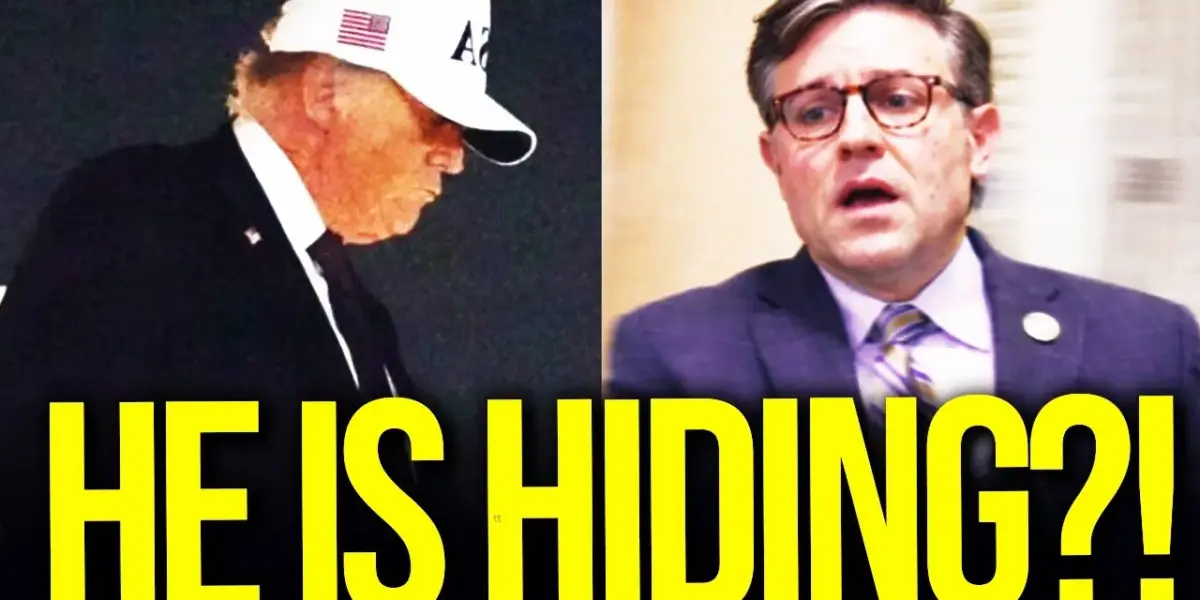
Speaker Mike Johnson is reportedly avoiding a vote on a War Powers Resolution as Donald Trump signals potential escalation in the Middle East. This abdication of duty raises concerns about congressional oversight and the U.S.'s path towards prolonged conflict.

Johnson Ducks War Vote as Trump Escalates Mideast Conflict
In a dramatic turn of events, the escalating conflict in the Middle East has collided with domestic political maneuvering, leaving the United States in a precarious geopolitical and constitutional position. Following a series of joint U.S.-Israel strikes against Iran, which have spiraled into a regional conflagration, former President Donald Trump has made a series of media appearances, signaling a potential for further escalation. Meanwhile, Speaker of the House Mike Johnson appears to be deliberately avoiding a crucial congressional vote on a War Powers Resolution, a move criticized as an abdication of constitutional duty.
Trump’s Bellicose Rhetoric and Escalating Tensions
Donald Trump, speaking to CNN, described the ongoing military operations as “knocking the crap out of them” and asserted that the U.S. Is “using” its “greatest military in the world.” He suggested the conflict was on a timeline of “four weeks” but ominously added, “We haven’t even started hitting them hard. The big wave hasn’t even happened. The big one is coming soon.” This rhetoric, coupled with reports of U.S. Service members killed and significant damage to military bases, paints a grim picture of an expanding war with uncertain objectives and a questionable exit strategy.
The transcript highlights a lack of a coherent narrative from the administration regarding the rationale, goals, and justification for the sacrifices being made. Intelligence, according to the analysis, points away from these actions being a necessary defense of the country. This ambiguity has fueled concerns that the U.S. Is being drawn into another protracted and potentially endless conflict, reminiscent of past interventions that have led to immense human and financial costs.
The War Powers Resolution: A Constitutional Check Ignored?
Amidst the escalating violence, a critical legislative effort is underway to reassert congressional authority over the initiation of war. Representatives Roanna and Thomas Massie, in both the Senate and the House, have introduced War Powers Resolutions. These resolutions aim to force a vote in Congress on whether to authorize the ongoing military actions, thereby returning the power to declare war to its constitutionally designated body.
However, the path to a vote is fraught with political obstacles. The transcript alleges that Speaker Mike Johnson has “ducked the vote,” with the House schedule remaining unchanged despite the burgeoning conflict.
This is attributed, in part, to the GOP leadership’s retreat in Florida and upcoming primaries in Texas and North Carolina, suggesting that political expediency is trumping constitutional responsibility. Critics, including Governor Nuome, have labeled Johnson as “spineless,” highlighting the perceived weakness of the current Congress in confronting executive overreach.
“The Constitution explicitly gives Congress the ability to start a war. Yet, this Congress is too weak.”
Historical Echoes and the “Bush to MAGA” Pipeline
The current situation draws parallels to past U.S. Foreign policy decisions, particularly the lead-up to the Iraq War. The analysis posits a historical pipeline from the neoconservative policies of the George W.
Bush era, through Donald Trump’s “America First” rhetoric, to a renewed interventionist stance. While Trump initially distanced himself from traditional interventionism, the current actions are seen as a reversion to the hawkish policies of figures like Dick Cheney.
The transcript features an interview with Shyot Chakraarti, a candidate for Congress and former chief of staff for AOC. Chakraarti explains the significance of the War Powers Resolution, emphasizing its role in forcing a debate and a recorded vote on the authorization of war.
He criticizes a “war hawk caucus” within both parties that, while advocating for military action, fears public accountability and thus seeks to delay or avoid a vote. This tactic, he argues, allows the executive branch to initiate hostilities unilaterally, effectively tying Congress’s hands.
<blockquote
“So it basically forces a vote in Congress on authorizing this war. But what you’re seeing happen is there’s basically a Warhawk caucus in the Democratic party that you know is being enabled by Democratic leadership right now who want to go to war.
They want this war in Iran, but they realize it’s incredibly unpopular. So, they don’t want to go on their record defending that they want to go to war in Iran because they saw what happened to everybody who voted to go to war in Iraq back in 2000 or back when that happened, right?”
Chakraarti further elaborates on the devastating consequences of past interventions, citing the trillions of dollars spent, lives lost, and the long-term destabilization of regions like the Middle East, Libya, and Syria. He argues that the focus on decapitating leaders without a post-conflict plan has consistently led to chaos, infrastructure collapse, and humanitarian crises, a pattern he sees repeating in the current conflict.
A Call for a New Political Vision
Beyond the immediate crisis, the discussion touches upon a broader critique of the political landscape and a vision for the future. Chakraarti argues that Donald Trump is a symptom, not the cause, of deeper societal problems stemming from a shattered American dream and increasing economic precarity for working people.
His vision for the Democratic Party centers on fighting for concrete policies that benefit working families, such as Medicare for All, universal childcare, tuition-free public colleges, and affordable housing. He also stresses the need for proactive engagement with emerging technologies like AI, advocating for their use for the good of humanity rather than for corporate profit. This requires a fundamental shift away from prioritizing corporate profit as the sole guiding principle of the economy towards establishing national goals focused on improving people’s lives.
A key element of this vision is challenging the influence of corporate money in politics and reforming the Democratic Party to be more responsive to working people. Chakraarti believes a movement of candidates is emerging to upend the status quo and defeat “Trumpism” for good by offering a positive, affirmative agenda.
Why This Matters
The unfolding events underscore a critical juncture for American democracy and foreign policy. The apparent willingness of the executive branch to unilaterally engage in military conflict, combined with the legislative branch’s apparent avoidance of its constitutional oversight responsibilities, poses a significant threat to democratic accountability. The lack of clear objectives and the rhetoric of escalation suggest a potential for a prolonged and costly engagement with devastating human consequences.
The debate around the War Powers Resolution highlights a deeper struggle over the direction of U.S. Foreign policy and the role of Congress. The historical context of past interventions is a stark warning against repeating mistakes driven by a lack of foresight and accountability. The call for a new political vision, focused on the needs of working people and proactive governance, offers a potential path forward, but its realization depends on challenging entrenched interests and invigorating democratic participation.
Implications, Trends, and Future Outlook
The current situation signals a worrying trend of executive overreach in foreign policy, potentially setting a precedent for future administrations. The reluctance of Congress to assert its constitutional powers, as evidenced by the avoidance of the War Powers vote, suggests a weakening of the legislative check on executive power. This could lead to a more militarized foreign policy, less subject to public debate and democratic control.
The broader political implications are also significant. The intertwining of foreign policy crises with domestic political calculations, such as upcoming primaries and party retreats, reveals the challenges of governing in a polarized environment. The push for a new vision within the Democratic Party, emphasizing economic security and accountability, reflects a growing demand for policies that address the concerns of everyday Americans, moving beyond partisan opposition to offer tangible solutions.
The future outlook hinges on whether Congress can reassert its constitutional authority and whether a more robust public debate can shape U.S. Foreign policy. The success of movements advocating for systemic change, as described by Chakraarti, will be crucial in determining whether the nation can steer away from perpetual conflict and towards a more just and equitable society.
Source: MAGA Mike HIDES FROM VOTE amid Trump BACKFIRE (YouTube)

Related Articles
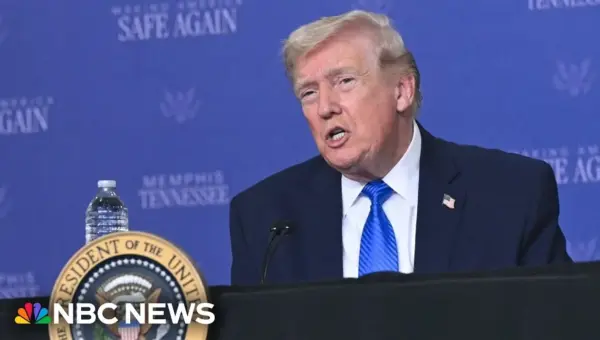
Trump Urges GOP: No Deals Without Voter ID, Citizenship Proof
Former President Donald Trump is demanding that Republicans refuse any legislative deals unless they include voter ID laws and proof of citizenship for voting. He strongly criticized mail-in voting, calling it "mail-in cheating." Trump urged the GOP to pass his "Save America Act" to ensure election integrity nationwide.
Trump Demands Iran Halt Nuclear Program, Seeks Regional Peace
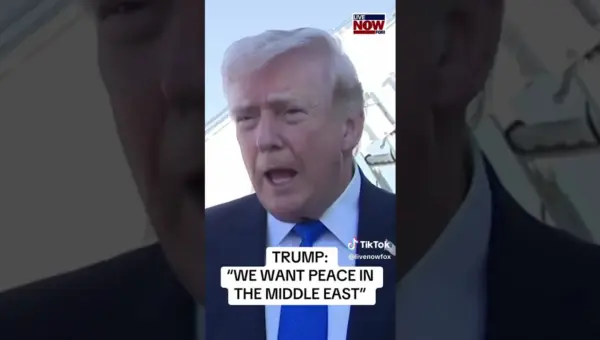
President Donald Trump has laid out firm demands for Iran, insisting on a complete halt to its nuclear program and missile development. He stated that any agreement must ensure Iran does not possess nuclear weapons and seeks to promote peace across the Middle East. Trump believes this approach would benefit Iran, Israel, and other regional allies.
Trump Highlights Crime Drop in Memphis, Links to Border Security
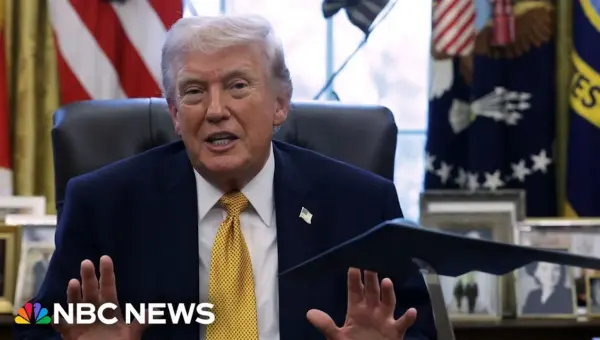
Former President Donald Trump met with a Memphis safety task force, celebrating a sharp decline in violent crime and linking the success to national security efforts. He discussed ongoing negotiations with Iran and strongly advocated for voter ID and proof of citizenship requirements in homeland security funding. The former president highlighted significant drops in crime statistics for Memphis following the task force's intervention.