Pentagon Briefs on Strikes Against Iran Amid Escalating Tensions
Defense Secretary Pete Hegseth and Chairman of the Joint Chiefs of Staff Gen. Dan Caine briefed reporters on Wednesday regarding recent combat operations against Iran. The Pentagon detailed the strategic objectives and intelligence justifying the strikes, emphasizing efforts to degrade Iran's regional destabilization capabilities. Officials also addressed the broader regional implications and the U.S. commitment to de-escalation through diplomatic channels.


Pentagon Details Strikes Against Iran Amid Regional Tensions
Washington D.C. – Defense Secretary Pete Hegseth and Chairman of the Joint Chiefs of Staff Gen. Dan Caine provided an in-depth briefing to reporters on Wednesday regarding recent combat operations conducted against Iran. The briefing, held at the Pentagon, comes at a critical juncture as regional tensions continue to escalate, prompting significant international concern and scrutiny.
Strategic Objectives and Operational Overview
Secretary Hegseth opened the briefing by outlining the strategic rationale behind the recent military actions. “Our operations were carefully calibrated to degrade Iran’s capacity to project power and destabilize the region,” Hegseth stated, emphasizing that the strikes were defensive in nature and aimed at deterring further aggression. He detailed that the operations targeted specific military infrastructure believed to be instrumental in supporting Iranian-backed militia activities across the Middle East.
Gen. Caine elaborated on the operational execution, describing the precision and scope of the strikes. “We employed a combination of air and sea-launched munitions, striking key sites with minimal collateral damage,” Gen. Caine reported.
He confirmed that intelligence assessments indicated the targeted facilities were actively involved in planning and enabling attacks against U.S. Interests and allies in the region. The Chairman stressed that the operations were conducted with a clear objective: to disrupt immediate threats and signal a firm resolve against further Iranian provocations.
Intelligence and Justification for Action
The briefing heavily emphasized the intelligence underpinning the decision to conduct combat operations. Secretary Hegseth asserted that the administration possesses “irrefutable intelligence” pointing to Iran’s direct involvement in recent attacks and its ongoing efforts to arm and direct proxy groups.
“We have seen a pattern of behavior from Iran that cannot go unchecked. This action is a necessary response to protect our personnel and our partners in a volatile theater,” Hegseth explained.
While specific details of the intelligence were not disclosed for operational security reasons, both officials conveyed a high degree of confidence in the information gathered. Gen. Caine added, “The intelligence community has worked tirelessly to provide us with the actionable information needed to protect our forces. The decision to act was based on a thorough assessment of credible threats and Iran’s demonstrated intent to carry them out.”
Regional Implications and Diplomatic Efforts
The Pentagon leadership acknowledged the broader regional implications of the strikes. Secretary Hegseth stated, “We are committed to de-escalation and the pursuit of diplomatic solutions, but these must be accompanied by a cessation of hostile actions by Iran and its proxies.” He indicated that diplomatic channels remain open, and the U.S. Is working closely with allies to ensure regional stability and deter any miscalculations by Tehran.
When questioned about the potential for wider conflict, Gen. Caine reiterated the U.S. Military’s readiness. “Our posture is one of deterrence and defense.
We are prepared for a range of contingencies, but our primary goal remains to prevent conflict through strength and clear signaling,” he said. The briefing underscored the delicate balance the U.S. Is attempting to strike between responding to provocations and avoiding a full-scale regional war.
International Reaction and Future Outlook
The briefing comes amid a complex geopolitical landscape, with international partners closely monitoring the situation. Allies have been briefed on the U.S. Actions, and discussions are ongoing regarding a unified approach to regional security. The Pentagon’s communication aimed to assure allies of U.S. Commitment while also seeking to manage perceptions and prevent unintended escalation.
Looking ahead, Secretary Hegseth concluded the briefing by stating, “We will continue to monitor the situation closely and will take all necessary measures to defend U.S. Interests and international peace and security.” The coming days and weeks will be crucial in determining whether these actions lead to a de-escalation of tensions or further entrench the conflict in the Middle East.
Source: LIVE: Pete Hegseth holds briefing on combat operations against Iran (YouTube)

Related Articles


Oil Prices Spike After Attacks on Energy Sites
Oil prices surged this week following a wave of U.S. airstrikes in Iran and attacks on energy sites in Qatar. Vice President Vance called the price increases a 'temporary blip,' while intelligence briefings revealed disagreements over the immediacy of the threat from Iran. Military actions targeted missile facilities along the Strait of Hormuz.


North Korea Eyes Iran Attack: A Nuclear Deterrent Boost
An attack on Iran may be reinforcing North Korea's belief that nuclear weapons are essential for its survival. The perceived failure of allies to fully support Iran, combined with South Korea's preemptive strike capabilities, strengthens Pyongyang's resolve to maintain its arsenal. This highlights the challenges in future denuclearization efforts.

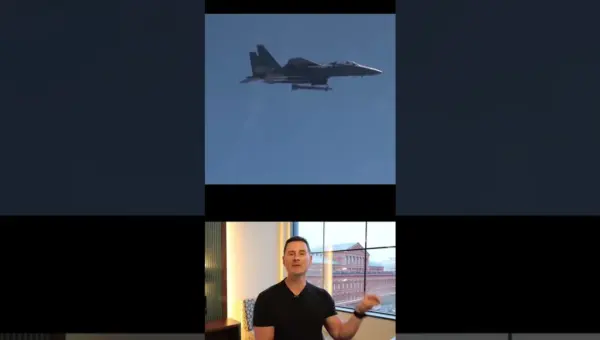
US Air Power Strikes Iranian Missile Sites
U.S. F-15E Strike Eagles deployed 5,000-pound GBU-72 bombs on hardened Iranian missile sites near the Strait of Hormuz. CENTCOM confirmed anti-ship threats were neutralized, securing vital oil shipping lanes. The strikes precede the arrival of 2,500 U.S. Marines, indicating preparatory battlefield actions.