Voters See Trump’s Decline: Polls Reveal Growing Doubts
Three recent polls reveal a majority of Americans, including a notable number of Republicans, now doubt Donald Trump's mental and physical health. The data suggests a growing public concern over his fitness for office, a trend that appears to be accelerating.

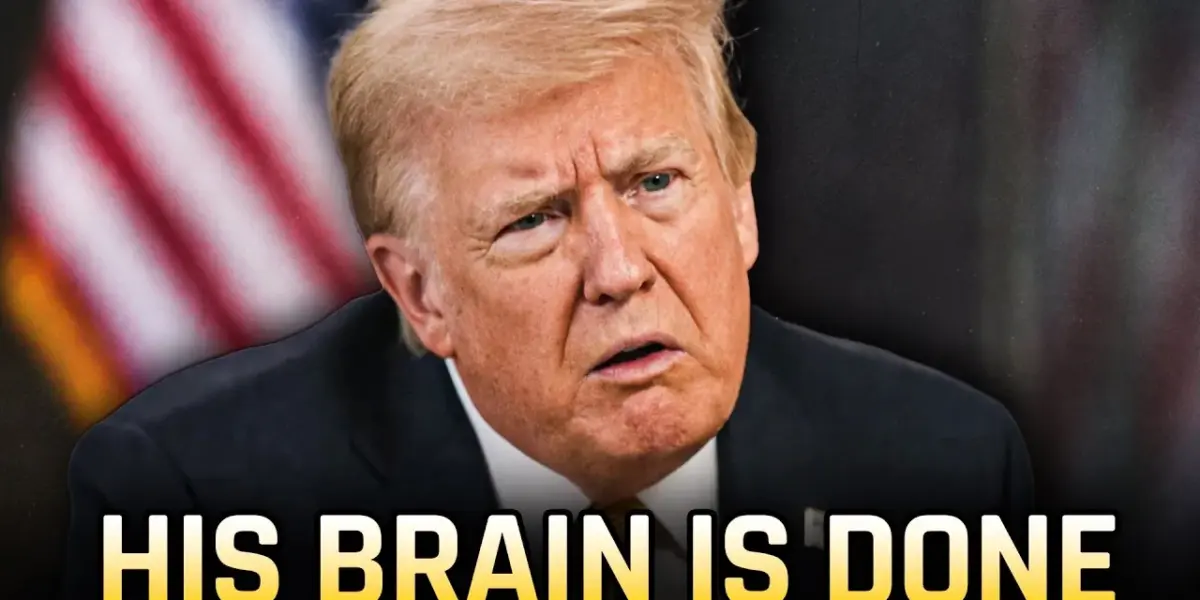
Cracks Appear: New Polls Signal Widespread Concern Over Trump’s Fitness
Recent polling data suggests a significant and growing segment of the American electorate, including a notable portion of Republicans, harbors serious doubts about Donald Trump’s mental and physical health. Three separate polls released this week paint a consistent picture: a majority of Americans believe Trump has become “erratic with age” and question his capacity to serve effectively as president. This trend indicates a potential shift in public perception, moving beyond partisan divides to a more general unease about the former president’s well-being.
The Numbers Don’t Lie: A Look at the Data
The findings from these polls are stark and warrant close examination. A Reuters/Ipsos poll revealed that 61% of respondents, including 30% of Republicans, agreed that Trump has become “erratic with age.” This suggests that the perception of his behavior is not confined to his political opponents but is also shared by a substantial number within his own party.
Further reinforcing these concerns, a CNN survey indicated a decline in confidence regarding Trump’s stamina and sharpness. The percentage of those confident in his ability to serve effectively as president dropped from 53% in late 2023 to 46% currently. This erosion of confidence, even within a relatively short period, points to a tangible shift in how voters perceive his readiness for the demands of the presidency.
Perhaps the most striking data comes from a Washington Post/ABC News poll. This survey found that 56% of Americans doubt Trump’s mental sharpness, while 51% question his physical health.
Significantly, these figures represent substantial increases of 13 and 23 percentage points, respectively, since previous measurements. The cumulative effect of these polls suggests a majority of the public is looking at Trump and expressing concern that “something’s not right.”
Normalizing the Unseen: Hand Bruises and Media Silence
The analysis accompanying these poll results points to a concerning normalization of visible signs of potential decline. The transcript notes that Trump has appeared with makeup covering hand bruises, a detail that has become, in the words of the analysis, “a thing we’ve come to accept because it has been normalized.” This normalization is attributed, in part, to what is perceived as a failure by the media and the former president’s administration to address these issues transparently. When explanations for such visible anomalies are offered, they are often met with skepticism, leading to a general cessation of questioning rather than a pursuit of clarity.
The argument is made that if the media had more robustly investigated and reported on these visible signs, the already concerning poll numbers for Trump could be significantly lower. The implication is that a lack of consistent, critical coverage has allowed these concerns to fester without fully impacting public opinion to the extent they might otherwise. The analysis suggests that the media’s current approach, characterized by a slow pickup of stories and insufficient coverage, has allowed Trump’s perceived decline to be less scrutinized than it warrants.
Comparing Trajectories: Trump vs. Biden
The current poll numbers for Trump are being compared to those experienced by President Joe Biden. The analysis highlights that Biden faced similar levels of public doubt regarding his mental sharpness, with 54% of the public expressing such doubts in February 2022.
However, the crucial distinction drawn is that Biden’s numbers, after that point, largely leveled off. In contrast, the transcript posits that Trump’s numbers are declining at a faster rate, both in public perception polls and, arguably, in his own cognitive state.
This comparison is significant because it suggests that while concerns about aging leaders are a recurring theme, the trajectory of public perception concerning Trump is uniquely negative and accelerating. The observation that Trump is “declining faster both in the polls and in his own mind” suggests a more urgent and perhaps irreversible trend, with the expectation that his poll numbers will continue to worsen.
Why This Matters
The implications of these poll results are profound for the upcoming political landscape. If a majority of Americans, and a significant portion of Republicans, are questioning Trump’s mental and physical fitness for office, it raises serious questions about his electability and his potential effectiveness as a leader.
This isn’t just about abstract polling numbers; it speaks to a fundamental concern about the stability and capability of the person who might hold the highest office in the land. Such doubts can influence voter behavior, campaign strategies, and the broader national discourse on leadership and aging in politics.
Historical Context and Trends
Concerns about the age and health of presidential candidates and incumbents are not new. Throughout history, the physical and mental stamina of leaders has been a subject of public scrutiny.
From Ronald Reagan’s later years in office to more recent discussions surrounding Joe Biden, voters have consistently weighed the perceived fitness of candidates against their policy positions and political ideologies. What appears to be evolving is the public’s willingness to directly address and quantify these concerns through polling, and perhaps a heightened sensitivity to visible indicators of cognitive or physical decline in a time of constant media scrutiny.
The trend highlighted by the analysis—that a significant portion of a candidate’s own party is expressing doubt—is particularly noteworthy. Historically, a candidate’s base often exhibits strong loyalty, with doubts about fitness being more prevalent among the opposition. The fact that substantial numbers of Republicans are reportedly agreeing that Trump has become “erratic with age” suggests a potential fracturing of unwavering support, driven by observations that transcend partisan affiliation.
Future Outlook
The future outlook suggested by these polls is one of continued scrutiny and potential further decline for Donald Trump’s public image regarding his fitness. The analysis anticipates that these numbers will only worsen, especially if the media increases its focus on these aspects of his public appearances.
The normalization of certain behaviors, like the hand bruises, may be challenged if sustained attention is given to them. The comparison with Biden’s polling trajectory suggests that while age and stamina are ongoing concerns for voters, Trump’s current path appears steeper and more concerning to a broader electorate.
The effectiveness of Trump’s campaign may increasingly rely on his ability to counteract these perceptions, either through direct engagement, robust counter-narratives, or by shifting the focus to other issues. However, if these poll numbers are indicative of a deeply held public sentiment, they represent a significant hurdle that may prove difficult to overcome. The coming months will likely see continued debate and analysis of Trump’s public presentation, with these poll results serving as a critical benchmark for understanding public opinion on his fitness to lead.
Source: Trump’s Brain is Absolutely Cooked and He KNOWS IT (YouTube)

Related Articles
Trump Considers Ground Troops for Iran War
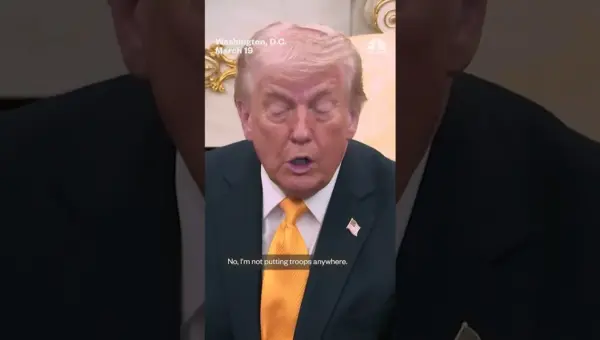
President Trump is reportedly weighing the deployment of thousands of U.S. ground troops to Iran, following weeks of air strikes. Options range from securing oil facilities to retrieving enriched uranium. The president has offered mixed signals on troop deployment, emphasizing U.S. military strength.
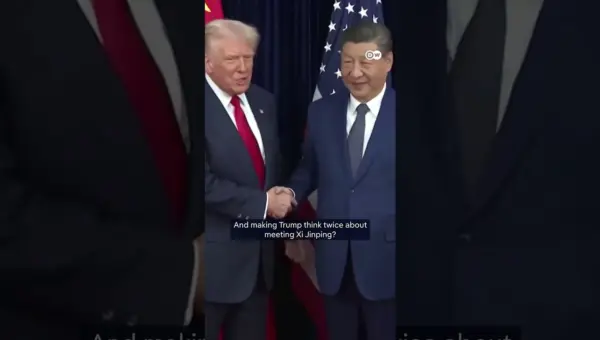
Trump Delays China Trip Amid Mideast War, Trade Tensions
Former President Donald Trump has postponed a planned trip to China, citing the ongoing Middle East war as a key reason. The conflict is impacting the US economy more severely than China's, altering the global power dynamic. Trade disputes over tariffs and agricultural purchases remain the central issue between the two nations.
Cuban Exiles Fear Trump’s ‘Take Control’ Threat
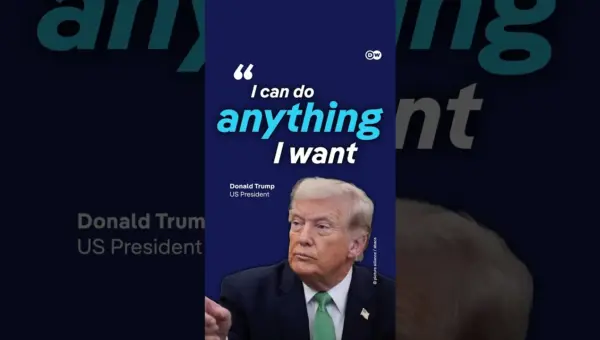
Cuban exiles are expressing deep concern over former President Donald Trump's recent remarks about potentially "taking control" of Cuba. The comments come as the island nation faces severe shortages of electricity and fuel, drastically impacting daily life for its citizens. Many fear renewed U.S. intervention could worsen the humanitarian crisis.