Iran’s Power Vacuum: IRGC Steers Nation Amidst Crisis
Iran faces unprecedented vulnerability following the assassination of Supreme Leader Ayatollah Ali Khamenei. The nation is under attack internally and externally, with the IRGC playing a crucial role in managing the leadership transition and maintaining state control amidst a deepening political and economic crisis.

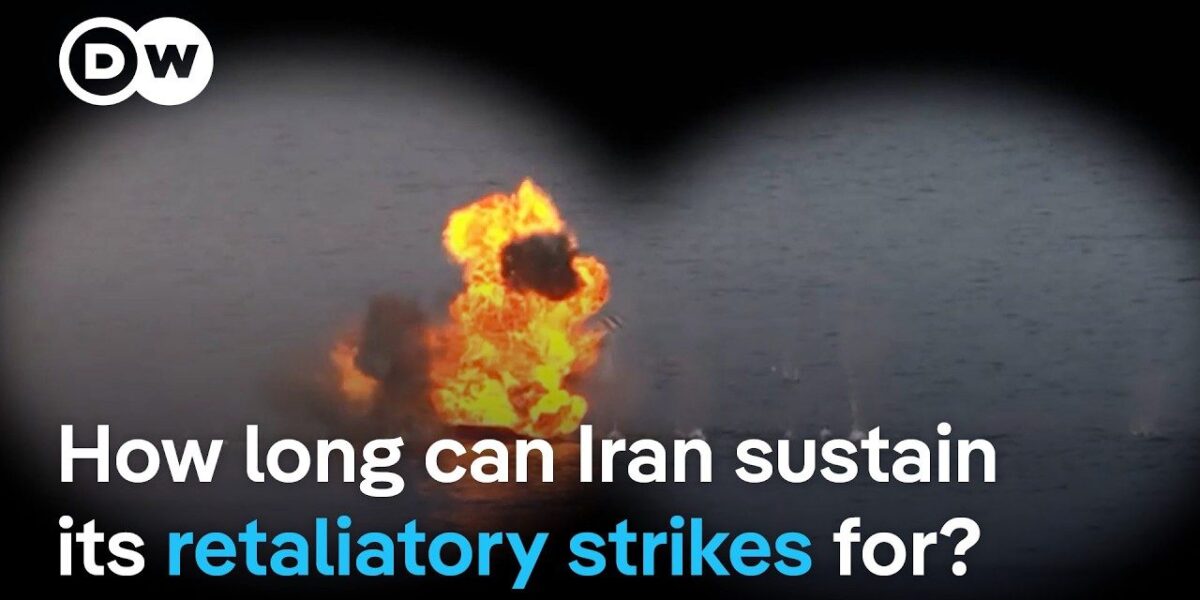
Iran Faces Unprecedented Vulnerability After Supreme Leader’s Assassination
Iran is navigating a critical juncture following the assassination of its Supreme Leader, Ayatollah Ali Khamenei, an act claimed by Israel in joint operations with the United States. The nation is observing 40 days of national mourning while simultaneously facing retaliatory attacks from Iran on Israel and U.S. Military bases in the Gulf, which have resulted in the deaths of three American soldiers.
In the wake of the assassination, Iran’s interim President Masoud Pezeshkian vowed revenge, stating, “Today the interim leadership council started its work and with the help of God we will continue the path of Imam Khomeini. The path of the dear leader and the path of all justice seekers in the world with strength.” The armed forces have pledged to act decisively against enemy bases, aiming to thwart adversaries.
Internal and External Threats Compound Iran’s Instability
According to Sarah Bazubi, an Iran analyst and non-resident research fellow at the Institute for Security Policy at the University of Kiel, the Islamic Republic is at its most vulnerable point since its inception. “Vulnerability comes from inside and outside,” Bazubi explained.
“It comes from the fact that the Iranian people really have moved on from the Islamic Republic.” She pointed to widespread public discontent, evidenced by past uprisings and the state’s violent crackdowns, as a significant internal threat. Bazubi cautioned against viewing the situation solely through the lens of military conflict with Israel and the United States, emphasizing the deeper internal vulnerabilities the regime faces.
Leadership Vacuum and Centralized Power Structure
The assassination of Khamenei has created a significant leadership vacuum, exacerbated by a decades-long trend of power centralization under Khamenei and his inner circle. Bazubi highlighted how Khamenei systematically undermined the authority of the presidency, the judiciary, and even the Supreme National Security Council, ensuring all significant decisions were filtered through him personally.
There appears to have been a concerted effort to eliminate potential successors, including prominent figures like Ayatollah Akbar Hashemi Rafsanjani and the late President Ebrahim Raisi. “The issue is that power was very concentrated and centralized and now there is a huge vacuum and there are not many viable options,” Bazubi noted.
Constitutional Framework for Interim Leadership
In accordance with Article 111 of the Iranian Constitution, an interim leadership council has been formed. This council comprises the President, a member of the Guardian Council, and the Head of the Judiciary.
Their mandate is to govern the country in the absence of a Supreme Leader while the Assembly of Experts works to select a permanent successor or a slate of candidates. This body is tasked with ensuring continuity of governance during this tumultuous period.
Economic Repercussions and Growing Public Hardship
The ongoing conflict and political instability are expected to have severe economic consequences for Iran. Rising inflation and increasingly unaffordable food prices are already a reality for ordinary Iranians.
Bazubi anticipates this situation will worsen due to disruptions in trade routes, transportation, and logistics, further compounded by threats to the government’s primary revenue source: hydrocarbon exports. While a blockade of the Strait of Hormuz is unlikely due to its detrimental impact on Iran itself, the regime’s strained relations with regional powers like Iraq, the UAE, and Oman, which previously facilitated its exports, will make economic recovery increasingly challenging.
The IRGC’s Key role in Continuity
Kazra Adabi, Director of IRGC Research at United Against a Nuclear Iran, clarify the key role of the Islamic Revolutionary Guard Corps (IRGC) during this transition. He described the IRGC as the ideological arm and the core of power within the regime, functioning as servants to the clergy and undergoing extensive indoctrination, including Shia seminary studies. “The IRGC is at the core of power in this Islamic regime,” Adabi stated.
He emphasized that the IRGC, alongside the apparatus of the Supreme Leader’s office, is tasked with preventing a power vacuum and ensuring continuity. “This is about the invisible state, the deep state,” he explained.
“The actual ones in charge right now is the office of supreme leader, the Beit-e Rahbari apparatus and the IRGC. They’re designed to ensure continuity.”
The Shadow of Nuclear Ambitions and External Threats
Adabi also addressed Iran’s long-standing nuclear ambitions, asserting that the regime has been intent on developing nuclear weapons for decades and has accelerated its efforts in recent years. He characterized this as an imminent threat not only to the Middle East but also to the West, labeling Iran as the most anti-American regime and a state sponsor of anti-Americanism. Adabi referenced past assassination attempts on U.S. Officials and terror plots on American soil as evidence of this hostility.
He expressed encouragement for continued military operations, believing they could create an opportunity for the Iranian people to overthrow the regime and establish a free Iran. He also highlighted the regime’s recent actions, including the alleged massacre of 40,000 civilians, as further justification for international pressure.
Looking Ahead: The Struggle for Control
As Iran grapples with the immediate aftermath of its Supreme Leader’s assassination, the focus shifts to the internal power dynamics and the IRGC’s efforts to maintain control. The coming weeks will be crucial in determining how effectively the interim leadership council can govern and how swiftly a new Supreme Leader will be selected.
The ongoing external pressures from the U.S. And Israel, coupled with deep-seated internal discontent and economic hardship, create a volatile environment. The international community will be closely watching to see if the IRGC can successfully navigate this crisis or if the confluence of threats will lead to further instability and a potential shift in Iran’s political landscape.
Source: What role does the Islamic Revolutionary Guard Corps play in Iran's leadership transition? | DW News (YouTube)

Related Articles

Fed Holds Rates Steady Amid Global Uncertainty, Inflation Fears
The Federal Reserve announced today it is holding interest rates steady for the second consecutive meeting. This decision comes amid rising global uncertainty, particularly due to the war in the Middle East and its impact on oil prices. The Fed also raised its inflation forecast, indicating expectations of higher consumer prices.


North Korea Eyes Iran Attack: A Nuclear Deterrent Boost
An attack on Iran may be reinforcing North Korea's belief that nuclear weapons are essential for its survival. The perceived failure of allies to fully support Iran, combined with South Korea's preemptive strike capabilities, strengthens Pyongyang's resolve to maintain its arsenal. This highlights the challenges in future denuclearization efforts.

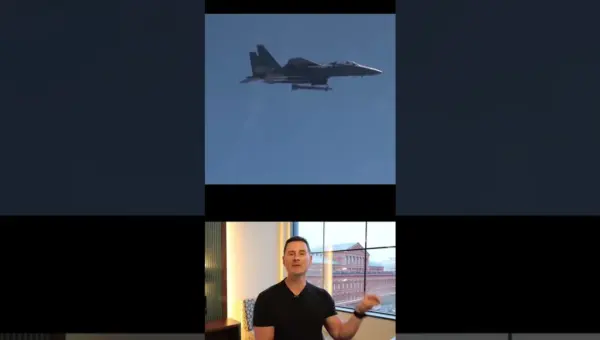
US Air Power Strikes Iranian Missile Sites
U.S. F-15E Strike Eagles deployed 5,000-pound GBU-72 bombs on hardened Iranian missile sites near the Strait of Hormuz. CENTCOM confirmed anti-ship threats were neutralized, securing vital oil shipping lanes. The strikes precede the arrival of 2,500 U.S. Marines, indicating preparatory battlefield actions.