Trump: Iran’s Supreme Leader Killed in US-Israeli Strike
Former President Donald Trump announced on Truth Social that Iran's Supreme Leader, Ayatollah Ali Khamenei, has been killed in a joint US-Israeli attack. The report, if confirmed, carries immense geopolitical weight for the Middle East. The situation remains highly volatile with ongoing military activities across the region.

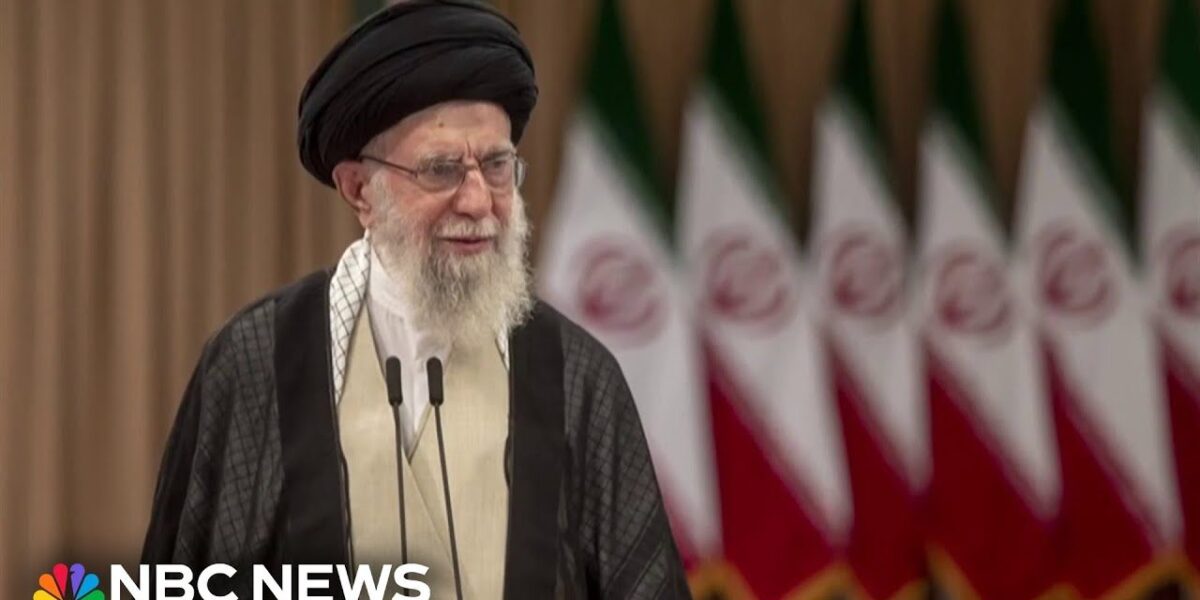
Trump Announces Ayatollah Khamenei’s Death in Joint Operation
In a stunning development that could reshape the geopolitical landscape of the Middle East, former President Donald Trump announced on his social media platform, Truth Social, that Iran’s Supreme Leader, Ayatollah Ali Khamenei, has been killed. The announcement, made public this afternoon, alleges that Khamenei’s death occurred during a joint attack orchestrated by the United States and Israel.
Ayatollah Khamenei, 86, was the paramount political and religious authority in Iran and a long-standing adversary of both the U.S. And Israel. His reported demise, if officially confirmed by Iran, would represent a seismic shift with profound implications for regional stability and international relations.
Details Emerge on Joint US-Israeli Operation
Initial reports suggest a coordinated effort between Israeli and American forces. Senior national security correspondent Courtney Kube, reporting on the developing story, indicated that while Israel’s focus appeared to be on targeting Iranian leadership, the U.S. Military concentrated on Iran’s military and security apparatus.
A senior U.S. Official familiar with the matter has corroborated Trump’s claim, stating that the U.S. Believes Ayatollah Khamenei is dead, based on communications with Israeli counterparts. The exact details of the operation are still being pieced together, but indicators have mounted throughout the day, including statements from Israeli officials and President Trump’s own assessment of the reports’ likely accuracy.
“We do now have a senior US official who’s familiar with the matter, who says that the US believes the Ayatollah is dead, and this is based on their communications with the Israelis here.”
The strikes reportedly targeted not only Khamenei but also other senior Iranian officials and elements of the Islamic Revolutionary Guard Corps (IRGC), including command and control structures. The success of these broader strikes against other high-ranking individuals is still under investigation.
Regional Impact and Escalation
The situation remains highly volatile, with missiles and drones reportedly in flight across the Middle East. Chief Foreign Correspondent Richard Engel, reporting from Israel, described a significant strike observed over Tel Aviv, characterized by a large black plume of smoke.
While the exact nature of the impact – whether from an incoming missile or an air defense system – was initially unclear, Engel later confirmed it was a missile that had impacted with considerable force. Initial reports indicated that at least two Israelis may have been killed in this particular strike.
Engel emphasized the effectiveness of Israel’s air defense systems, often developed in cooperation with the U.S., in intercepting the vast majority of Iranian projectiles. However, he noted that the conflict has already transcended a direct confrontation between Iran, Israel, and the U.S., extending to approximately nine different countries across the region. This wider engagement highlights the complex and interconnected nature of the current hostilities.
Khamenei’s Role and Potential Succession
Ayatollah Ali Khamenei, who assumed leadership in 1989, has been the ultimate decision-maker in Iran, wielding significant influence over both domestic and foreign policy. His death would create a substantial power vacuum and trigger a process to select a new Supreme Leader. The Guardian Council, a powerful vetting body, would likely play a key role in identifying and approving candidates.
Potential successors often include prominent clerical figures with strong political credentials within the Islamic Republic’s hierarchy. The selection process could be contentious and expose existing fault lines within Iran’s political establishment.
Broader Geopolitical Ramifications
The implications of Khamenei’s reported death are far-reaching. The Supreme Leader has been a central figure in Iran’s regional policy, including its support for various proxy groups and its nuclear program. His absence could lead to shifts in these policies, though the ultimate direction would depend heavily on the ideology and priorities of his successor.
For the United States and Israel, the operation, if successful in eliminating Khamenei, represents a significant strategic victory. However, it also carries the risk of severe Iranian retaliation, potentially through its network of regional proxies or direct military action, further destabilizing an already tense region.
The international community is closely monitoring the situation, with calls for de-escalation and restraint likely to intensify. The United Nations and various global powers will be seeking to understand the full scope of the operation and its aftermath, while also working to prevent a wider regional conflict. The economic impact, particularly on global oil markets, is also a significant concern, given the Middle East’s critical role in energy supply.
Looking Ahead: Uncertainty and Potential Retaliation
As the situation continues to unfold, the world watches for official confirmation from Iran and for any signs of retaliatory action. The coming hours and days will be critical in determining the immediate consequences of this reported event. Key developments to monitor include:
- Official statements from the Iranian government regarding the Supreme Leader’s status.
- The process of selecting a new Supreme Leader and any potential internal power struggles.
- The response from Iran and its regional allies, including Hezbollah and other proxy groups.
- Further details on the scope and success of the joint US-Israeli strikes.
- International diplomatic efforts to manage the crisis and prevent further escalation.
The reported death of Ayatollah Khamenei marks a key moment, the full ramifications of which will likely take considerable time to become clear. The immediate focus remains on managing the heightened tensions and preventing a broader conflict that could engulf the entire Middle East.
Source: Trump says Iran's supreme leader was killed in attack by U.S. And Israel (YouTube)

Related Articles
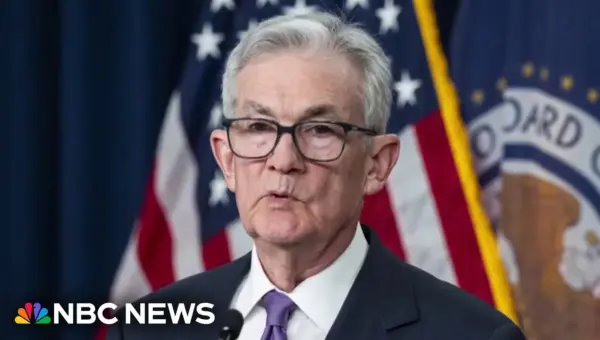
Fed Holds Rates Steady Amid Global Uncertainty, Inflation Fears
The Federal Reserve announced today it is holding interest rates steady for the second consecutive meeting. This decision comes amid rising global uncertainty, particularly due to the war in the Middle East and its impact on oil prices. The Fed also raised its inflation forecast, indicating expectations of higher consumer prices.


North Korea Eyes Iran Attack: A Nuclear Deterrent Boost
An attack on Iran may be reinforcing North Korea's belief that nuclear weapons are essential for its survival. The perceived failure of allies to fully support Iran, combined with South Korea's preemptive strike capabilities, strengthens Pyongyang's resolve to maintain its arsenal. This highlights the challenges in future denuclearization efforts.
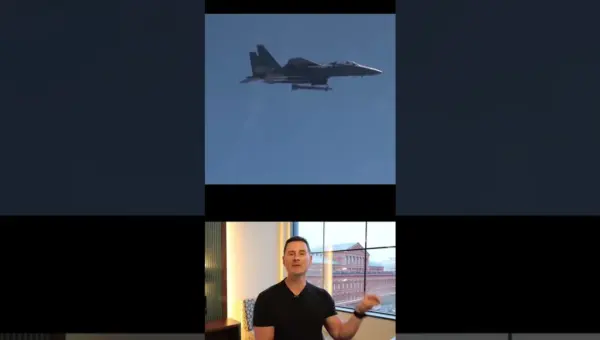
US Air Power Strikes Iranian Missile Sites
U.S. F-15E Strike Eagles deployed 5,000-pound GBU-72 bombs on hardened Iranian missile sites near the Strait of Hormuz. CENTCOM confirmed anti-ship threats were neutralized, securing vital oil shipping lanes. The strikes precede the arrival of 2,500 U.S. Marines, indicating preparatory battlefield actions.