Virginia’s Gerrymandered Map Sparks Fierce Debate
Virginia voters approved a new congressional map favoring Democrats, sparking intense debate over gerrymandering. Republicans are challenging the map in court, citing deceptive ballot language and unconstitutional procedures. This closely watched case could significantly impact the balance of power in Congress.

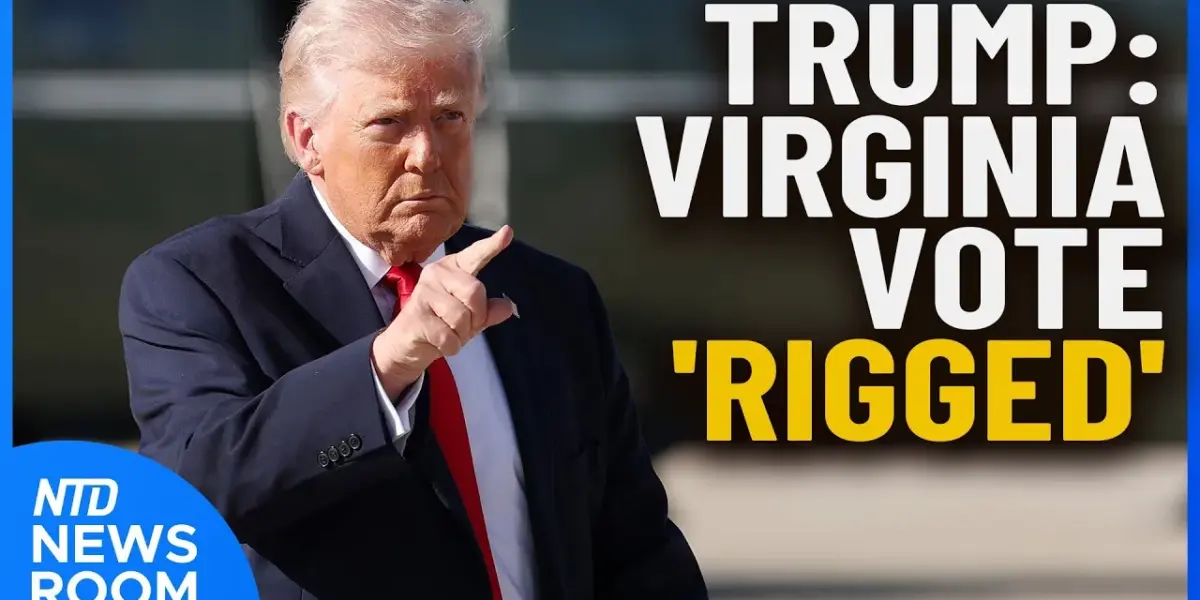
Virginia’s Gerrymandered Map Sparks Fierce Debate
Virginia voters recently approved a new congressional map that heavily favors Democrats. This comes as Democrats aim to counter Republican gains in Texas, where their congressional map was drawn to favor Republicans.
The new map in Virginia is designed to give Democratic candidates an advantage in 10 out of 11 districts. This represents a significant change from the current situation, where the state is split between six Democratic-leaning districts and five Republican-leaning districts.
The Democratic-controlled legislature in Virginia redrew the district lines. They did this by breaking up existing Republican-leaning districts and adding areas with more Democratic voters. This strategy aims to dilute the Republican vote.
For example, a district in the Richmond area, a Democratic stronghold where Kamala Harris won by a wide margin, is being altered. The previous map kept this district intact. However, the new map splits it up, adding many of its Democratic voters into neighboring Republican-stronghold communities.
Another example is District 2 in the Virginia Beach area. This district was nearly evenly split between Republican and Democratic voters in the 2024 presidential election. Under the new map, it is expected to become more favorable to Democrats.
This change is achieved by adding more of the Norfolk area, which has a high concentration of Democratic voters, into the district. Some observers have described the new map as being so intricately drawn that it resembles a lobster in shape.
Voters Divided on Redistricting
Voters in Virginia were split on the issue, with the vote to approve the map being very close. Ahead of the vote, some voters expressed concerns about representation for rural areas. “We don’t have the population of Northern Virginia and as a rural area, we just need to be heard,” one voter stated.
Others felt that the political divide made the outcome inevitable. “Democrats in Virginia, I just want to be even like Democrats and Republicans. To me, it really they going to do what they going want to do anyway,” another voter commented.
Democrats celebrated the approval, with former President Barack Obama congratulating Virginia Democrats. They view the map as a way to push back against the new Texas map, which favors Republicans.
The Texas map was drawn after the Trump administration’s Justice Department stated that some minority districts in Texas violated the Constitution. Virginia House Speaker Don Scott stated that Virginians “stepped up and leveled the playing field for the entire country.”
Republican Opposition and Legal Challenges
Republicans, however, are unhappy with the outcome. They point out that the vote was very close, with only a few percentage points separating those who approved and rejected the map.
Republicans argue that the language used on the ballot was deceptive. Virginia Republican Party Chairman Jeff Ryer stated that “evidently a sufficient number of Virginiaians trusted the blatantly dishonest language that Democrats placed on the ballot to make our commonwealth the most severely gerrymandered in the nation.”
Former Virginia Governor Glenn Youngkin also criticized the map. He called the campaign for the map “blatantly unfair” and cited a Washington Post article that described it as a “brazenly dishonest campaign.” The Washington Post suggested the measure should not pass.
The new map will not take effect immediately because it has been challenged in the courts. This legal challenge is the last resort for Republicans hoping to prevent the map’s implementation, which would remain in place until 2030 if approved.
Debate Over Mail-In Ballots and Gerrymandering Tactics
The discussion around the vote also involved concerns about mail-in ballots. An analysis showed that while early in-person and election day voting were close, mail-in ballots swung the vote in favor of Democrats.
Bart McCoy, a former presidential campaign policy adviser, expressed suspicion about mail-in balloting, citing past reports that suggest it can be problematic and a site for fraud. He noted that a significant number of mail-in ballots from Fairfax County raised suspicions.
Democratic political consultant Lee Nevs countered these concerns, stating that such claims often arise when one side loses. He asserted that there has been no proof of widespread fraud with mail-in ballots and highlighted his experience witnessing signature verification processes in election offices. Nevs argued that Republicans brought this situation upon themselves by starting the trend with redistricting in Texas, which he described as a power grab intended to secure more congressional seats for Republicans.
McCoy, however, pushed back, arguing that gerrymandering has a long history, dating back to Elbridge Gerry in Massachusetts. He pointed to states like New England, Illinois, and Maryland, where he claims gerrymandering heavily favors Democrats despite closer statewide vote splits. McCoy believes the Virginia map was drawn unconstitutionally and illegally and will likely be overturned in the courts.
Historical Context and Future Outlook
Nevs maintained that the Supreme Court has allowed redistricting for political purposes, citing Texas, Ohio, Missouri, and potentially Florida as examples where such changes are not being put to a ballot. He argued that Virginia and California, by contrast, allowed voters to have a say. Nevs also noted that redistricting typically happens after the census every 10 years, not in the middle of a decade, which he sees as the main issue fueling public anger.
McCoy disagreed on the Supreme Court’s role in this specific case. He stated that the Virginia Supreme Court, not the US Supreme Court, will rule on this matter.
He outlined several alleged violations of the Virginia Constitution, including procedural issues with how the map was passed. A judge had already ruled against the map in a prior case, finding it was “wrong from how it started.” McCoy believes the state Supreme Court has already signaled that the map does not conform to constitutional provisions and will be overturned.
The debate highlights the ongoing partisan battles over political representation. Democrats spent significantly more on the campaign to approve the map than Republicans.
Some suggest the shift in messaging from “balance” to an “anti-Trump” stance helped increase support for the measure. The outcome of the legal challenges will determine the congressional map for Virginia until 2030, with significant implications for the balance of power in Congress.
Why This Matters
The redistricting process in Virginia is a clear example of how political parties use legislative power to shape electoral outcomes. Gerrymandering, the practice of drawing district boundaries to favor one party, has a long and contentious history in the United States. This Virginia case is particularly notable due to its timing, the close vote, and the accusations of deceptive ballot language and unconstitutional procedures.
The legal battles ahead will test the boundaries of state constitutional law and judicial review in redistricting disputes. If the map is upheld, it could embolden other states to pursue similar partisan redistricting efforts. Conversely, if it is overturned, it might serve as a deterrent and reinforce the importance of adhering to established constitutional procedures for drawing electoral maps.
The future outlook suggests that redistricting will remain a highly contested issue in American politics. As seen in this case, the fight over district lines is often as crucial as the elections themselves in determining which party controls legislative bodies. The outcome in Virginia could influence how future redistricting efforts are approached and litigated across the country.
Related News
In other news, Georgia Democratic Congressman David Scott passed away at age 80 after a long career in elected office. On a national security front, Senate Republicans are moving forward with a budget plan for immigration enforcement, aiming to fund agencies like ICE and Border Patrol. The Treasury Department is also continuing its “Operation Economic Fury” against Iran’s oil and weapons procurement networks, with Secretary Yellen discussing its impact on oil prices and sanctions relief.
The Pentagon is proposing a significant increase in military spending for fiscal year 2027, calling it a “generational investment” that includes substantial funding for drone warfare, space defense, and shipbuilding. Meanwhile, investigations are underway regarding the deaths of scientists involved in US nuclear rocket programs, with concerns raised about potential espionage and foul play. China is also reportedly developing new technologies for drone charging that could extend flight times significantly.
Source: Trump: Virginia Vote 'Rigged'; WH: Cards Are In President's Hands For Iran | NTD Newsroom (April 22) (YouTube)

Related Articles


Gerrymandering Backfires on GOP Amidst War Woes
Democrats have gained a significant advantage in Virginia following a vote to redraw congressional maps, potentially delivering more seats in the midterms. Meanwhile, President Trump faces sinking approval ratings amid the ongoing Iran war and economic concerns. The White House strategy is shifting as redistricting battles and international conflicts continue to shape the political landscape.


Trump Allies Fear His Backfire Effect on Redistricting
Virginia voters narrowly approved a Democrat-backed redistricting plan, potentially shifting House seats significantly. Allies of Donald Trump reportedly fear his attempts to counter this move will backfire, making things worse for the Republican party. This win is part of broader Democratic successes despite claims of unpopularity, as polls show voters often prefer Democrats even when unhappy with both parties.


Red State GOP Leaders Resist Trump’s Grip
Red state Republican lawmakers are pushing back against Donald Trump's influence, particularly concerning redistricting. Indiana Republicans refused Trump's demands to redraw maps, fearing it would hurt their party. This signals a growing pragmatism among state GOP leaders prioritizing voter sentiment over loyalty to Trump.