Trump Issues Stark Warning to Iran Amid Nuclear Fears
President Trump has issued a firm deadline to Iran for nuclear deal negotiations, warning of "total devastation" if terms are not met. Meanwhile, the mysterious deaths and disappearances of US scientists are under investigation, raising national security concerns. A controversial election in Michigan also highlights ongoing debates about political discourse and foreign policy.

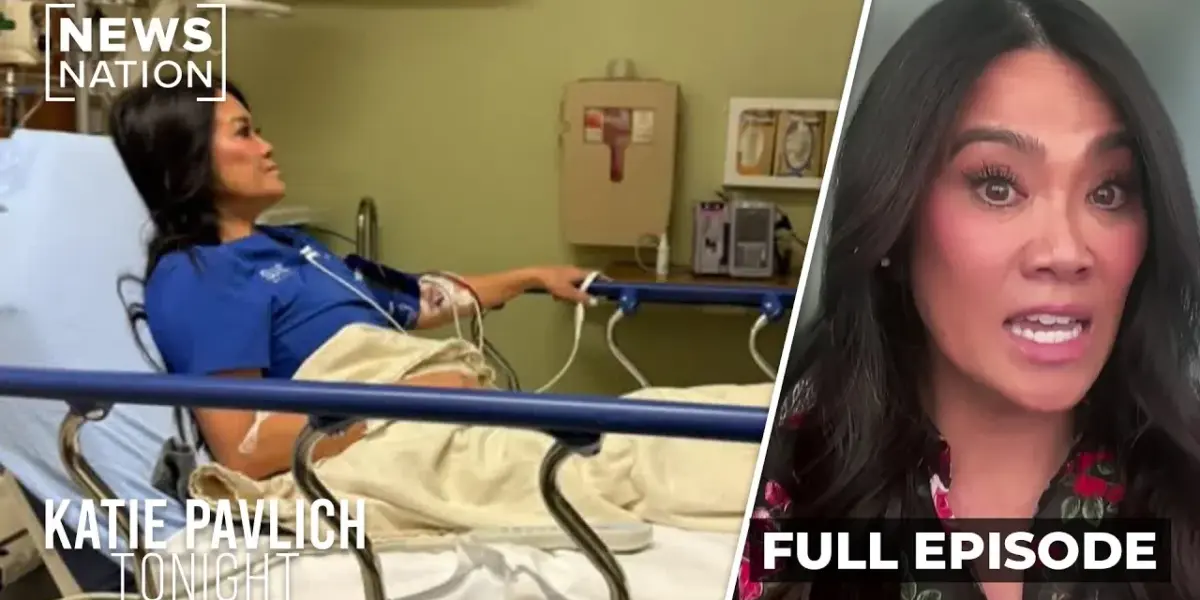
Trump Issues Stark Warning to Iran Amid Nuclear Fears
The United States is engaged in high-stakes diplomacy with Iran, with President Trump issuing a firm deadline for the regime to accept terms or face severe consequences. This diplomatic push occurs as concerns over Iran’s nuclear program resurface, adding urgency to the negotiations.
Iran Deal Deadline Looms
President Trump has set a Wednesday evening deadline for Iran to agree to terms, warning that further extensions are unlikely. This ultimatum comes as a ceasefire between the US and Iran, agreed upon two weeks prior, is being closely watched. A second round of talks is scheduled for Pakistan this week, but the President’s stance suggests a firm resolve to avoid prolonged negotiations.
The US has maintained a blockade of Iranian ports, a measure that will continue until a deal is reached. This pressure tactic was underscored by a recent incident where US forces intercepted an Iranian-flagged vessel in the Arabian Sea.
Nuclear Threat Re-emerges
Adding to the tension, a report from CBS’s 60 Minutes confirmed the ongoing nuclear threat posed by Iran. This clear reminder comes amidst questions about the fate of highly enriched uranium previously seized by US forces. The program’s potential to develop nuclear weapons remains a significant concern for international security.
Expert Analysis on Diplomacy and Uranium Retrieval
Former Deputy National Security Adviser Steve Yates expressed support for the President’s patient diplomatic efforts, emphasizing a “don’t trust, just verify” approach. He suggested that the President is preparing multiple options, regardless of negotiation outcomes. Yates also noted that leadership changes within Iran could complicate future discussions.
“Clearly we’ve got to get the straight open. And I think that we have to make a final move to push against their ability to strike. At that point we switch into a deescalation and maintenance mode.” – Steve Yates
Amber Smith, former Deputy Assistant to the Secretary of Defense for Outreach, discussed the complex challenges of retrieving highly enriched uranium from Iran. She described the process as dangerous and requiring a large-scale military operation, potentially involving thousands of troops for security.
Smith referenced “Project Sapphire” in 1994, an operation in Kazakhstan that successfully removed enough enriched uranium to make 20 nuclear bombs. However, she stressed the significant difference with Iran, where cooperation is unlikely and the environment is hostile, increasing the risk of casualties and escalation.
China’s Role and Global Implications
Gordon Chang, author of “The Coming Collapse of China,” highlighted the impact of the US blockade on China. He noted that China relies heavily on oil passing through the Strait of Hormuz, with the blockade disrupting 45-50% of its imported seaborn oil.
Chang also pointed to a broader trend of deglobalization, where global turbulence, partly influenced by China, makes countries hesitant to maintain long supply chains. This ultimately hurts China, as its economy depends on international trade and sales.
“As you have turbulence around the world, not only at the Strait of Hormuz, but other places, thanks to China, by the way, then you have, I think, a deglobalization, you have countries less willing to maintain these long supply chains that cross oceans.” – Gordon Chang
Steve Yates further elaborated on China’s alleged support for Iran, including providing intelligence and weapons. He emphasized the importance of the President’s upcoming visit to China, focusing on the content of the discussions and using access to China’s market as leverage to contain its “malign influences.” Yates stated that the narrative of inevitable American decline and Chinese rise needs to be challenged.
Geopolitical Pressure Mounts
Amber Smith concluded that Iran’s “saber rattling” is not surprising, given its understanding of “brute force.” She argued that the US must make Iran feel increasing pressure, akin to “walls caving in,” to prioritize peace and survival over its current games.
Smith praised President Trump’s “maximum pressure campaign,” which includes the naval blockade, while still offering negotiation. She believes Iran understands the brutal military consequences of non-compliance, pushing them towards a deal before such actions are necessary.
Election Integrity Concerns in Virginia
The discussion then shifted to a contentious election issue in Virginia, where Democrats are pushing for a new congressional map ahead of the midterm elections. The proposed map, to be decided in a special election, would shift Virginia from a near-even split of six Democratic and five Republican districts to a 10-1 Democratic advantage.
Critics, including the Washington Post editorial board, have accused Democrats of dishonesty in presenting the amendment. They argue the map unfairly crams Republicans into one district while fragmenting others, particularly in Northern Virginia.
Debate Over Gerrymandering and Fairness
Matt Whitlock, a Virginia resident, criticized the move, stating that Democrats are discarding a previously fair map, established through an independent process, in favor of one funded by out-of-state special interests. He described it as an extreme partisan exercise.
Richard Goodstein, a former adviser to Bill and Hillary Clinton, defended the Democrats’ actions, framing them as a response to Republican gerrymandering in other states like Texas, Missouri, and North Carolina. He argued that giving voters a choice on the ballot is a novel approach, and that Democrats are showing a “spine” by pushing back against perceived unfairness.
“Here in California and in Virginia, we’re actually giving it to the voters to give them a choice. How novel.” – Richard Goodstein
Whitlock countered that the Virginia Democrats are not truly giving voters a choice, but rather “gaslighting” them. He argued that the proposed map, including a notably contorted district, is demonstrably unfair and that voters will recognize this.
Goodstein pointed to the Supreme Court’s 2019 decision preventing intervention in gerrymandering as a catalyst. He argued that if Republicans were serious about fair redistricting, they would have supported Democratic proposals in Congress.
The segment concluded with the observation that Democrats are losing educated voters who feel misled by the proposed map, a move described as “naked, ugly politics.” The election results were to be determined.
Mystery Surrounds Missing US Scientists
The program also addressed the unsettling mystery surrounding the deaths and disappearances of several top US scientists. Both the White House and the House Oversight Committee are now investigating these cases, vowing to leave no stone unturned.
Reports indicate that multiple high-profile scientists working in US nuclear and rocket technology have gone missing or have been found dead under suspicious circumstances. The House Oversight Committee has requested information from the Departments of Energy, Defense, the FBI, and NASA.
National Security Concerns Raised
Chairman James Comer of the House Oversight Committee stated that these incidents, if accurate, could pose a grave threat to US national security. The investigation aims to determine if there is a connection between these cases or if they are merely a series of coincidences.
Jesse Weber, host of Jesse Weber Live, has been covering the story since the disappearance of General William Neil McCaslin in February. She described the situation as increasingly strange, with a lack of clear answers. Weber emphasized that a House Oversight Committee investigation, with its subpoena power, is a significant step.
“There may not be a connection, right? You hear the president saying, ‘I’m hoping it’s random.’ But when you have multiple people who are part of the Jet Propulsion Laboratory… This is worth an investigation.” – Jesse Weber
Former FBI Special Agent in Charge Andrew Black expressed that he would not be surprised if adversaries like China, Russia, or Iran were involved in taking out US scientists. He stressed the need to get to the bottom of this for public awareness, national security, and the families affected.
Black highlighted five cases that are particularly concerning: four individuals in New Mexico who went for a walk and never returned, leaving behind personal items, and another individual who vanished during a hike. The fact that these individuals were working on secret national security issues and disappeared under similar circumstances demands a thorough investigation.
FBI’s Role in the Investigation
Andrew Black explained that the FBI is equipped to handle such investigations, with agents possessing security clearances. They would begin by interviewing those closest to the victims, exploring any threats received, and examining the nature and value of the scientists’ work.
The FBI would also collaborate with other agencies, including the CIA, to determine if a hostile foreign government was involved. The investigation will seek to uncover whether these were espionage cases or inexplicable disappearances.
University of Michigan Election Sparks Controversy
The program also touched upon a controversial local election at the University of Michigan Board of Regents. Democrats reportedly dropped support for a Jewish incumbent and backed a candidate who has expressed support for Hezbollah, a designated terrorist organization.
The candidate, Amir MLD, had previously deleted posts that included anti-Semitic conspiracy theories and referred to Hezbollah’s late leader as a martyr. This decision has drawn criticism, especially considering the incumbent, Jordan Aker, has been a victim of anti-Semitism himself.
Concerns Over Anti-Semitism in Politics
Professor Jeffrey Lax of CUNY University and co-founder of Safe Campus, expressed concern about the direction this indicates for the Democratic Party. He highlighted that Hezbollah has been responsible for the deaths of hundreds of Americans.
A campaign video from MLD showed him speaking in support of students protesting at the University of Michigan, framing their actions as persecuted political speech. Lax questioned the university’s role in protecting such discourse.
The segment ended by noting that the University of Michigan election and the broader issues of geopolitical tension, election integrity, and the safety of scientific personnel are subjects that will continue to be closely monitored.
Source: Dr Pimple Popper Stroke Scare; Trump’s Warning to Iran | Katie Pavlich Tonight Full Show 4/20 (YouTube)

Related Articles
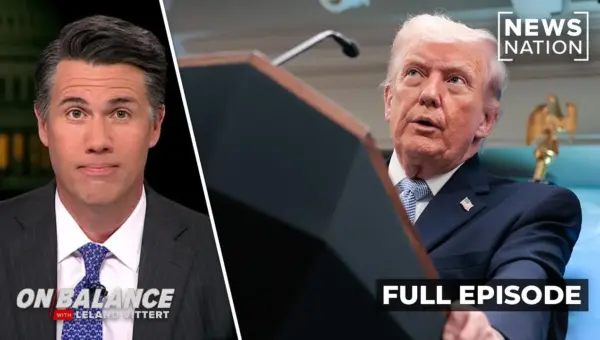
Iran Smells Fear: Trump’s Iran Strategy Falters
President Trump faces a complex situation with Iran, marked by shifting strategies and mixed messages. Meanwhile, California's Democratic party struggles to find a gubernatorial candidate, with Republicans leading the polls. Experts debate Iran's intentions and the U.S.'s best path forward, emphasizing strength and consistency.


US Oil Blockade Targets China’s Economy
The U.S. has blockaded Iranian oil, aiming to curb China's economic growth by limiting its access to discounted energy. This move highlights the ongoing economic competition between the two global powers. Investors should understand how inflation and geopolitical events create market opportunities.
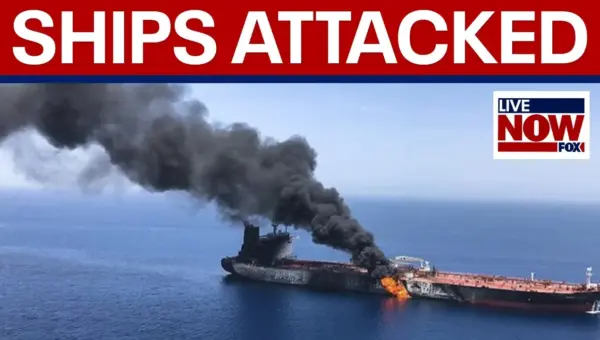
Iran Attacks Ships in Strait of Hormuz Amid Ceasefire Concerns
At least two ships have been attacked in the Strait of Hormuz, a critical shipping lane, raising new questions about ongoing efforts to de-escalate tensions. Iran's paramilitary Revolutionary Guard has reportedly attacked a third vessel. This news comes as a ceasefire between the US and Iran was extended, creating a confusing picture of the current situation.