China Escalates South China Sea Claims
China is aggressively expanding its military presence and control in the South China Sea, building new bases and using tactics like dumping cyanide to assert its claims. This escalation occurs while the US is focused elsewhere, raising concerns about regional stability and future confrontation.

China Escalates South China Sea Claims
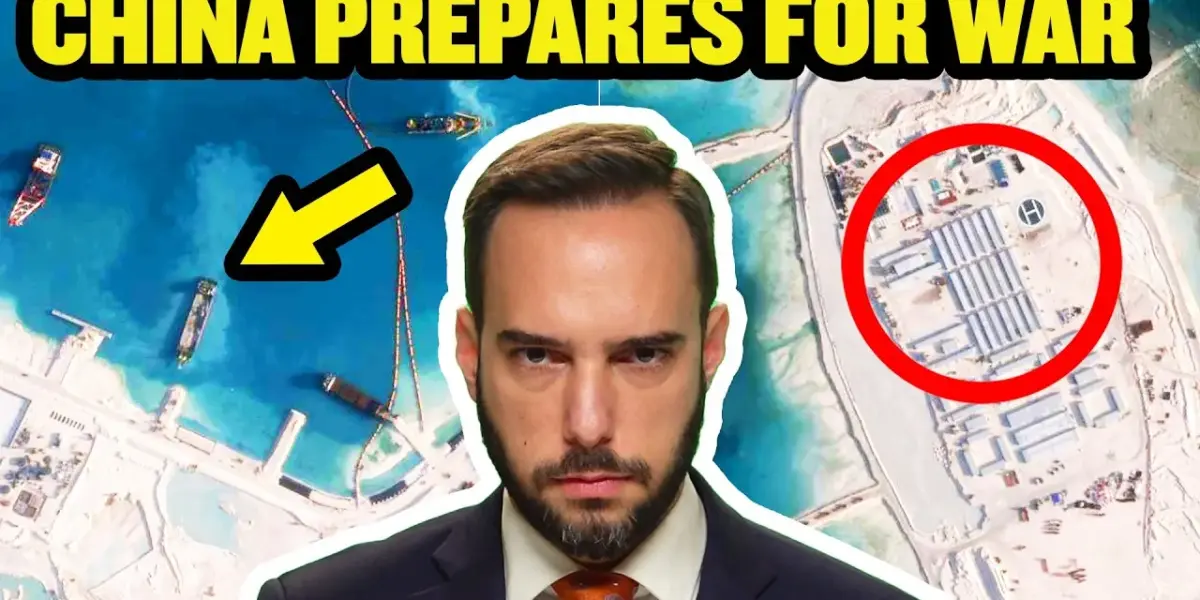
China is increasing its military presence and aggressive actions in the South China Sea. This comes as the United States focuses its attention on other global issues. China has been building military bases on artificial islands it created.
The Chinese Communist Party (CCP) claims a large area of the South China Sea as its territory. Other countries in the region strongly disagree with this claim, leading to frequent confrontations.
Past Aggression and New Tactics
For years, China has used tactics like blockades and confronting foreign fishing boats. These actions often involve using water cannons and even physical attacks with axes and knives.
Despite global attention elsewhere, China is not backing down. Instead, it is taking more extreme measures, such as Chinese fishermen dumping cyanide into the sea near the Second Thomas Shoal.
Cyanide Dumping Near Second Thomas Shoal
The Philippine Navy has reported Chinese fishermen suspected of using cyanide since 2015, but proof was lacking until recently. After analyzing confiscated materials, the Philippines has confirmed the use of cyanide.
This action aims to destroy local fish populations, which serve as a vital food source for Filipino Navy personnel stationed on the BRP Sierra Madre, a World War II ship used as a makeshift base. The cyanide could also damage the coral reefs supporting the Sierra Madre, though no damage to the ship itself has been reported yet.
Broader Pattern of Harassment
This cyanide incident is part of a larger pattern of Chinese assertiveness. Recent months have seen China escalate its tactics. These range from minor annoyances, like sending unwanted messages to the phones of Philippine officials, to more serious actions.
China recently aimed its fire control radar at a Philippine warship near Sabina Shoal, a step short of open conflict. China also fired flares at a Philippine Coast Guard plane near Mischief and Subi Reefs, which are militarized Chinese artificial islands.
Island Building and Strategic Expansion
Satellite images reveal China’s continued expansion in the South China Sea. China has placed floating barriers to block access to Scarborough Shoal, an area it has occupied since 2012. Vietnam, another country with territorial disputes with China, has also built artificial islands.
China has responded by undertaking massive dredging projects to create even larger outposts. At Antelope Reef in the Paracel Islands, China has transformed a small outpost into one of its largest in the region in a matter of months.
Antelope Reef’s Military Potential
The expanded Antelope Reef outpost is large enough to support significant military infrastructure. This includes a runway, power plants, underground storage, and facilities for surface-to-air and anti-ship missiles.
Its strategic location near Hainan Island, a major Chinese military base, suggests it could play a key role in future conflicts. Such a base could be used for laying mines, resupplying aircraft carriers, or detecting submarines.
Salami-Slicing Strategy
Vietnam has protested China’s actions, but faces limited options. China’s approach is often described as “salami slicing.” This means gradually taking small actions, knowing that other countries may not respond forcefully to avoid war.
Over time, these small steps lead to China establishing a significant military presence across the region. This strategy has led to concerns about China eventually deploying nuclear bombers from these bases.
Global Impact and Future Scenarios
The escalating tensions in the South China Sea highlight a growing confrontation between the United States and China. As the US deals with other international challenges, China is steadily increasing its strategic position in a vital global waterway.
This expansion challenges established international norms and the security interests of numerous regional nations. The situation suggests a continued period of heightened risk and potential conflict in the Indo-Pacific.
Historical Context
China’s actions build upon its long-standing claims in the South China Sea, often referred to as the “nine-dash line.” These claims are not recognized by international law, particularly the United Nations Convention on the Law of the Sea (UNCLOS). Past incidents, like China’s seizure of Scarborough Shoal in 2012, demonstrate a pattern of asserting control through sustained presence and pressure, rather than outright invasion.
Economic Considerations
The South China Sea is a critical global trade route, with trillions of dollars in goods passing through it annually. Control or disruption of these sea lanes has significant economic implications for all nations involved.
China’s assertiveness could impact shipping costs and supply chain reliability. While the transcript doesn’t detail specific economic sanctions or trade figures related to the South China Sea disputes, the region’s economic importance is a key factor in the ongoing geopolitical maneuvering.
Regional Alliances and Rivalries
The South China Sea disputes involve multiple nations, including the Philippines, Vietnam, Malaysia, Brunei, and Taiwan, all of whom have overlapping claims or interests. China’s actions often strain its relationships with these neighbors, pushing some closer to the United States for security assurances. The ongoing territorial disputes and China’s expanding military footprint are reshaping regional security dynamics, creating a complex web of alliances and rivalries.
Future Outlook
The current trajectory suggests continued escalation in the South China Sea. China is likely to persist with its island-building and militarization efforts, while regional nations and the US will likely continue to contest these actions through diplomatic means and freedom of navigation operations. The risk of miscalculation or accidental escalation remains a significant concern, particularly given the increasing frequency of close encounters between Chinese and Philippine vessels and aircraft.
The next major development to watch will be how regional powers and the US respond to China’s ongoing militarization of its artificial islands and its assertive tactics against neighboring countries’ vessels.
Source: While the US Fights Iran, China Makes Its Move (YouTube)

Related Articles
Navy Deploys Sea Drones to Clear Hormuz Mines
The U.S. Navy is deploying advanced sea drones to clear potential mine threats in the Strait of Hormuz, a vital shipping lane. Retired Navy SEAL Mike Sarraille detailed the types of Iranian mines and the technology used to neutralize them. The situation also involves U.S. Ambassador Mike Walz defending President Trump's stance on targeting Iran's civilian infrastructure if necessary.

US Seizes Iranian Ship, Escalating Tensions in Strait of Hormuz
The U.S. Navy has seized an Iranian cargo ship in the Strait of Hormuz, escalating tensions and drawing threats of retaliation from Iran. While military actions intensify, diplomatic efforts are underway, with Pakistan potentially mediating talks between the two nations. Both countries face economic pressures, creating a complex dynamic that could either lead to further conflict or a negotiated resolution.

China Aids Iran, Fuels Geopolitical Tensions
China's alleged provision of targeting satellite data and advanced weaponry to Iran has significantly heightened geopolitical tensions. This support includes enabling Iran to operate a Chinese satellite and supplying supersonic missiles, placing China on an opposing side to U.S. interests.