PM Faces Parliament Over Vetting Scandal, Robbins Next
Prime Minister Keir Starmer faces Parliament today over the Peter Mandelson vetting controversy, expected to blame senior civil servant Sir Olly Robbins. Robbins' testimony tomorrow is seen as critical, with potential implications for Starmer's leadership. Meanwhile, Londoners face significant disruption from Tube strikes this week.

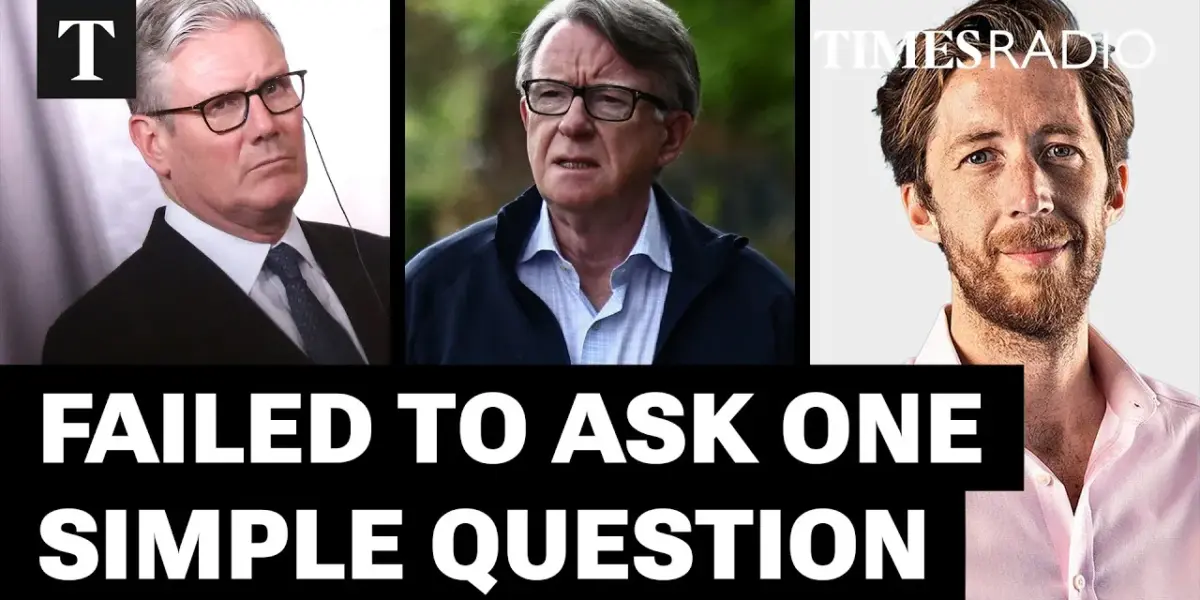
Prime Minister Keir Starmer is set to address Parliament this afternoon regarding the controversy surrounding the vetting of Peter Mandelson for an ambassadorial role. The Prime Minister is expected to place the blame on senior civil servant Sir Olly Robbins, claiming Robbins acted alone and ignored internal recommendations.
This comes after reports that the Prime Minister and Foreign Secretary were not fully informed about the vetting process. Scottish Secretary Douglas Alexander stated that the Prime Minister would have expected to be aware of the security clearance granted to Peter Mandelson, especially when it went against the vetting agency’s advice.
Robbins Faces Scrutiny
The situation has led to questions about why Sir Olly Robbins, a key figure in the vetting process, did not inform the Prime Minister of the issues. Government ministers have been quick to emphasize that the vetting process is independent of political interference. This stance has drawn some skepticism, given past government statements.
Sir Olly Robbins is scheduled to speak tomorrow, in what is being described as a significant parliamentary event. His testimony could heavily influence the outcome of this controversy.
Sir Olly Robbins will likely argue that he was legally barred from sharing specific vetting details with politicians. However, Starmer’s team contends that Robbins should have at least disclosed the fact that Mandelson had failed the vetting process.
A simple inquiry from the Prime Minister’s office to the Foreign Office could have clarified the situation. This basic step, akin to common office practices, was seemingly not taken.
Questions Over Deliberate Omission
The failure to ask basic questions about Peter Mandelson’s vetting raises concerns. It suggests a potential deliberate decision to avoid seeking information.
This could imply that those in power were aware of the implications of asking such questions. The Prime Minister’s office may have been consciously avoiding information that could have caused significant problems.
The government will likely focus on framing this as a dispute between ministers and the civil service. By getting bogged down in detailed discussions about constitutional law, they hope to lose public interest.
Many people may tune out when the conversation turns to complex legal matters and constitutional reform acts. The public may not be as engaged with these details as politicians in Westminster.
Broader Implications and Political Fallout
The core issue remains that Starmer was aware of Mandelson’s connections to China and Jeffrey Epstein. He appointed Mandelson before the vetting process was even complete.
This implies that pressure may have been applied to expedite Mandelson’s vetting. It would have been highly embarrassing for everyone involved if the vetting had stopped Mandelson’s appointment after it had already been announced.
Some commentators have drawn parallels to other political figures, suggesting that many in Donald Trump’s inner circle would not pass rigorous vetting. This highlights a potential double standard in the public and political reaction. The anger over Mandelson’s vetting is contrasted with the support he received when he was seen as instrumental in securing a trade deal.
Potential End for Starmer?
The current political climate raises questions about the future of Keir Starmer as Prime Minister. Sir Olly Robbins’ testimony tomorrow could be decisive.
However, a change in leadership is unlikely this week. The timing, just before local elections, would be disadvantageous for the Labour Party.
The most strategic move for restive Labour MPs would be to wait until after the local elections. A weakened Prime Minister, already perceived as a ‘lame duck,’ facing poor election results would create the ideal moment for a leadership challenge. This approach would maximize political impact.
Economic Concerns Amidst Global Instability
Paul Johnson, a former civil servant and economist, discussed the broader economic situation. He noted that the closure of the Strait of Hormuz has impacted oil prices. Market reactions to geopolitical events, particularly statements from world leaders, remain a complex factor.
Despite ongoing global disruptions, global stock markets have shown remarkable resilience. While oil prices have been affected, broader market indices remain high compared to previous years. It is unclear whether markets are underestimating the potential duration of conflicts or are overly confident in a swift resolution.
The real economy is experiencing effects through increased government borrowing rates. Expectations for interest rate cuts have shifted, with the Bank of England likely to maintain current rates or even increase them if inflation rises further. Concerns about inflation and government responses are also impacting the economy.
Fertilizers, which affect food prices, and other economic sectors are indirectly dependent on oil. The UK is predicted to face a technical recession in the coming months. However, growth forecasts were already low, meaning the UK was not far from such a scenario.
War Bonds Explained
Reports suggest Rachel Reeves is considering issuing ‘war bonds’ to fund increased defense spending. Johnson explained that war bonds are simply a form of government borrowing used to cover short-term costs during a conflict. They are not designed to fund long-term increases in spending.
Funding long-term defense spending requires taxation, not borrowing. Issuing ‘war bonds’ for such purposes is seen as a confusing tactic, potentially blurring the lines between short-term crisis funding and sustained budget increases. The intention might be to obscure the need for higher taxes.
London Faces Tube Strikes
London is bracing for significant disruption as Tube strikes are set to occur from Tuesday through Friday. Two 24-hour strikes are scheduled, with a brief gap in between. However, this gap will offer little relief due to the displacement of trains and staff.
The strikes stem from a dispute over changes to working patterns, specifically a shift from a five-day to a four-day week. While one union, ASLEF, has accepted the new terms, the RMT union is resisting. They are concerned about fatigue from longer shifts and are seeking to negotiate shorter shifts within the current five-day structure.
Several key Tube lines will be completely shut down during the strike days. These include the Piccadilly line, the Circle line, and parts of the Metropolitan and Central lines.
A reduced service will operate on other lines, but significant delays and overcrowding are expected. Transport for London (TfL) is advising passengers to seek alternative travel arrangements.
Otageni’s Secret Flavor Factory
In a lighter segment, the discussion turned to Yotam Ottolenghi’s ‘secret flavor factory.’ Ottolenghi, known for popularizing vegetables in British cuisine, sources much of his produce from a greenhouse in Tottenham. This facility supplies his restaurant, ROVI, in Fitzrovia.
The greenhouse, located near White Hart Lane, is a successful urban farming initiative. Run by chief grower Maxenso, it produces large quantities of tomatoes, herbs, and salad greens. The project aims to reduce the restaurant’s carbon footprint by sourcing ingredients locally.
A standout discovery from the greenhouse was a ‘Kyoto sage.’ This herb possessed a distinct flavor and aroma remarkably similar to pineapple. It is reportedly being considered for use in cocktails, adding an unusual twist to beverages.
Source: Starmer Had Just One Question To Ask – He Failed In Doing That | Andy Silvester (YouTube)

Related Articles
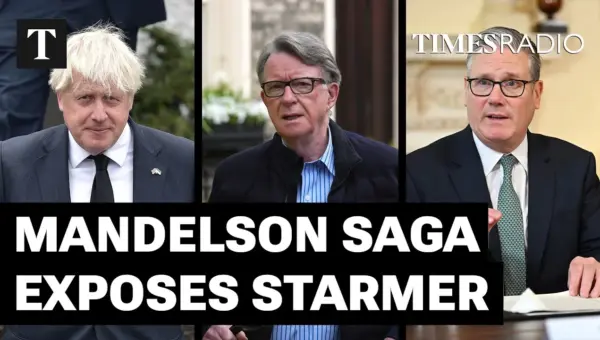
PM Faces Reckoning Over Envoy’s Security Vetting Scandal
Prime Minister Keir Starmer faces intense scrutiny over the appointment of Peter Mandelson as ambassador, who was given the role despite failing security vetting. The scandal has drawn comparisons to past governments and raised questions about accountability and adherence to process. Starmer is set to address Parliament, while Sir Oliver Robbins will be questioned by a select committee.


PM Faces Fury Over Mandelson Security Scandal
Prime Minister Keir Starmer is facing intense scrutiny after it was revealed Peter Mandelson received the highest level of security clearance ('Strap 3') despite failing initial vetting. Starmer's office plans to blame Sir Olly Robbins, the outgoing head of the Foreign Office, for not disclosing the vetting failure. The controversy raises questions about whether Parliament was misled and could lead to legal battles.
PM Faces Liar or Fool Choice Over Mandelson Scandal
Prime Minister Keir Starmer faces Parliament amidst a growing scandal over the appointment of ambassador Peter Mandelson. Accusations of misleading the House have surfaced after it was revealed Mandelson failed security vetting, a fact Starmer claims he was not told. The situation forces Starmer into a difficult position, potentially having to appear foolish rather than dishonest.