Starmer Defends Defence Amidst Heated PMQs Exchange
Keir Starmer defended Labour's defence policy during a heated Prime Minister's Questions session, facing scrutiny over military spending and international roles. Political commentator Patrick Maguire analyzed Starmer's strategy to position Labour as strong on national security.

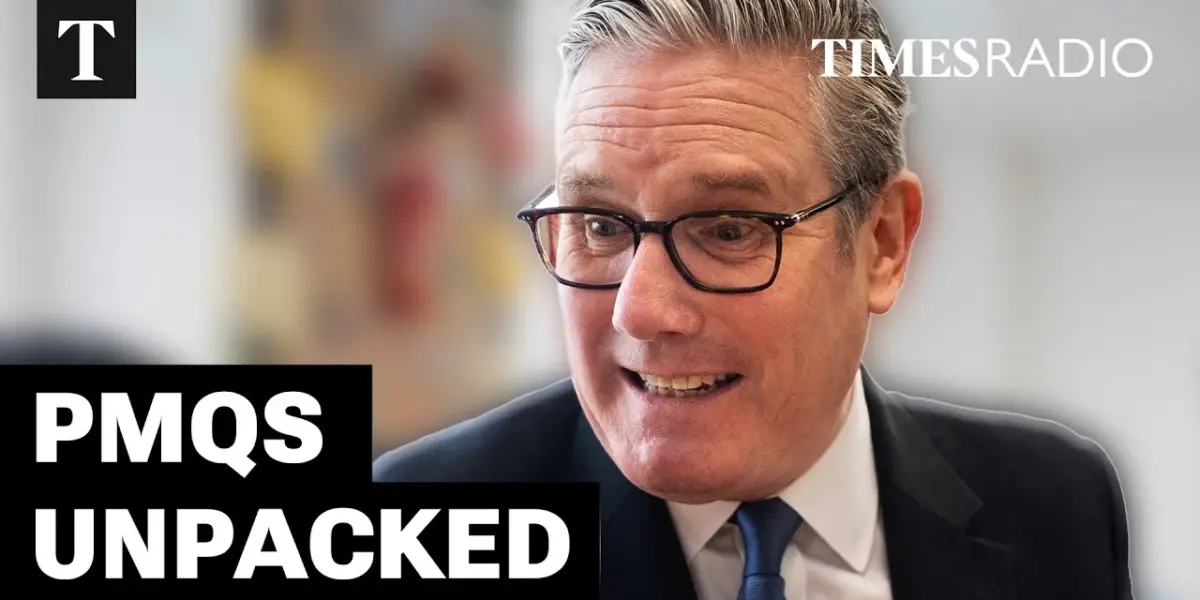
Starmer Defends Defence Amidst Heated PMQs Exchange
During a lively session of Prime Minister’s Questions (PMQs) on Wednesday, Keir Starmer, the leader of the opposition, found himself defending his party’s stance on national defence. The debate, which featured commentary from The Times’s chief political commentator Patrick Maguire and comedian Andrew Maxwell, highlighted key disagreements and strategic positioning within the UK’s political landscape. The exchanges focused on issues of military spending, international alliances, and the government’s approach to global security challenges.
Opposition Leader Faces Scrutiny
Prime Minister’s Questions often serve as a crucial platform for the opposition to challenge the government’s policies. This week was no exception, as Keir Starmer pressed the government on its defence strategy.
He questioned the adequacy of current spending levels and the clarity of the UK’s role in ongoing international conflicts. Starmer argued that a stronger, more visible commitment to defence was necessary to maintain Britain’s influence and security.
“We must ensure our armed forces have the resources they need to protect our nation and our interests abroad,” Starmer stated, emphasizing the importance of a robust defence budget.
Government Responds to Defence Concerns
The government, in turn, defended its record on defence, highlighting recent investments and strategic partnerships. Ministers asserted that they were taking a responsible approach to national security, balancing current needs with long-term planning.
They pointed to increased defence spending and ongoing military exercises as evidence of their commitment. The Prime Minister’s office suggested that Labour’s criticisms were unfounded and politically motivated, aiming to sow doubt rather than offer constructive solutions.
Analysis of the PMQs Session
Patrick Maguire, a chief political commentator for The Times, provided an in-depth analysis of the exchanges. He noted that Starmer’s defence of his party’s position was a strategic move, aiming to present Labour as a credible alternative on national security.
Maguire suggested that the opposition leader was trying to counter perceptions of weakness on defence, a long-standing challenge for the Labour party. The debate, he explained, was not just about current policy but also about shaping public perception ahead of future elections.
Comedian Andrew Maxwell offered a more light-hearted, yet insightful, perspective on the proceedings. He often uses humour to highlight the theatrical elements of parliamentary debates.
Maxwell commented on the sharp exchanges and the carefully crafted language used by politicians on both sides. His observations often draw attention to the underlying political calculations driving the public discourse.
Key Issues Under Discussion
Several core issues dominated the defence-focused PMQs. These included:
- Military Spending: Questions were raised about whether current defence budgets were sufficient to meet evolving global threats.
- International Alliances: The strength and effectiveness of partnerships with NATO and other allies were debated.
- Technological Advancement: The need to invest in modern military technology and cyber defence capabilities was highlighted.
- Readiness of Armed Forces: Concerns were expressed about the operational readiness and equipment levels of the UK’s military personnel.
Broader Implications for UK Politics
The discussion around defence at PMQs has significant implications for the broader political landscape. National security is a key concern for voters, and the ability of a party to present a strong and credible defence policy can significantly influence public opinion.
Starmer’s efforts to define Labour’s stance on defence suggest a recognition of this fact. It indicates a move to broaden the party’s appeal beyond its traditional base.
For the government, maintaining a perception of strength and competence on defence is crucial for its own electoral prospects. Any perceived missteps or weaknesses in this area could be exploited by opponents. The ongoing debates reflect a strategic battle for control over the narrative on national security, a theme likely to resonate throughout future political campaigns.
Looking Ahead
As international tensions continue to evolve, defence policy will undoubtedly remain a central issue in British politics. All eyes will be on how both the government and the opposition continue to shape and articulate their strategies. Future parliamentary sessions and public statements will be closely watched for further developments in this critical area of national interest.
Source: LIVE PMQs Unpacked: Keir Starmer Defends Defence (YouTube)

Related Articles


UK Government Plans for CO2 Shortages Spark Food Security Fears
The UK government is reportedly developing contingency plans for potential carbon dioxide (CO2) shortages, raising concerns about food security. These preparations, codenamed 'Exercise Turnstone,' echo strategies used during Brexit and highlight vulnerabilities in national supply chains. Meanwhile, the Labor Party is adopting a tougher stance on global conflicts and figures like Donald Trump, though its effectiveness in boosting popularity remains uncertain.

House Votes to Extend Spy Powers Amid Fierce Debate
The House is debating a controversial spy bill that would renew Section 702 of FISA for 18 months without reforms. Critics worry about government spying on Americans, while supporters say it's vital for national security. The bill faces opposition from Democrats and some Republicans, despite calls for unity from former President Trump.


Turkey Faces Shocking School Violence: Two Shootings in Days
Turkey is reeling after two school shootings in two days, an event considered extremely rare for the country. The violence has left four dead and over 30 injured, prompting national shock and calls for investigation. Authorities are probing how young students obtained weapons and why such attacks occurred.