Robots Race to Finish Line in Beijing Half Marathon
Humanoid robots are set to compete in Beijing's second-ever half marathon this weekend, showcasing significant industry improvements. The race features both remote-controlled and autonomous robots, highlighting the global competition in AI and robotics development. Experts predict a massive surge in humanoid robot numbers by 2050.

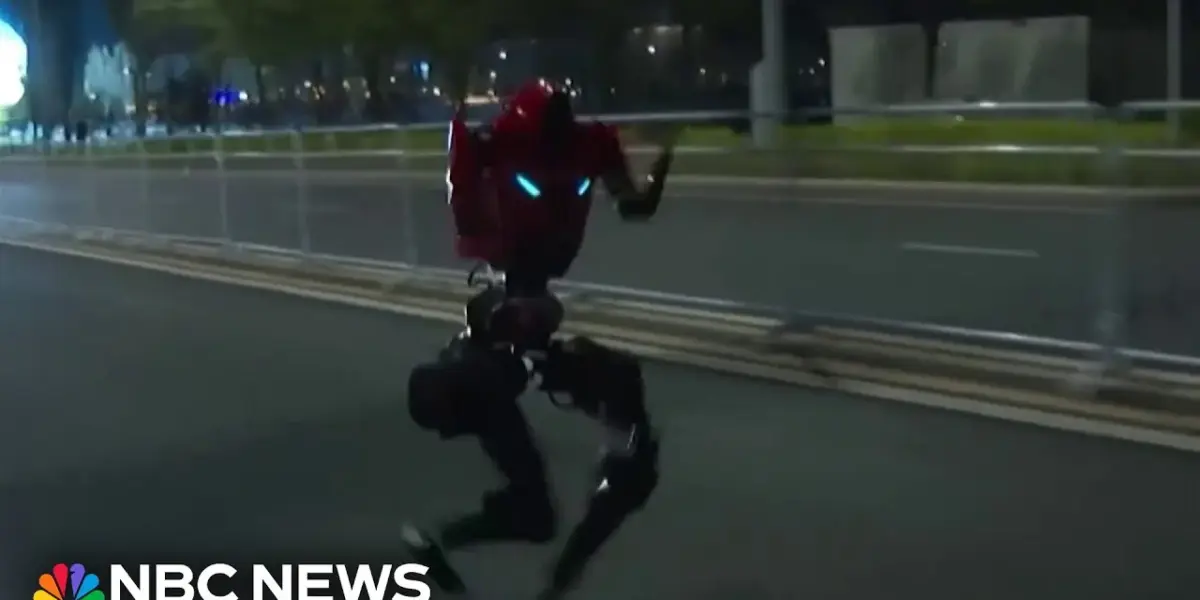
Robots Hit the Track for Beijing Half Marathon
Humanoid robots are lacing up their virtual running shoes this weekend to compete in Beijing’s second-ever half marathon. This event pits advanced machines against each other and, for some, against human runners. Last year, human participants finished the race more than an hour and a half ahead of the robots, but organizers expect a much closer competition this year.
A marketing manager for a leading Chinese robot maker stated that this year’s race reflects significant improvements across the entire industry. The outcome of this man versus machine challenge remains to be seen, but the race itself highlights the ongoing global competition to develop sophisticated humanoid robots.
The Global Race for Robot Supremacy
The development of humanoid robots is a key focus for major global powers, particularly the United States and China. Beyond athletic competitions, these robots are showing impressive capabilities in various fields. For example, robots have performed complex, choreographed routines for cultural events like Chinese New Year celebrations.
Robots are increasingly being integrated into factory settings, taking on roles previously performed by humans. This integration raises important questions about the level of autonomy these machines possess versus the degree to which they are controlled or pre-programmed by human operators.
Understanding Robot Autonomy in the Race
The Beijing half marathon features two main categories of robot participants: autonomous and remote-controlled. The distinction is crucial for understanding their performance and the technology involved.
Remote-controlled robots, while easier to operate in terms of basic movement like running, still rely heavily on human guidance. A person on the sidelines must direct their path and help them avoid obstacles, essentially acting as the robot’s eyes and brain.
In contrast, the autonomous navigation teams represent a higher level of technological advancement. These robots are designed to perceive their environment, make decisions, and navigate the course without direct human input. This year, these advanced autonomous robots will make up nearly 40% of the over 100 participants in the event.
The Future of Humanoid Robots: A Projected Boom
The advancements seen in this year’s robot half marathon are indicative of a broader trend. Experts predict a massive increase in the number of humanoid robots in the coming decades.
A report by Morgan Stanley forecasts that China could have over 300 million humanoid robots by the year 2050. The United States is also expected to see significant growth, with an estimated 70 million humanoid robots by the same year. This projection highlights the growing importance and potential widespread adoption of this technology.
Rapid Technological Progress
The pace of development in robotics is astonishing. According to industry observers, the leaps and bounds made in this field every three to six months are incredible. This rapid progress suggests that the capabilities of humanoid robots will continue to expand dramatically.
While development has encountered some challenges, this year’s competition in Beijing is expected to showcase a new level of performance. The event is a public demonstration of how far robot technology has come and offers a glimpse into its future applications.
The robots’ participation in the half marathon is more than just a sporting event; it’s a testbed for real-world applications. Success in navigating a racecourse could translate to improved performance in logistics, elder care, and hazardous environment exploration.
As the race unfolds this weekend, observers will be looking closely at the autonomous robots. Their ability to complete the course efficiently and safely will be a key indicator of progress. The results will offer valuable insights into the current state of artificial intelligence and robotic control systems.
The global race to develop advanced humanoid robots is accelerating. Events like the Beijing half marathon provide a unique platform to compare different approaches and measure progress. The continued investment and innovation in this area suggest that humanoid robots will play an increasingly significant role in our lives.
Looking ahead, the next major milestone will likely be robots performing tasks that require fine motor skills and complex decision-making in unpredictable environments. The advancements seen on the track are just the beginning of this technological journey.
Source: Chinese humanoid robots prepare for second-ever half marathon in Beijing (YouTube)

Related Articles


Markets Brace for Uncertainty Amid Geopolitical Tensions, AI Boom
Geopolitical tensions surrounding Iran are creating market uncertainty, but a booming artificial intelligence sector and a stable labor market are providing significant economic support. Investors are watching closely as AI investment continues to drive growth and buffer against potential downturns.


AI Models Learn by Embracing Digital ‘Suffering’
Artificial intelligence models are learning to solve complex problems by experiencing digital 'pain' through reinforcement learning. This method involves intentional failure and negative feedback, pushing AI to adapt and improve. It mirrors human learning processes of trial, error, and delayed reward.


AI Tracks Oil Tankers, Aiding US Strategy Against China
The US is employing advanced AI to track oil tankers, aiming to counter China's reliance on foreign oil. This strategy uses AI to monitor ships, identify sanctioned cargo, and influence global energy markets by disrupting supply chains. The goal is to assert energy dominance and shape international economic outcomes.