Trump Urges GOP: No Deals Without Voter ID, Citizenship Proof
Former President Donald Trump is demanding that Republicans refuse any legislative deals unless they include voter ID laws and proof of citizenship for voting. He strongly criticized mail-in voting, calling it "mail-in cheating." Trump urged the GOP to pass his "Save America Act" to ensure election integrity nationwide.

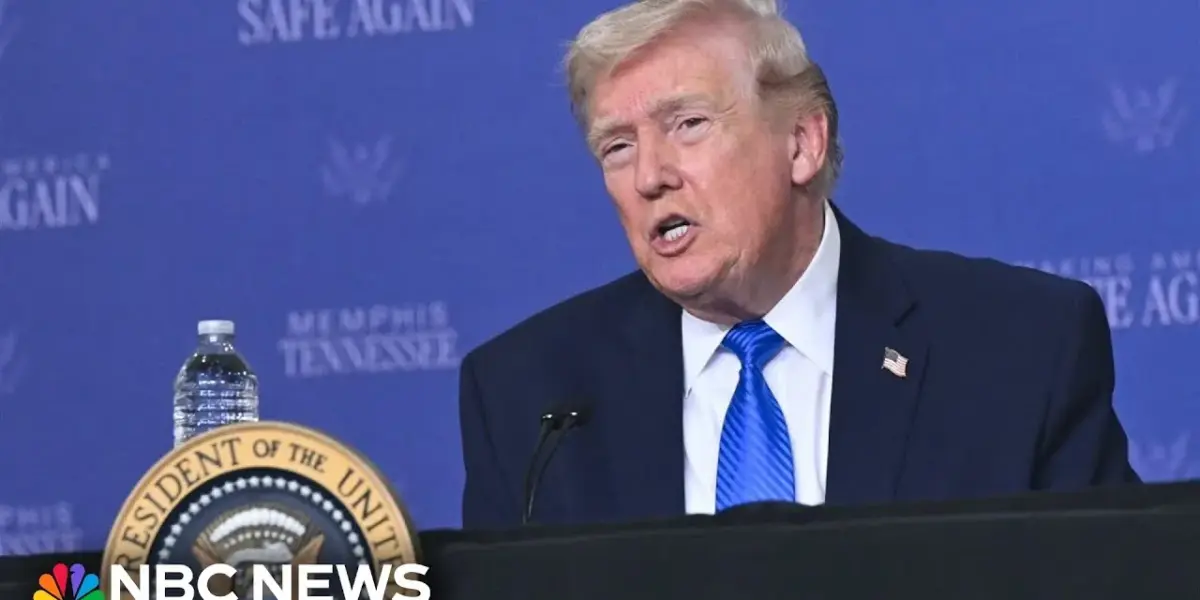
Trump Demands Voter ID in GOP Negotiations
Former President Donald Trump has instructed Republican lawmakers not to agree to any legislative deals unless they include strict voter identification requirements and proof of citizenship for voting. He stated this position forcefully, emphasizing his belief that these measures are crucial for election integrity. Trump made these remarks, urging Republicans to stand firm on these demands, suggesting that any compromise without them would be a significant misstep.
Trump specifically called for the passage of what he termed the “Save America Act.” He argued that requiring voter ID is a common-sense measure, noting that many other countries implement similar systems. This directive comes as Republicans consider various legislative priorities and potential negotiations with Democrats.
Concerns Over Mail-In Voting
A central theme of Trump’s message was his strong opposition to widespread mail-in voting, which he has frequently labeled as “mail-in cheating.” He believes that mail-in ballots create significant opportunities for fraud and undermine public confidence in election results. Trump asserted that the United States is an outlier among developed nations in its approach to mail-in voting procedures.
He presented voter ID as a fundamental aspect of election security, akin to a national security issue. Trump dismissed arguments that such requirements are difficult for citizens to meet. He called such claims insulting to the public’s ability to follow simple procedures.
Broader Political Context
Trump also linked these election integrity concerns to current challenges facing the nation, citing issues at airports as an example of what he sees as Democratic mismanagement. He suggested that the public is experiencing significant struggles due to current policies. Trump implied that focusing on election security is a way to address broader concerns about the country’s direction under the current administration.
He indicated that his administration, if he were still in office, would have implemented stronger measures. Trump mentioned that while he was in charge, they were working to improve such situations. The “Save America Act” proposal suggests a legislative package aimed at federal election reform, with voter ID and citizenship verification fundamentally.
Arguments for Voter ID
Trump’s call for voter ID legislation is based on the principle that requiring identification at the polls ensures that only eligible citizens cast votes. He views this as a straightforward way to prevent potential fraud and maintain the integrity of the electoral process. The argument is that voters should present a form of identification, such as a driver’s license or a state-issued ID card, before casting their ballot.
Supporters of voter ID laws often point to existing requirements in many states for certain transactions, like purchasing alcohol or picking up prescriptions, as evidence that such identification is a normal part of daily life. They argue that if citizens can provide ID for these activities, they should be able to do so for voting. This perspective frames voter ID as a minimal burden for the vast majority of eligible voters.
Opposition and Counterarguments
Critics of strict voter ID laws, including many Democrats and civil rights organizations, argue that these measures disproportionately disenfranchise certain groups of voters. They contend that eligible voters, particularly low-income individuals, the elderly, students, and minority groups, may face greater difficulties in obtaining the required forms of identification. These obstacles can include the cost of obtaining documents, transportation to government offices, and time off work.
Opponents also question the extent of voter fraud that voter ID laws are designed to prevent, often citing studies that suggest in-person voter impersonation is exceedingly rare. They view these laws as an unnecessary barrier to voting that serves to suppress turnout rather than secure elections. The debate often centers on balancing election security with voter access and the fundamental right to vote.
The “Save America Act”
While the specific details of the “Save America Act” were not fully elaborated in the transcript, Trump’s remarks indicate it is intended to be a comprehensive piece of legislation focused on election integrity. The core components he highlighted are mandatory voter identification and proof of citizenship for all voters. This suggests a federal push to standardize election laws across the country, overriding state-specific rules that may differ.
The inclusion of citizenship verification would likely require voters to present documentation proving their legal status in the United States. This could involve birth certificates, passports, or naturalization papers. Such a requirement would go beyond the current practices in many states, which often rely on self-attestation of citizenship during voter registration.
Future Implications
Trump’s directive places significant pressure on Republican lawmakers as they navigate legislative opportunities. His insistence on making voter ID a non-negotiable element of any deal could lead to legislative stalemates if Democrats remain opposed. The effectiveness of this strategy will depend on the unity of the Republican party and their willingness to prioritize this issue over other potential legislative gains.
The call for federal action on voter ID also raises questions about states’ rights and the balance of power between federal and state governments in regulating elections. Future legislative sessions will likely see continued debate and potential conflict over these fundamental aspects of the American electoral system. The upcoming election cycle will be closely watched to see how these debates influence voter access and election administration.
Source: Trump tells Republicans: 'Don't make any deal' unless it includes voter ID (YouTube)

Related Articles
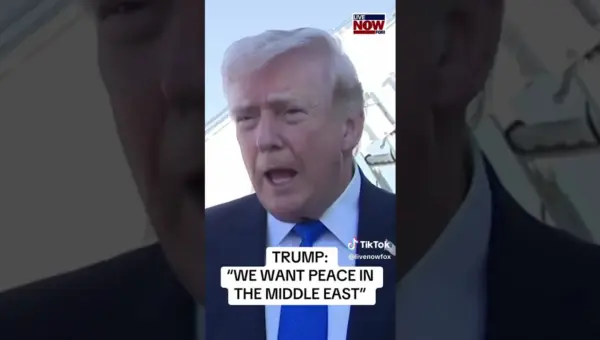
Trump Demands Iran Halt Nuclear Program, Seeks Regional Peace
President Donald Trump has laid out firm demands for Iran, insisting on a complete halt to its nuclear program and missile development. He stated that any agreement must ensure Iran does not possess nuclear weapons and seeks to promote peace across the Middle East. Trump believes this approach would benefit Iran, Israel, and other regional allies.
Trump Highlights Crime Drop in Memphis, Links to Border Security
Former President Donald Trump met with a Memphis safety task force, celebrating a sharp decline in violent crime and linking the success to national security efforts. He discussed ongoing negotiations with Iran and strongly advocated for voter ID and proof of citizenship requirements in homeland security funding. The former president highlighted significant drops in crime statistics for Memphis following the task force's intervention.
Trump Declares Victory Over Iran, Links Border Security to Voting Rights
Donald Trump claimed victory over Iran and linked Homeland Security funding to voter ID laws during a speech in Memphis. He asserted his administration dismantled Iran's military, leading to negotiations and preventing nuclear weapon development. Trump also highlighted crime reduction in Memphis as a success, while demanding strict voter identification and proof of citizenship for elections.