DNA Tech Solves Cold Cases, Offers Hope in Guthrie Disappearance
The Nancy Guthrie disappearance case faces scrutiny over early investigative missteps, but investigative genetic genealogy offers new hope. This DNA technology, which solved the 30-year-old Michella Welch murder, could crack the Guthrie case. Experts discuss the pain of ambiguous loss and the challenges of unsolved disappearances.


Cold Case DNA Technology Offers New Hope in Nancy Guthrie Search
The investigation into the disappearance of Nancy Guthrie, missing for over two months, is facing criticism for alleged inexperience and early missteps. However, a powerful new tool, investigative genetic genealogy, is emerging as a beacon of hope for families seeking answers in unsolved cases. This technology, which helped identify the killer in the decades-old Michella Welch murder, could be key to finding Nancy Guthrie.
Criticism Mounts Over Initial Investigation
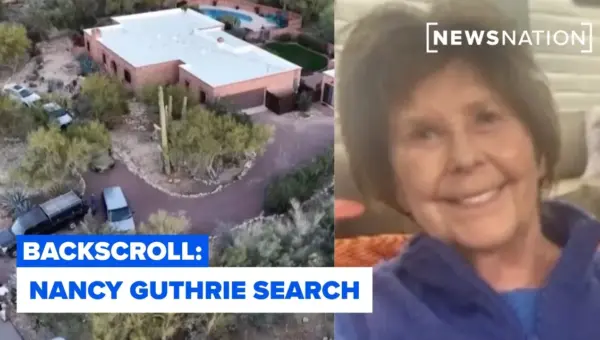
Nancy Guthrie vanished from her home on January 11th, without her essential medication. Sixty-three days later, her whereabouts remain unknown. A source close to the investigation has raised serious concerns about the early handling of the case. They believe there was a “rush to judgment” at the scene, where investigators initially treated the disappearance as a search and rescue mission rather than a potential crime. This approach, the source suggests, may have negatively impacted the critical early hours of the investigation.
Adding to the concerns, the supervisor who first arrived at Nancy Guthrie’s home reportedly had no prior experience investigating a homicide. This lack of experience, coupled with the Pima County Sheriff Chris Nanos’ decision not to immediately involve the FBI, has raised questions. The source also indicated that evidence collection may have been insufficient, as detectives had to return to the scene multiple times. Currently, investigators have no direct suspect, a situation not surprising to those familiar with the case’s troubled start.
Investigative Genetic Genealogy: A Powerful Tool
The search for Nancy Guthrie has spotlighted the growing effectiveness of investigative genetic genealogy. This technique uses DNA evidence from a crime scene to build detailed family trees, ultimately leading to the identification of suspects. It was this method that helped solve the 1986 murder of 12-year-old Michella Welch in Tacoma, Washington.
Michella disappeared while with her sisters, and her body was found later that night, having been sexually assaulted and murdered. The case went cold for over 30 years until CeCe Moore, a leading expert in investigative genetic genealogy, was brought in. Within hours, Moore used DNA from the crime scene to identify Gary Hartman, a psych ward nurse living in the same area, as the killer. Detectives confirmed his identity by collecting his DNA from a restaurant napkin.
Moore, who has solved over 300 cases using this method, believes it can crack the Nancy Guthrie case. She explained on the podcast “The Truth of the Matter” that identifying Michella’s killer brought a sense of closure and justice to her family. Nicole Eby, Michella Welch’s sister, shared the profound impact of the decades-long uncertainty. “Not knowing who did it was like, you know, is he still after other people? Is it, you know, an attack on our family?” Eby recounted, describing the pain of not knowing for sure. She found the confirmation that Hartman was the killer, after so many years, to be overwhelming and ultimately healing, despite the painful process of confronting him in court.
The Pain of Ambiguous Loss
For Savannah Guthrie, Nancy’s daughter and co-anchor of NBC’s Today Show, the prolonged uncertainty represents a profound challenge. After returning to work, Savannah spoke about the unique pain of not knowing her mother’s fate. Dr. Pauline Boss, a therapist who coined the term “ambiguous loss,” explained this concept. It refers to a loss where there is no verification, meaning a person is physically missing, and the family does not know if they are dead or alive.
Dr. Boss noted that this type of loss, first researched with the families of American servicemen missing in action in Vietnam, cannot be resolved without definitive evidence, such as DNA, a body, or the person’s return. For those experiencing ambiguous loss, the only path forward is to learn to live with the uncertainty. She advised that society needs to be more supportive of individuals experiencing such grief, encouraging resilience rather than focusing solely on tears.
Savannah Guthrie’s situation is complicated by potential fraudulent leads. TMZ reported receiving two ransom notes from the same sender. One claimed knowledge of Nancy’s body and kidnapper, demanding Bitcoin. A second note suggested Nancy was alive in Sonora, Mexico. Experts, however, question the legitimacy of these tips, noting that a genuine informant would likely seek the substantial reward money offered rather than a smaller Bitcoin payment.
Leadership and Legal Concerns
Former homicide prosecutor Matt Murphy expressed strong criticism of the Pima County Sheriff’s Department’s leadership. He stated that leadership has failed the Guthrie family and the community. Murphy pointed to a no-confidence vote by the sheriff’s own deputies as evidence of systemic issues. He also criticized District Attorney Laura Conover for what he described as a lack of involvement in the case, particularly concerning the need for vertical prosecution, where prosecutors and detectives work closely from the start.
Murphy highlighted that in his own experience as a prosecutor, he was present at every murder scene to assess evidence. He suggested that the current investigation’s actions, like using SWAT teams for minor incidents, appear performative and poorly managed. He also raised concerns about the potential for evidence suppression if decisions are not made correctly and in accordance with the Constitution, which could benefit the defense.
Murphy theorizes that the case could involve a money-related interpersonal issue, such as someone owing Nancy money or someone who stands to gain financially from her death. However, he stressed the importance of keeping an open mind, as initial assumptions can often be misleading. He noted that law enforcement cannot eliminate suspects prematurely. The FBI, he added, is considered the best in the world at solving complex cases, and while this case may eventually be solved, it could take years.
Looking Ahead
The disappearance of Nancy Guthrie remains a painful mystery, compounded by questions about the initial investigation. Yet, the advancements in investigative genetic genealogy offer a powerful new avenue for uncovering the truth. For families like the Gutries and the Welch family before them, these technologies provide a glimmer of hope for justice and closure, even in the face of profound and prolonged uncertainty.
Source: Nancy Guthrie search: Savannah returns to 'Today,' genetic help & more case updates | Backscroll (YouTube)

Related Articles

Investigation Flaws Hamper Search for Missing Woman
Early investigative missteps, including treating a disappearance as a search and rescue rather than a crime, have hampered the search for Nancy Guthrie. Sources reveal a lack of experienced leadership and poor handling of the crime scene, while ransom notes continue to complicate the case. These issues have led to a crisis of confidence in the Pima County Sheriff's Department.


Unsolved Mysteries: 30 Disappearances That Still Haunt Us
Explore 30 of the most chilling and baffling disappearances throughout history. From Amelia Earhart to D.B. Cooper, these unsolved cases continue to haunt us, leaving behind a legacy of unanswered questions and enduring mysteries.


DNA Clues Emerge in Cold Case: Saliva Samples Hold Key
Seventy days into the Nancy Guthrie case, fears of it going cold are rising. A mixed DNA sample is the only lead, but it requires advanced analysis. Expert CeCe Moore believes saliva DNA from the perpetrator, potentially left while holding a flashlight, is a key to solving the mystery. New technologies could help investigators overcome these challenges.