Ukraine Unveils Advanced Defense Tech, Seeks Global Partnerships
Ukraine is showcasing its rapidly expanding defense industry, highlighting advanced domestic missile systems, drones, and robotic platforms. President Zelenskyy announced new international security partnerships, positioning Ukraine as a global provider of defense technology and expertise.


Ukraine Boosts Defense Industry, Eyes Global Security Role
Ukraine is rapidly transforming its defense industry, showcasing a range of advanced weapons and technologies developed since the start of the full-scale invasion. President Volodymyr Zelenskyy highlighted these advancements, emphasizing the nation’s growing capabilities in missile systems, unmanned aerial vehicles (UAVs), and robotic platforms.
Domestic Innovation Drives Military Strength
The Ukrainian defense sector has built a new, large-scale industry in just four years. It now produces a wide array of military equipment, including missiles, unmanned systems, naval drones, reconnaissance systems, artillery, ammunition, armored vehicles, and robotic systems. Zelenskyy stated that these domestically produced weapons are crucial for protecting Ukrainian skies, cities, and villages, saving lives, and proving that “made in Ukraine” signifies effectiveness and strength.
Key Ukrainian weapons mentioned include the long-range missile systems Flamingo, Ruta, Clo, Neptune, Palianytsia, and Vilkha. The nation is also producing millions of FPV drones and millions of shells annually. A significant development highlighted is Ukraine’s own long-range missile capabilities, which are already in action. Zelenskyy noted the impressive range of Ukrainian drones, capable of reaching targets 1,750 km from Ukraine’s border. Weapons like Al Sitchin, Lyutyi, Morok, Bars, Obriy, and FP are cited as proof of this extended reach.
Robotics and Unmanned Systems Lead the Way
Ukraine is pioneering the use of ground robotic systems in combat. For the first time in this war, an enemy position was captured solely by unmanned platforms, including Unmanned Ground Vehicles (UGVs) and drones. This operation, which resulted in the surrender of occupying forces, was conducted without infantry involvement and, crucially, without any Ukrainian losses. UGVs such as Ratel, Termit, Adam, Reese, Zmey, Protector, and Volya have completed over 22,000 missions in just three months at the front. These robots are deployed into dangerous zones, saving soldiers’ lives by performing tasks that would otherwise put them at extreme risk.
Global Security Partnerships Take Shape
Beyond domestic production, Ukraine is actively seeking to establish new international security partnerships. Unlike in the past, when Ukrainian military assets were sometimes sold off, the current approach focuses on long-term, mutually beneficial cooperation. Ukraine’s security experience and military expertise are becoming highly sought-after assets globally.
Ukrainian interceptors are already deployed in the Middle East and Gulf countries. Nations like Saudi Arabia, the UAE, and Qatar are acquiring Ukrainian missile defense systems. These partnerships extend beyond mere hardware sales; Ukraine is offering integrated solutions for countering threats like Shahed drones, including radar coverage, electronic warfare systems, and communication networks for air defense components. Discussions are ongoing with Kuwait, Oman, Turkey, and Syria, with interest also coming from countries across Asia and Africa.
Zelenskyy also mentioned upcoming negotiations with European partners to create a joint air defense system. He stressed that Ukraine must become an integral part of Europe’s security, or some European nations risk falling under Russian influence. Furthermore, Ukraine is offering its unique experience in maritime security, particularly its success in operations within the Black Sea. Naval drones like Sea Baby, Magura, and Sokol are highlighted as export capabilities, along with Ukraine’s large-scale artillery and armor production.
Strategic Implications
Ukraine’s focus on developing and exporting advanced defense technology signifies a major strategic shift. Domestically, it bolsters Ukraine’s ability to defend itself and reduces reliance on foreign aid for critical systems. The success of unmanned systems in combat demonstrates a new doctrine of warfare that prioritizes minimizing friendly casualties through technological superiority. This approach could influence future military strategies worldwide.
Internationally, Ukraine is positioning itself not just as a recipient of security aid but as a provider of security solutions. The partnerships being forged, particularly in the Middle East, generate revenue for Ukraine and strengthen its geopolitical standing. By sharing its hard-won combat experience and technological innovations, Ukraine is building a network of allies and demonstrating its capacity to be a significant player in global security architecture. This strategy also ensures access to weapons systems Ukraine may still need, creating a reciprocal security relationship.
Historical Context
The emergence of Ukraine’s defense industry echoes the post-World War II industrial build-ups of other nations seeking self-sufficiency and strategic leverage. The mention of companies like Apple starting in garages also draws a parallel to the rapid, often grassroots, innovation seen in many successful technology sectors. This highlights Ukraine’s ability to adapt and scale its capabilities under pressure, similar to how nascent industries have grown into global powerhouses throughout history.
Source: 🔥Zelenskyy SHOWED Ukraine’s SUPERWEAPON! Announced SENSATIONAL NEWS (YouTube)

Related Articles


Global Conflict Fuels Food Price Hikes for Americans
Global conflict with Iran is driving up fertilizer and fuel costs for farmers, leading to significant price increases for common grocery items like tomatoes. This ripple effect is impacting American consumers' budgets and highlighting the fragility of global food supply chains.


Iran’s Secret Subs Threaten Strait of Hormuz
Iran has reportedly deployed its secret Ghadir-class submarines into the Strait of Hormuz, raising fears of attacks on shipping. The U.S. has vowed to sink these vessels if they pose a threat. This move escalates regional tensions amid stalled nuclear talks and ongoing conflicts.

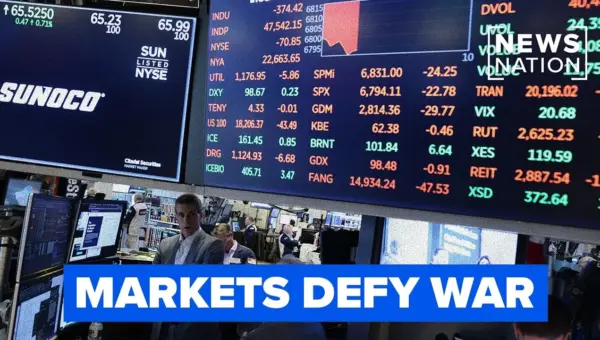
Markets Defy War Fears as Oil Prices Fluctuate
Wall Street rallied and erased Iran war losses as oil prices fluctuated near $100 a barrel. Despite market gains, Americans face higher gas prices, with a U.S. blockade of the Strait of Hormuz potentially worsening inflation. The Producer Price Index report is closely watched for future inflation signals.