US Navy Launches Strait of Hormuz Blockade
The U.S. Navy has initiated a naval blockade of Iranian ports in the Strait of Hormuz, halting maritime traffic tied to Iran. This move, ordered by President Trump, deploys advanced naval assets including carrier strike groups and destroyers. Iran has issued threats of retaliation, while the U.S. aims to pressure Tehran's finances and nuclear program.

US Navy Launches Strait of Hormuz Blockade
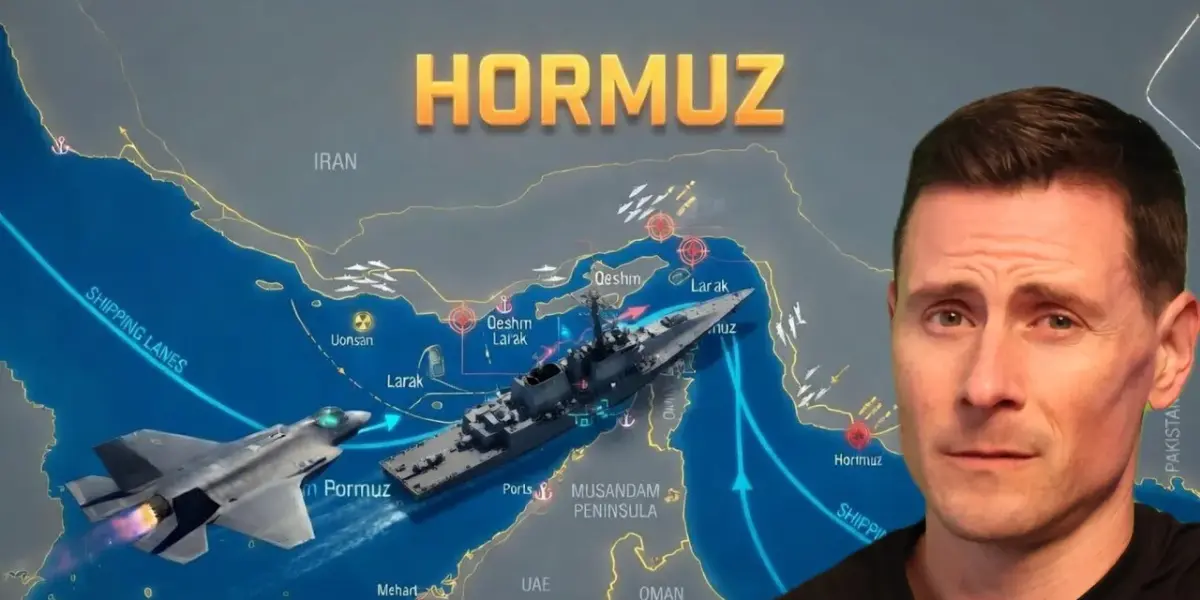
On April 13th, 2026, the United States Navy initiated a naval blockade in the Strait of Hormuz. President Trump ordered U.S. Central Command (Centcom) to enforce the blockade, stopping all vessels connected to Iranian ports and coastal areas. The operation began at 10:00 a.m. Eastern Standard Time. Passage for other vessels remains unimpeded.
Naval Assets Deployed
The U.S. Navy deployed significant assets for the operation. These include carrier strike groups, Arleigh Burke-class guided missile destroyers equipped with Aegis combat systems, submarines, and patrol aircraft. Overhead air assets are likely providing surveillance and coordinating interdiction efforts. This mirrors tactics previously seen in conflicts like the one in Venezuela.
Iran’s Strategic Response and Capabilities
Iran has responded with strong rhetoric, warning that no port in the Persian Gulf or Gulf of Oman will be safe if its facilities face pressure. This defiance highlights Iran’s pattern of escalating tensions rather than seeking compromise. The Iranian Revolutionary Guard Corps (IRGC) has also released propaganda videos depicting potential conflict scenarios. These videos, featuring animated sequences of naval engagements, appear to mock the U.S. naval presence and highlight Iran’s perceived defenses, such as mines and missiles.
Iran has also been undertaking a long-term project to build a new oil pipeline. This pipeline runs along the country’s coast, connecting its northern and southern regions. The goal is to bypass the Strait of Hormuz, allowing Iran to avoid disruptions if the strait is closed or blockaded. This project suggests Iran anticipated such a blockade for years.
Geographically, Iran may attempt to harass blockading ships from areas like Larak Island. This location is known as a base for launching Shahed drones, which could be used against oil tankers or naval vessels. The presence of a minefield in the Strait of Hormuz also presents a challenge that U.S. forces must navigate.
Geopolitical Context and Diplomatic Efforts
The blockade follows the collapse of a two-week ceasefire after extensive negotiations. Vice President JD Vance stated that Iran rejected core requirements, primarily centered on preventing nuclear weapons development. Iran, in turn, blamed the U.S. for excessive demands.
The blockade is seen as a demonstration of American sea power. Its success could significantly alter the balance of power in the Persian Gulf. The U.S. aims to pressure Iran’s finances by restricting access to its ports, thereby forcing the regime to reconsider its nuclear ambitions and proxy activities.
The economic strain on Iran is expected to grow if the blockade continues. Iran has relied heavily on oil exports to China for revenue, with reports suggesting hundreds of millions of dollars per tanker. Disrupted oil flows could lead to mounting shortfalls and increased domestic discontent.
Strategic Implications
The U.S. Navy’s strategy focuses on a targeted approach. By blocking access to Iranian ports along the Persian Gulf and Gulf of Oman, the U.S. exerts financial pressure without completely shutting down the Strait of Hormuz. This preserves freedom of navigation for legitimate international shipping, supporting global energy stability.
The deployment of advanced naval assets like Arleigh Burke-class destroyers with Aegis radar provides superior tracking and defense capabilities. Submarines offer stealthy intelligence gathering. Carrier-based aircraft and maritime patrol planes ensure persistent surveillance and rapid response. This layered defense system is designed for precise decision-making, allowing legitimate traffic to move while intercepting Iranian-linked vessels.
If Iran retaliates by targeting neighboring Gulf ports or attempting to swarm U.S. patrols with fast attack craft, the U.S. Navy is prepared to respond. Arleigh Burke destroyers would engage targets, supported by carrier-based F-18s and other aerial assets. Close-in weapon systems on naval vessels could also be used against smaller threats.
The effectiveness of this blockade hinges on Iran’s reaction. Any misstep by Tehran could escalate the situation into a larger conflict. The coming hours will be critical in determining the future course of the current tensions in the Persian Gulf.
Source: INSANE U.S. Navy Blockade of Iran Just Went LIVE (YouTube)

Related Articles
Trump Opens Strait of Hormuz, Signals End to Conflict
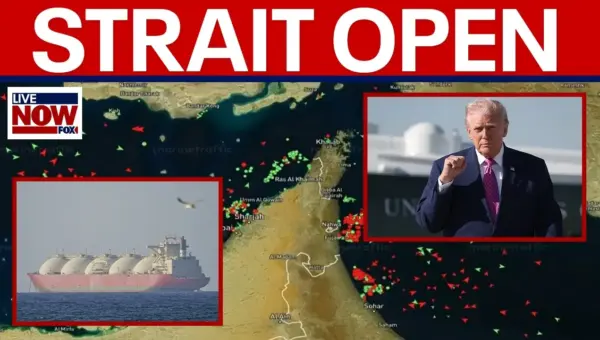
President Trump announced the permanent opening of the Strait of Hormuz, leading to a drop in oil prices and stock market surges. Diplomatic talks between Israel and Lebanon concluded productively, while U.S.-Iran negotiations face hurdles over nuclear ambitions and regional security.


Iran Blockade Sparks Global Economic Fears
A tense standoff in the Strait of Hormuz, driven by Iran's control over the vital waterway, is sparking global economic fears and raising the specter of $20 a barrel gas prices. The crisis highlights complex geopolitical dynamics involving the U.S., Iran, China, and Israel, with diplomatic missteps and economic warfare strategies at the forefront. This situation underscores the fragility of global energy markets and the interconnectedness of international security and economic stability.


Iran Faces Internal Unrest Amidst Escalating Global Tensions
Iran is facing internal unrest with assassinations targeting protest crackdown leaders, while also being accused of using Chinese spy satellites to aid attacks on U.S. troops. The U.S. is mobilizing thousands of troops and implementing a naval blockade.