EBR-1: The Dawn of Nuclear Power Generation
Explore EBR-1, the world's first nuclear power plant in Idaho, which pioneered electricity generation using controlled nuclear fission and the breeding of plutonium. Discover the science behind this historic achievement and its impact on modern energy.

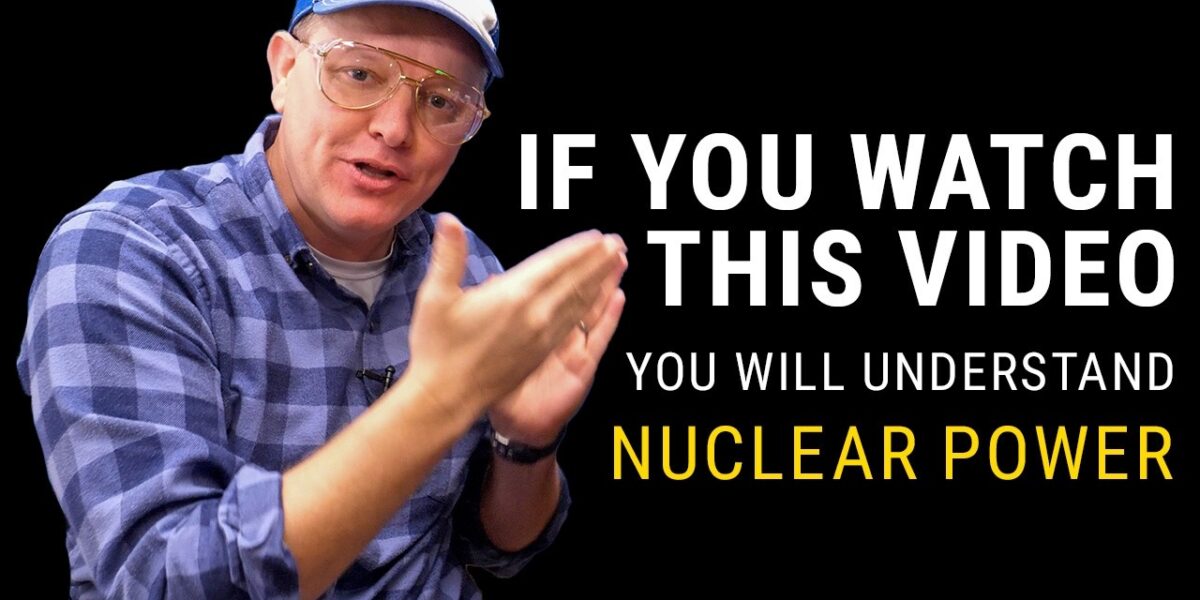
EBR-1: The Dawn of Nuclear Power Generation
In the vast landscape of scientific innovation, few achievements have reshaped human civilization as profoundly as the harnessing of nuclear energy. While the term “nuclear” often evokes images of immense power and the specter of atomic weaponry, its potential for peaceful, constructive application is equally, if not more, significant.
At the heart of this transformative journey stands EBR-1, the Experimental Breeder Reactor 1, a modest yet monumental structure nestled in the remote plains of Idaho. This facility, operational since the mid-1950s, holds the distinction of being the world’s first nuclear power plant to generate electricity, marking a key moment in humanity’s quest for clean and abundant energy.
Forging the Future in the Idaho Desert
Located approximately an hour outside Idaho Falls, Idaho, within the sprawling Idaho National Laboratory, EBR-1 is proof of the ingenuity and daring of early nuclear engineers. Constructed in just two years during the 1950s, its very existence seems almost miraculous by today’s standards of complex construction projects. The building itself, with its distinctive mid-century architecture, now is a historical monument and an educational hub, preserving the legacy of this groundbreaking endeavor.
Understanding the Nucleus: Fission and Breeding
To grasp the significance of EBR-1, one must first understand the fundamental processes at play: nuclear fission and breeding. Fundamentally, nuclear power generation relies on the controlled splitting of atomic nuclei, a process known as fission.
The most common fuel for this process is Uranium-235 (U-235), an unstable isotope that constitutes about 0.7% of naturally occurring uranium. The remaining 99.3% is largely Uranium-238 (U-238), a more stable isotope.
When a fast neutron strikes a U-235 atom, it causes the atom to become highly unstable, transforming into Uranium-236. This excited state is fleeting; the U-236 atom quickly splits into two smaller atoms, typically isotopes of Krypton and Barium.
This fission event releases a tremendous amount of energy in the form of heat, which is the primary source of power generation. Crucially, the fission process also releases additional fast neutrons – typically three – which can then go on to strike other U-235 atoms, creating a self-sustaining chain reaction.
The “breeder” aspect of EBR-1 refers to its ability to produce more fissile material than it consumes. This is achieved by utilizing the abundant U-238. When a fast neutron, not needed for immediate fission, strikes a U-238 atom, it initiates a series of transformations.
The U-238 becomes Uranium-239, which then undergoes beta decay to form Neptunium-239, and subsequently, another beta decay transforms it into Plutonium-239 (Pu-239). Plutonium-239 is itself a fissile material, capable of sustaining a chain reaction. Thus, a breeder reactor can effectively create new nuclear fuel from a more common, non-fissile isotope.
Harnessing the Heat: From Reactor to Electricity
The heat generated by fission in EBR-1’s core was not directly used. Instead, it was transferred to a coolant. A unique feature of EBR-1 was its use of a liquid metal coolant – a mixture of sodium and potassium (often referred to as NaK).
This choice was deliberate. Water, commonly used in modern reactors, absorbs and slows down neutrons, making it unsuitable for a fast breeder reactor that requires fast neutrons for breeding. Liquid metal, on the other hand, remains liquid at operating temperatures and, critically, does not significantly impede the speed of neutrons, while also being an excellent conductor of heat.
EBR-1 employed a three-loop system for safety and efficiency. The primary loop circulated the NaK coolant through the reactor core, absorbing the heat. This superheated NaK then flowed to a heat exchanger, where it transferred its thermal energy to a secondary loop of NaK.
This secondary loop, in turn, circulated to a third heat exchanger, where it heated water, converting it into steam. The steam then drove a turbine, which was connected to a generator, ultimately producing electricity. This multi-loop design ensured that the highly radioactive primary coolant was contained and isolated from the secondary steam-generating system, a crucial safety measure.
A Glimpse into the Control Room
The control room of EBR-1 offers a fascinating window into the operational realities of the 1950s. Unlike the digital interfaces of today, it features analog gauges and paper chart recorders.
These instruments, though seemingly rudimentary, provided intuitive readouts of critical parameters like temperature and pressure. Engineers could readily discern trends and anomalies by observing the patterns on the circular graph paper, a method that offered a different, perhaps more human-centric, way of understanding complex data compared to vast digital logs.
A particularly striking feature is the “Scram” button – the emergency shutdown mechanism. EBR-1 had two distinct scram systems.
One involved the insertion of control rods, a more gradual shutdown. The other, more drastic, involved the immediate dropping of the outer breeding blanket, which rapidly decreased reactivity and shut down the reactor almost instantaneously, though it required a longer restart procedure.
The Reactor Core: Breeding and Reflection
The physical reactor core of EBR-1, though now decommissioned and behind a radiation shield, reveals the ingenious design principles. The core itself consisted of hexagonal assemblies. The central assemblies contained the enriched U-235 fuel, responsible for propagating the chain reaction.
Surrounding this were assemblies made of U-238. This arrangement was critical for breeding, ensuring that fast neutrons escaping the U-235 core had a high probability of interacting with the U-238 blanket.
A key innovation was the use of the U-238 blanket not just for breeding but also as a reflector to sustain the chain reaction. When the reactor was not critical enough on its own, this U-238 blanket, housed in cup-shaped bricks on a hydraulic elevator, could be raised around the core. This acted like a mirror, reflecting escaping neutrons back into the core, increasing the probability of fission and allowing for startup and shutdown by simply raising or lowering the blanket, rather than relying solely on control rods.
Legacy and the Future of Nuclear Power
EBR-1 was more than just a power plant; it was a crucible of learning. The handwritten notes found throughout the facility highlight the pioneering nature of the work.
Every system, every calibration, was a first, with engineers meticulously documenting their findings to guide future endeavors. This spirit of exploration and rigorous data collection laid the groundwork for subsequent generations of nuclear reactors.
The lessons learned at EBR-1 continue to inform the development of advanced nuclear technologies. As the world grapples with the urgent need for clean energy solutions to combat climate change, nuclear power, with its low carbon footprint and high energy density, remains a critical component of the global energy mix. EBR-1 stands as a powerful reminder of the scientific curiosity and engineering prowess that first unlocked the atom’s potential, enabling a future powered by nuclear energy.
Source: I Explored the World's First Nuclear Power Plant (and How It Works) – Smarter Every Day 306 (YouTube)

Related Articles


AI Fuels Unprecedented Energy Demand: A New Investment Boom
The rapid expansion of artificial intelligence is creating an unprecedented surge in electricity demand, straining existing grids and sparking a new investment boom in the energy sector. From utilities to nuclear power and grid infrastructure, significant capital is flowing into support AI's insatiable energy appetite.

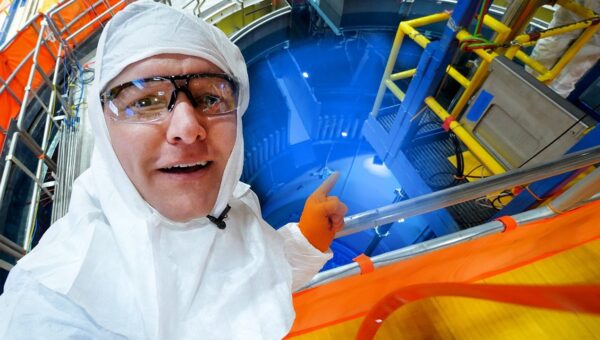
Inside a Nuclear Plant’s Refueling: A Rare Glimpse
A rare look inside the Browns Ferry Nuclear Plant reveals the complex and highly coordinated process of refueling a nuclear reactor. Witnessing the transfer of spent fuel assemblies and understanding the rigorous safety protocols offers a new perspective on this vital energy source.


Nuclear Plant Workers: Radiation Fears Are Unfounded
Nuclear plant workers are emphasizing the stringent safety protocols and minimal radiation exposure they experience daily. Advanced training and adherence to the ALARA principle, focusing on shielding, distance, and time, ensure worker safety against radiation and contamination.