Trump’s Shifting Stance on Draft Sparks Voter Betrayal Fears
Recent statements from the Trump administration have revived the specter of a military draft, raising concerns among voters who recall explicit campaign promises against war. This analysis explores the political rhetoric, historical context, and implications of keeping the draft 'on the table'.

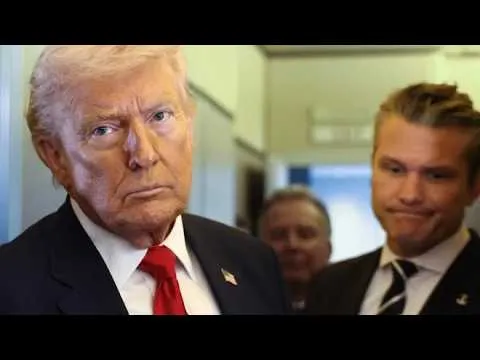
The Specter of the Draft Returns: A Shifting Political Landscape
The possibility of reinstating a military draft, a concept long relegated to historical footnotes for many Americans, has resurfaced with a potent mix of concern and political critique. Recent statements from within the Trump administration have ignited a national conversation, fueled by a perceived contradiction between campaign promises and current policy discussions.
From ‘No More Wars’ to ‘All Options on the Table’
The current stir began when Caroline Levit, a press secretary, addressed public anxieties about a potential draft. When pressed about President Trump’s plans regarding ground troops, particularly in light of an ongoing air campaign, Levit stated, “It has been and it will continue to be. And President Trump wisely does not remove options off of the table.” She elaborated that while a draft is “not part of the current plan right now, but the president again wisely keeps his options on the table.”
This measured, yet open-ended, response has been met with sharp criticism, particularly from those who recall Trump’s explicit 2016 campaign pledges. During his presidential run, Trump positioned himself as a candidate of peace, promising to end wars and avoid new military entanglements. “I’m not going to start a war.
I’m going to stop wars,” he declared. “No more wars, no more disruptions.
We will have prosperity and we will have peace under Trump.” He further emphasized this stance by advising young men worried about global instability or a military draft to vote for him, framing himself as the bulwark against such fears. “The best way to prevent it is to vote for Donald Trump,” he stated.
The ‘Trump Con’: Populism vs. Policy
Critics, including the speaker of the transcript, argue that this represents a betrayal of those promises, a tactic they label as the “Trump con.” The argument is that Trump, while campaigning as a populist champion of the working class and an anti-war candidate, has, in power, pursued policies that contradict these appeals. The transcript points to tax cuts for the wealthy, cuts to social programs like Medicaid and food assistance, and engagement in trade wars that allegedly increased costs for ordinary Americans as evidence of a disconnect between his rhetoric and actions. The implication is that a president who prioritizes his wealthy allies and pursues interventionist foreign policy cannot genuinely represent the interests of the working class.
Dissent Within the Ranks: A Divided Republican Party?
The controversy is not confined to opposition circles. Even figures within the Republican party have expressed alarm.
Marjorie Taylor Greene, for instance, has publicly criticized what she perceives as a push by some Republicans towards broader military involvement, including the potential drafting of both sons and daughters. She has identified figures like Lindsey Graham and Mark Levin as proponents of an “America Last war,” suggesting a hawkish faction within the party that contrasts with Trump’s stated anti-war platform.
Lindsey Graham’s own statements, quoted in the transcript, reveal a strong inclination towards direct military action, particularly concerning Iran. He advocates for intervention to prevent Iran from acquiring nuclear weapons and supports regime change, envisioning a future of peace and prosperity following such a transformation.
His rhetoric, characterized by urgency and a call to “blow the hell out of these people,” starkly contrasts with the “peace and prosperity” promised by Trump during his campaign. This highlights a potential ideological divide within the Republican party regarding foreign policy, with some advocating for a more interventionist approach while Trump’s base was largely sold on an “America First” and anti-war message.
Historical Context: The Draft and Shifting Public Opinion
The draft has a complex and often contentious history in the United States. The Selective Service System, established during World War I, has been instrumental in staffing the military during major conflicts.
The Vietnam War era, in particular, saw widespread public opposition to the draft, leading to significant social and political upheaval. The shift to an all-volunteer force after Vietnam was a landmark change, and the idea of reinstating the draft remains a sensitive issue, evoking memories of that divisive period.
The current debate also touches upon the nature of presidential power and accountability. The transcript suggests that a president, once in office, may feel less constrained by campaign promises, especially when faced with complex geopolitical situations or when influenced by a more interventionist foreign policy establishment. The idea that a president can dismiss polling data and public sentiment, as implied by comments attributed to Trump regarding his disregard for public opinion on troop deployment, raises questions about democratic responsiveness and the role of the commander-in-chief.
Why This Matters
The potential re-implementation of a draft, however remote it may currently seem, carries profound implications for American society. It directly affects young people and their families, fundamentally altering life trajectories and imposing significant personal costs. Beyond the immediate impact, the debate highlights a critical tension in contemporary American politics: the gap between campaign promises and executive action, the definition of “populism,” and the direction of U.S. Foreign policy.
For voters who supported Trump based on his anti-war platform, any perceived deviation from these core promises raises questions of trust and political integrity. It also highlights the power dynamics within a presidency, where advisors, geopolitical pressures, and personal convictions can shape decisions independent of public will.
Implications, Trends, and Future Outlook
The discourse surrounding the draft and the potential for new military engagements reflects broader trends in international relations and domestic politics. The resurgence of great power competition, ongoing regional conflicts, and the complex web of alliances and rivalries all contribute to a volatile global environment. In this context, the debate over military intervention and the tools available to a commander-in-chief, including the draft, will likely persist.
For the Trump administration and its supporters, the argument for keeping all options open is framed as pragmatic leadership and strategic flexibility. For critics, it represents a dangerous departure from core principles and a potential return to the costly, protracted conflicts of the past.
The future outlook depends heavily on evolving geopolitical events, the administration’s policy choices, and the continued engagement and scrutiny of the American public and its representatives. The transcript concludes with a call for voters to hold leaders accountable, reminding them that their support is not a given and that elected officials work for the people, not the other way around.
The Role of Media and Information
The transcript also touches upon the contemporary media landscape, where social media platforms and independent news outlets play a key role in disseminating information and fostering debate. Concerns are raised about the potential for censorship or suppression of critical voices by tech companies catering to administrative interests. This highlights the ongoing struggle for an unfettered public discourse, especially on sensitive political and military issues.
Source: BREAKING: UPDATE on possibility of Trump DRAFTING AMERICANS (YouTube)

Related Articles
Crypto Scammer Sues Trump Admin After Being Scammed
Cryptobillionaire Justin Sun is suing the Trump administration, claiming extortion. However, the situation involves alleged scams on both sides. Sun, who invested millions in Trump's World Liberty Financial, claims the company froze his assets after he refused to invest more, costing him millions. This lawsuit highlights the complex and often shady dealings within the intersection of politics and cryptocurrency.
Trump Embarrasses Vance, Hegseth; Allies Question Loyalty
Senator JD Vance and Fox News host Pete Hegseth have recently been placed in challenging public situations, sparking questions about their loyalty to Donald Trump. Observers are analyzing whether these alliances are driven by deep conviction or calculated political strategy. The ongoing dynamic raises concerns about the potential impact on their individual political careers and the wider Republican party.

Carlson’s ‘Apology’ Exposes His True Political Game
Tucker Carlson's recent 'apology' for misleading people is seen by many not as a sign of genuine change, but as a strategic political move. Analysts suggest he's distancing himself from Donald Trump as Trump's popularity wanes, aiming to rebrand himself for future political ambitions.