Hegseth’s Iran Response Criticized as ‘Disturbing in its Weakness’
Defense Secretary Pete Hegseth's responses regarding U.S. forces in Iran have been widely criticized as "disturbing in its weakness" and lacking strategic clarity. Observers pointed to his body language and ambiguous statements as indicators of a lack of transparency and gravitas.

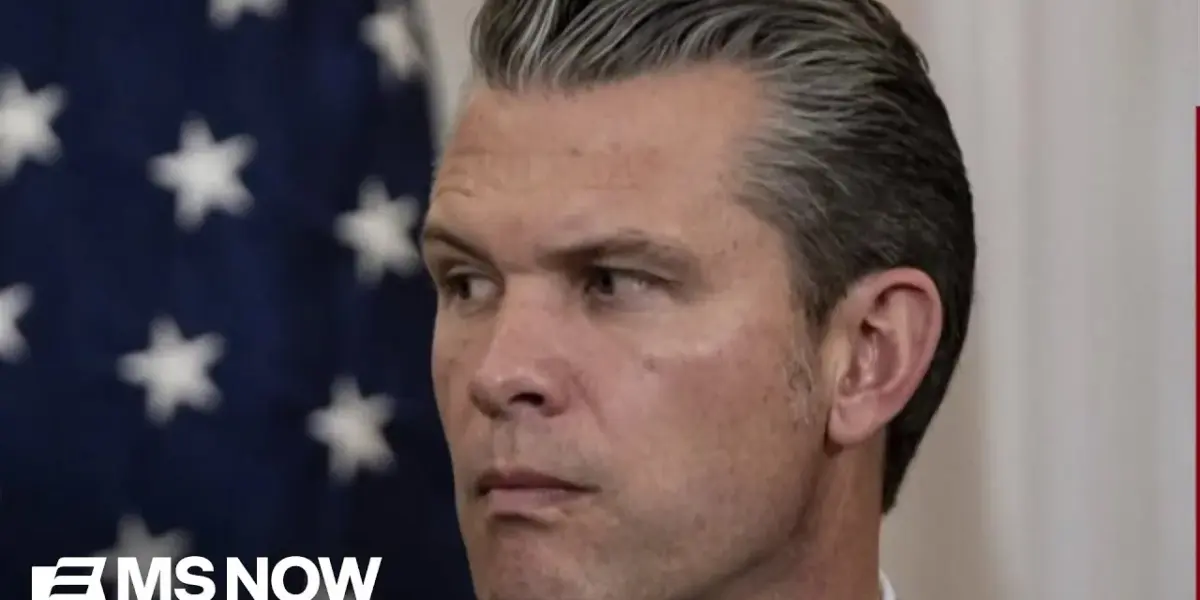
US Defense Secretary’s Stance on Iran Forces Deemed Incoherent
WASHINGTON D.C. – The current U.S. Objective in Iran remains alarmingly unclear, with recent statements from Defense Secretary Pete Hegseth drawing sharp criticism for their perceived weakness and lack of strategic clarity. Experts and commentators are questioning the administration’s approach, particularly in light of recent leadership changes within Iran and escalating regional tensions.
New Leadership in Iran and Unanswered Questions
The appointment of Ayatollah Khamenei’s son as the new leader of Iran, as reported by The Wall Street Journal and other outlets, marks a significant development. This succession, mirroring the previous repressive leadership, has amplified concerns about the future trajectory of U.S.-Iran relations. The question of the current U.S. Objective in the region has become central to the debate, with many expressing a profound lack of understanding.
“What now?” has become the prevailing question, highlighting a perceived absence of a clear strategy. This uncertainty is compounded by the belief that Iran will intensify efforts to inflict pain on the United States, both economically and in terms of national security. The potential for significant negative consequences for the American people looms large if a coherent plan is not in place.
Hegseth’s Body Language and Ambiguous Statements
A key point of contention has been Secretary Hegseth’s response to a direct question regarding the presence of U.S. forces, overt or covert, inside Iran. When asked if there were any American personnel on the ground, Hegseth’s initial response was, “I wouldn’t tell you that if we did.” When pressed further, confirming his earlier statement of “no,” he added, “but we reserve the right and we would be completely unwise if we did not reserve the right to take any particular option, whether it included boots on the ground or no boots on the ground.”
Commentators observed Hegseth’s demeanor during this exchange, noting a “smirk” followed by a dismissive “nanny, nanny, nanny, I wouldn’t tell you if I did,” before a final, seemingly hesitant, “No, but might be.” This body language and the shifting verbal responses were interpreted by many as a tell-tale sign of deception.
“The brilliance and the confidence and the courage of the military are its own stunning thing, and I want to really cleave Pete Hegseth off of that in terms of his public utterances. That was disturbing in its weakness. I’m not going to tell you, but yeah, I will.
I mean, what was that? Yeah, and the smirk gave away the whole game, right, Nicole?”
The assessment was that Hegseth’s reaction strongly suggested the presence of covert forces, rendering his verbal denials disingenuous and his overall stance weak. Critics argue that his public persona, particularly his tendency towards what is described as “bro speak” and internet meme-like statements, lacks the gravitas and authority expected of a Secretary of Defense during a critical geopolitical period.
Lack of Gravitas and Amateurish Approach
Comparisons have been drawn to past Secretaries of Defense, such as Donald Rumsfeld, who, despite potential unpopularity, commanded serious attention. Hegseth, in contrast, is characterized as a “featherweight presence” whose pronouncements are seen as trivial and ill-suited for the gravity of the current situation. The implication is that Hegseth is not equipped to be the clear messenger for U.S. Strategy, leading to a dangerous reliance on others, including the President and military leadership, for definitive communication.
The phrase “this war is just getting started,” attributed to Hegseth in a separate clip, contrasts sharply with indications from the President suggesting a potential early end to hostilities. This disparity highlights the perceived lack of a unified or coherent strategy emanating from the top levels of the Defense Department.
The critique extends to Hegseth’s alleged role in fostering an environment where decisions of life and death are made and communicated in an “amateurish, childish” manner. This is seen as particularly concerning given the recent loss of American lives and the unintended deaths of Iranian civilians.
Strained Relationship with the Press
Hegseth’s early decision to restrict press access to the Pentagon has been highlighted as a departure from the more open communication that characterized previous conflicts like the wars in Iraq and Afghanistan. The belief is that this move, intended to control the narrative, is counterproductive.
Professional journalists, it is argued, will continue to find ways to report information, as many within the military and defense establishment are willing to speak with the press because they believe in a shared American interest. However, Hegseth’s perceived distrust of anyone not explicitly aligned with the Pentagon’s official version of events makes the process more difficult.
“Hegseth thinks that anybody that isn’t explicitly signed on as a member of the team and, you know, has taken the vow of loyalty is by definition an enemy and therefore can’t be trusted.”
This adversarial approach to the press corps is seen as hindering the necessary flow of information, making it harder for the public to understand critical decisions and potentially exacerbating the confusion surrounding U.S. policy in Iran.
Future Implications and What to Watch
The criticisms leveled against Secretary Hegseth point to a broader concern about leadership and strategy during a period of significant international instability. The perceived lack of clear objectives, the ambiguous communication from the Defense Department, and the strained relationship with the press all contribute to an environment of uncertainty. Moving forward, the focus will remain on whether the administration can articulate a coherent strategy for Iran, clarify its objectives, and restore confidence in its leadership, particularly within the defense establishment and among the international community.
Source: ‘Disturbing in its weakness’: Nicolle on Pete Hegseth’s answer on boots on the ground in Iran (YouTube)

Related Articles

Iran Faces New Miscalculation Risk as US Signals Action
Iran may be poised for another significant miscalculation regarding U.S. resolve, based on past instances of underestimating American action. The situation involves renewed diplomatic talks with potentially unchanged hardline leadership, raising concerns about continued ideological commitment to Iran's objectives.

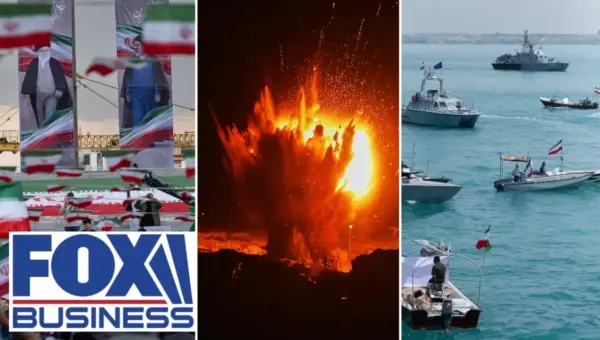
US Sanctions Cripple Iran: Regime on Financial Brink
Intense U.S. economic sanctions have pushed Iran to the brink of financial collapse, crippling its military and weakening its currency. Divisions within the Iranian regime are widening, exposing leadership struggles. This strategy aims to force negotiations or lead to the regime's downfall.
US Strategy: Blockade Iran, Avoid War in Gulf
Admiral Robert Harwood outlines a U.S. strategy focused on economically pressuring Iran to ensure free passage through the Strait of Hormuz. The approach prioritizes avoiding military conflict while addressing Iran's nuclear ambitions and regional threats.