World Bank Chief Warns of Youth Jobs ‘Time Bomb’
World Bank President Ajay Banga warns of a looming 'youth jobs time bomb' as 1.2 billion young people enter the job market with only 400 million jobs expected. He highlights the need for hope, aspiration, and private capital mobilization in emerging markets to prevent mass migration and instability.

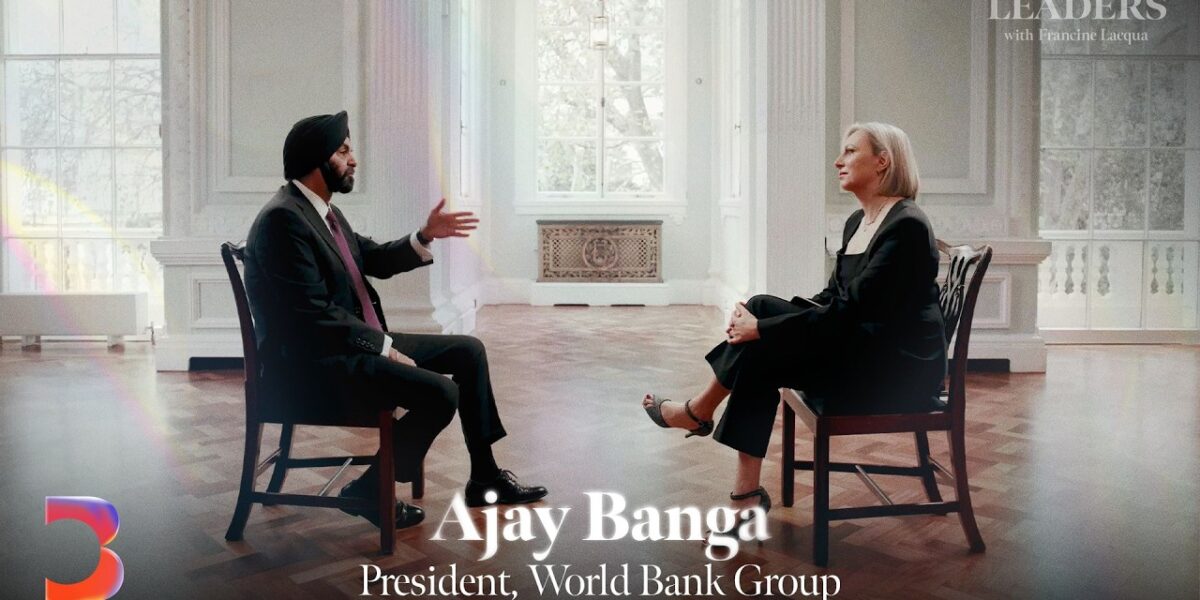
World Bank Chief Warns of Youth Jobs ‘Time Bomb’
The global economy faces a monumental challenge as an estimated 1.2 billion young people are expected to enter the job market over the next decade, yet only 400 million new jobs are projected to be created. This stark deficit of 800 million jobs, particularly in emerging markets, represents a “ticking time bomb of historic proportions,” according to Ajay Banga, President of the World Bank.
In an interview with Francine Lacqua, Banga articulated the urgent need to provide hope and aspiration to the burgeoning youth populations in developing economies. Failure to do so, he warned, could lead to mass migration, fragility, conflict, and violence. By 2050, over 80% of the world’s population will reside in countries currently considered developing, with these nations also hosting the vast majority of young people and experiencing the most significant urban population growth.
The Interlocking Crises of Poverty and Inequality
Banga, who took the helm of the World Bank with a mission to end poverty and ensure a livable planet, highlighted the interconnected nature of global challenges. “The world’s problems are thick and dense and they, they are two or three interlocking problems.
The problem, inequality and poverty,” he stated. A significant issue is the disparity between talent, which is abundant globally, and the lack of opportunity and capital, which disproportionately affects women, ethnic minorities, and other marginalized groups.
The World Bank, an intergovernmental institution with 189 member countries and a history spanning 80 years, is designed to facilitate long-term thinking. Its financing mechanisms, including loans with maturities of up to 50 years, contrast with the short-term incentives that often drive political and corporate decision-making. “The system is incented in short-term thinking,” Banga observed, emphasizing the need for institutions like the World Bank to foster a more extended perspective.
From Sales to Global Finance: Banga’s Journey
Banga’s career trajectory offers a unique perspective on the challenges facing emerging economies. His early years in sales at Nestle India exposed him to the realities of rural poverty, where even basic products were unaffordable for many. This experience, coupled with his later roles at PepsiCo during India’s economic liberalization and Citigroup, where he modernized banking services for millions, shaped his understanding of the link between business and development.
At Mastercard, where he served as COO and later CEO, Banga championed financial inclusion, aiming to reduce reliance on cash. He oversaw a period of immense growth, transforming the company from a $20 billion market cap entity to $360 billion by the time he departed. A key strategic focus was diversifying revenue streams, particularly through data analytics, which he aimed to grow from 4% to 40% of revenues, ultimately reaching 36%.
“We started breaking it down into what you could do. It came to a very simple strategy, grow your existing business, credit, debit, prepaid, that stuff. Diversify your clients to not just the biggest banks, but also add smaller banks, fintechs, technology firms, governments do all that and then build out new businesses.”
Leadership in a Changing World
Banga stressed the evolving nature of leadership, moving beyond a sole focus on IQ to encompass EQ (Emotional Quotient) and DQ (Decency Quotient). “Now I think it’s about your DQ, which is your decency quotient, which is can you actually get people to realize that your hand is on their back, you’re pushing them, but it’s on the back, it’s not in their face,” he explained. Adaptability, affability, curiosity, and a willingness to understand others’ perspectives are crucial for effective leadership, especially when navigating complex global challenges.
The Youth Jobs Squeeze and Emerging Market Realities
The phenomenon of young people protesting and even collapsing governments, as seen in countries like Madagascar, Nepal, Bulgaria, and Bangladesh, highlights the severity of the youth unemployment crisis. Gen Z, in particular, is experiencing unprecedented economic hardship, reflected in high rankings on the Misery Index (the sum of inflation and unemployment rates).
Ami, a 23-year-old from Kathmandu, shared her experience of facing severe unemployment in Nepal, relying on freelancing and social media. The government’s ban on social media was perceived as an attempt to silence a generation frustrated with unemployment and corruption, leading to escalating protests and violence.
Banga differentiated the impact of Artificial Intelligence (AI) in emerging markets compared to developed nations. While advanced AI requires significant computing power, electricity, and data, which are scarce in many developing countries, smaller-scale AI applications delivered via mobile devices can offer valuable tools for healthcare, farming, and education.
Key Sectors for Job Creation
To address the job deficit, Banga identified five critical sectors for job creation in emerging markets:
- Infrastructure
- Agriculture
- Tourism (noted as creating the most jobs per dollar invested)
- Healthcare
- Value-added manufacturing (e.g., pharmaceuticals, minerals, metals)
However, realizing the potential in these sectors requires a stable political environment, consistent economic growth, robust job creation strategies, adequate infrastructure, effective governance, and supportive policies. The private sector is pivotal, as it generates approximately 90% of jobs in developing economies.
Catalytic Capital and Multilateralism
The World Bank is focused on mobilizing private capital, which is more readily available than public funds, to bridge the trillions of dollars needed for climate change, infrastructure, food security, and energy transitions. By providing “catalytic capital,” the World Bank aims to encourage private sector investment to expand its reach and impact.
Despite skepticism about the relevance of multilateralism in today’s world, Banga affirmed its importance. The successful recapitalization of IDA 21, the World Bank’s fund for the poorest countries, even amidst significant political changes in major donor nations, demonstrates the enduring role of international cooperation. He emphasized that the focus should be on the *type* and *aim* of multilateralism.
Banga also addressed the issue of migration, distinguishing between legal and illegal migration. While legal migration is crucial for addressing skills gaps in developed nations and should be encouraged, uncontrolled illegal migration poses a significant challenge and can fuel populism. He argued that true populism stems from a desire for opportunities for one’s own people, which can be best achieved through global markets and stable international systems.
The Future of Development Finance
The World Bank’s strategy is shifting towards a blended finance model, combining public funds, private capital, and philanthropy. Banga believes that incentives for individuals and businesses to use funds effectively are more productive than unconditional handouts. “Handouts have a low outcome probability,” he stated, advocating for approaches that encourage self-sufficiency and growth.
Ultimately, Banga’s vision for the World Bank is to empower young people in emerging markets, enabling them to drive future growth and development. His personal motivation stems from a desire to make a tangible difference rather than being an “armchair critic,” a principle he also instills in his own daughters.
Source: Ajay Banga on India, Migration and a Youth Jobs Time Bomb | Leaders with Francine Lacqua (YouTube)

Related Articles

Diesel Tops $5 Per Gallon Amid Iran War
Diesel prices have surpassed $5 per gallon in the U.S. due to the war in Iran disrupting global oil supplies. This surge impacts everything from food to manufacturing, raising inflation concerns and potentially slowing economic growth through 2026.
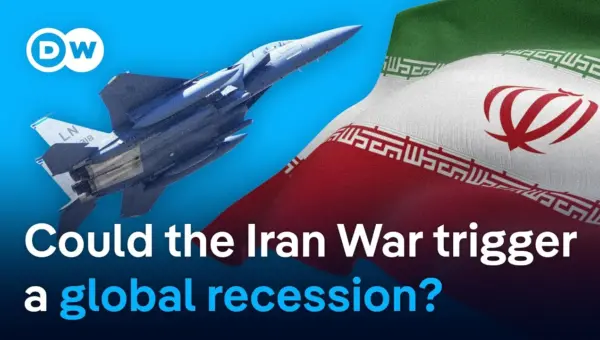
Global Economy Faces Deep Uncertainty Amid Middle East War
World financial leaders are gathering amid growing fears of a global economic crisis. The conflict in the Middle East is creating significant uncertainty, disrupting supply chains and rattling energy markets. The IMF warns of a potential sharp slowdown, with growth possibly falling to levels seen only during major global recessions.


Iran Blockade Sparks Global Economic Fears
A tense standoff in the Strait of Hormuz, driven by Iran's control over the vital waterway, is sparking global economic fears and raising the specter of $20 a barrel gas prices. The crisis highlights complex geopolitical dynamics involving the U.S., Iran, China, and Israel, with diplomatic missteps and economic warfare strategies at the forefront. This situation underscores the fragility of global energy markets and the interconnectedness of international security and economic stability.