Iran Defends Strikes: ‘Collateral Damage’ in Regional Conflict
Iran's Foreign Minister has described civilian casualties in neighboring countries as "collateral damage," asserting that Iran's targets are solely U.S. installations. He warned that such outcomes are an unfortunate but possible consequence of war, drawing parallels to the situation in Gaza.

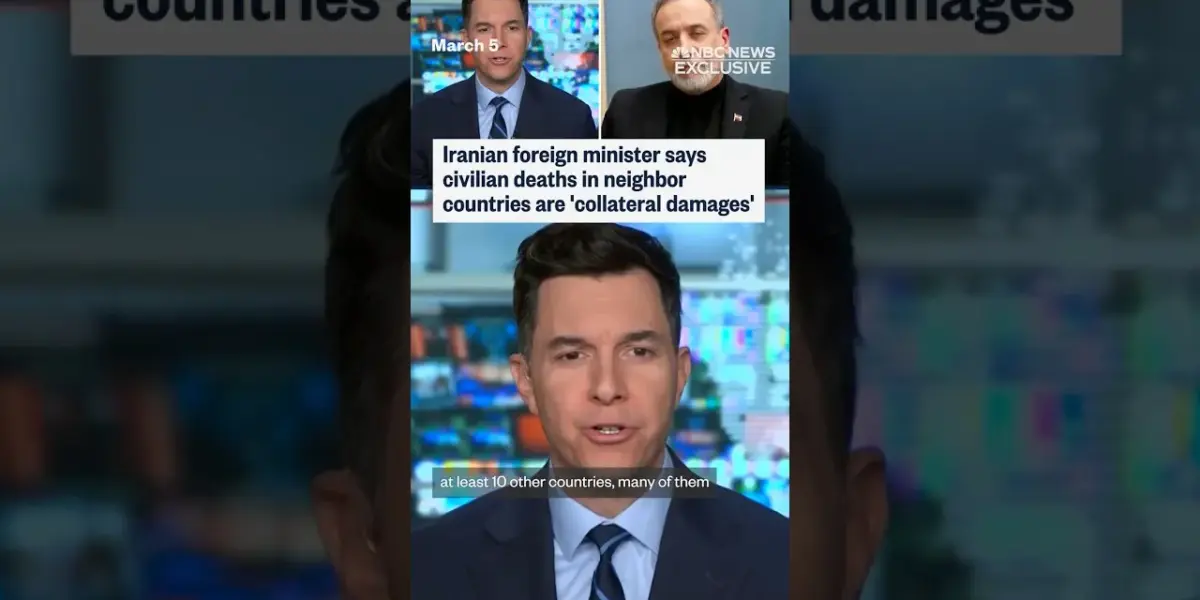
Iran’s Foreign Minister Addresses Regional Strikes, Cites ‘Collateral Damage’
TEHRAN – Iran’s Foreign Minister has stated that civilian casualties resulting from his country’s actions in neighboring nations are “collateral damage,” drawing parallels to the situation in Gaza. The remarks came in response to accusations that Iran has attacked its Arab neighbors, including during the holy month of Ramadan, despite these nations not being directly involved in the conflict.
Iran Denies Targeting Neighbors, Focuses on U.S. Installations
In a direct refutation of the accusations, Iran’s top diplomat asserted that his country has not attacked its neighbors or Muslim nations. Instead, he clarified that Iran’s military actions have been directed solely at “American targets and American bases, American installations which are unfortunately located in the soils of our neighbors.” He emphasized that Iran has communicated this stance directly to the foreign ministers of these neighboring countries, assuring them that they are not the intended targets and that Tehran has no “problem” with them.
“We have made it clear for them. Uh I have been in touch with their foreign ministers and I have explained that we are not targeting you. We we have no uh you know problem with you. We are only targeting the American installations and American bases.”
Iran’s Foreign Minister
Civilian Casualties Acknowledged as Unintended Consequences
Despite the assertion of targeting only American assets, the Foreign Minister acknowledged the possibility of civilian casualties. When pressed on reports of Iran striking hotels, high-rise apartments, and airports, which are not typically considered military targets, he conceded, “Maybe they have been some collateral damages as it is in every war.” He further contextualized this by referencing the more than 70,000 people killed in Gaza by the Israeli army, which were also labeled as collateral damage.
“Yes, there is the possibility of you know collateral damages in this situation as well,” the minister stated, implying that such outcomes are an unfortunate but inherent risk in wartime scenarios. He reiterated that Iran had previously warned all parties in the region about the potential consequences should the U.S. Attack Iran.
Regional Warnings and U.S. Role
The Foreign Minister highlighted that Iran had issued advance warnings to the region, stating that if attacked by the U.S., Iran would have no choice but to retaliate against American installations located within the territories of its neighbors. He warned that such actions could escalate the conflict, leading to a “disaster for the whole region.” He noted that these warnings were not only issued by Iran but also by “many others” and even by “many Americans” who had advised the U.S. Administration against repeating past mistakes in the region.
The minister concluded by framing the current conflict as one that was not initiated by Iran. “This war is not our war.
This is not our choice. This is a war of choice by the United [States],” he asserted, placing the onus for the ongoing hostilities on the U.S. Administration.
Broader Implications and Future Outlook
The statements from Iran’s Foreign Minister highlight the complex and volatile geopolitical landscape of the Middle East. By framing civilian deaths as “collateral damage” and focusing blame on U.S. Installations and policies, Iran attempts to legitimize its actions while deflecting direct responsibility for broader regional instability. This narrative, however, is likely to be met with skepticism by regional neighbors and the international community, who are grappling with the increasing risk of wider conflict.
The acknowledgment of potential collateral damage, even when framed as unavoidable, raises serious concerns about adherence to international humanitarian law and the protection of civilians in conflict zones. As tensions remain high, the focus will be on whether diplomatic channels can effectively de-escalate the situation or if the cycle of retaliation and unintended consequences will continue to draw more actors into the fray, potentially leading to the wider regional disaster that Iran itself has warned against.
Source: Iranian foreign minister says civilian deaths in neighbor countries are 'collateral damages' (YouTube)

Related Articles

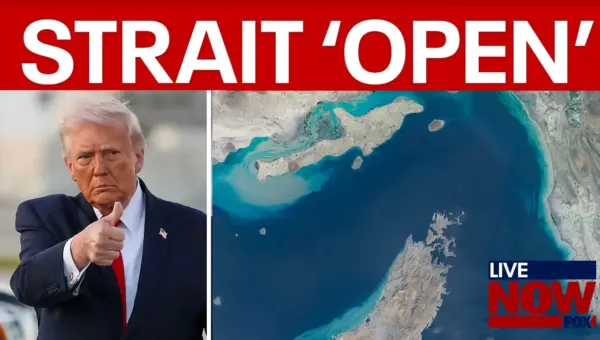
Iran Reopens Strait of Hormuz to Commercial Ships
Iran's foreign minister announced the Strait of Hormuz is now fully open to commercial vessels, following a ceasefire in Lebanon. This vital shipping lane, through which a fifth of the world's oil passes, had been closed since February 28th. The move comes amid international efforts to ensure maritime security and ease economic disruptions.


Iran Reopens Strait of Hormuz After Cease-Fire
Iran announced the reopening of the Strait of Hormuz, a critical global oil chokepoint, following a cease-fire in the Israel-Lebanon conflict. The move is seen as a significant de-escalation, with markets rallying and oil prices falling. Questions remain about the U.S. Navy's blockade, which is expected to be lifted.
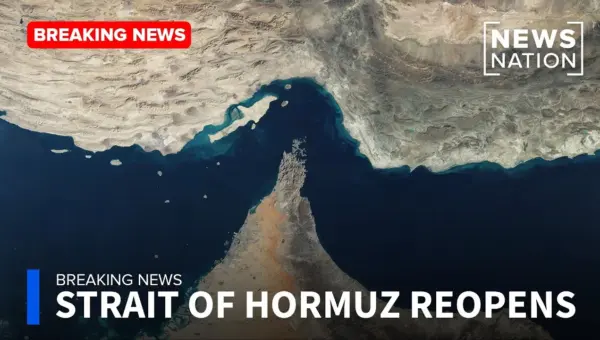
Strait of Hormuz Reopens, But Tensions Remain High
Iranian officials claim the Strait of Hormuz is now open for commercial vessels as part of a cease-fire in Lebanon. However, the U.S. maintains its naval blockade, turning away ships. This creates a tense standoff in a vital global shipping lane, with international partners pushing for reopening while the U.S. holds its position.