BMW M5 Touring Dominates Unpredictable Drag Race
The new BMW M5 Touring proved its mettle in an eclectic drag race, showcasing its immense power against a diverse field of electric, hybrid, and petrol rivals. Despite the variety, the M5's 727hp V8 hybrid powertrain dominated the competition.

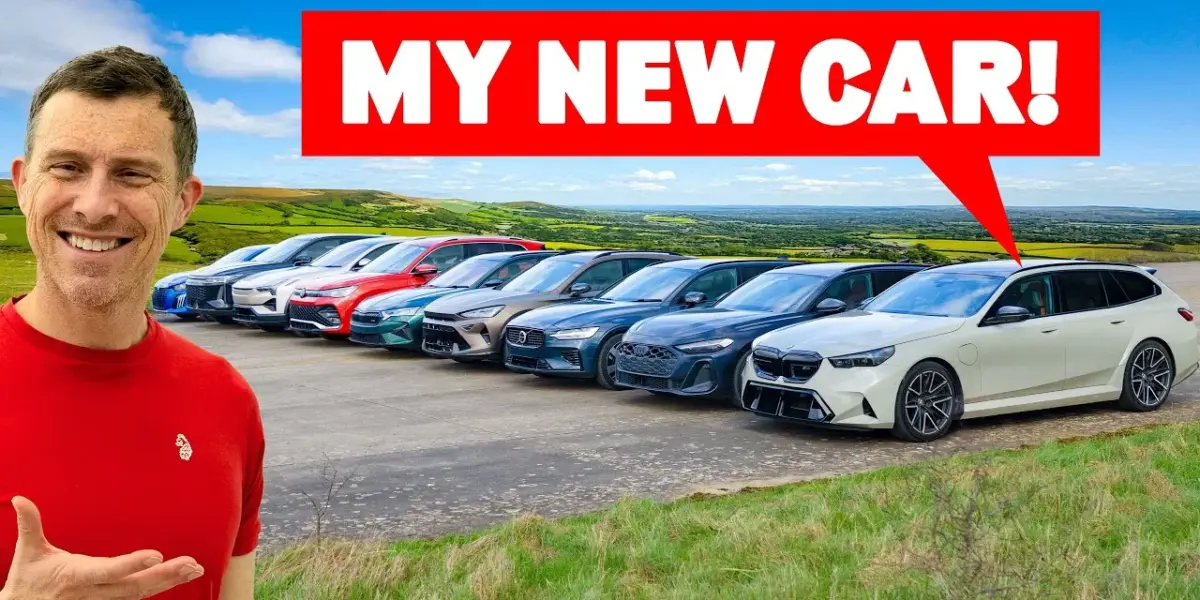
BMW M5 Touring Sets New Benchmark in Diverse Drag Race Showdown
The automotive world is often captivated by head-to-head performance battles, and Carwow has delivered one of the most eclectic and unpredictable drag races to date, pitting a staggering eleven vehicles against each other. While the headline might suggest a straightforward victory for the newest M5 Touring, the sheer variety of powertrains and vehicle types involved promised a thrilling spectacle where conventional wisdom could be tossed aside. From budget-friendly electric hatchbacks to monstrously powerful hybrid estates, this wasn’t just a test of raw power, but also of technology, weight, and launch strategy.
The Contenders: A Symphony of Powertrains
Carwow lined up an impressive roster, showcasing the diverse landscape of modern automotive propulsion:
- Citroen e-C3 (2026): The affordable EV entry, boasting 113hp and 125Nm of torque, weighing approximately 1,440kg.
- Peugeot 208 1.2 Hybrid 136 (2026): A 136hp, 230Nm, 1.2-litre turbo-petrol mild-hybrid, tipping the scales at 1,228kg.
- BYD Seal 6 DM-i Touring: A plug-in hybrid with around 184hp and 300Nm, weighing 1,710kg.
- Skoda Octavia vRS: A practical performance hatch with 265hp, 370Nm from a 2.0-litre turbo, weighing 1,570kg.
- Volkswagen Tiguan 265hp: An SUV sibling sharing the Octavia’s 265hp, 400Nm, 2.0-litre turbo engine, at 1,750kg.
- Polestar 3 Long Range Single Motor: A hefty 2,500kg electric SUV producing 299hp and 490Nm.
- Cupra Formentor VZ3: A sporty SUV with 310hp, 400Nm from its 2.0-litre turbo, weighing 1,640kg.
- Audi S5 Avant (2026): A traditional performance estate with a 3.0-litre turbo V6 delivering 362hp and 550Nm, weighing 1,995kg.
- Omoda 9 Noble PHEV AWD Auto (2026): A plug-in hybrid powerhouse generating around 449hp and 700Nm, weighing 2,200kg.
- Volvo V60 Ultra T8 PHEV AWD (2026): Another potent PHEV estate, offering 455hp, 709Nm from a 2.0-litre turbo/supercharged hybrid system, weighing 2,100kg.
- BMW M5 Touring (2026): The undisputed king of the hill, combining a 4.4-litre twin-turbo V8 with hybrid tech for a colossal 727hp and 1,000Nm, weighing a substantial 2,550kg.
Performance: Instant Torque vs. Raw Horsepower
The drag strip is where horsepower figures and torque curves truly come alive. The initial launch is crucial, and electric vehicles often have a significant advantage due to their instant torque delivery. The lightweight Peugeot 208 Hybrid, with its 136hp and 230Nm, might surprise with a quick getaway, as would the more affordable Citroen e-C3, despite its lower power output.
However, as the speeds increase, the sheer grunt of the larger engines and hybrid systems begins to tell. The Skoda Octavia vRS and Volkswagen Tiguan, both producing a healthy 265hp, represent the accessible performance end of the spectrum. The Cupra Formentor VZ3 steps it up with 310hp, while the Audi S5 Avant offers a more refined, yet potent, 362hp from its V6.
The real fireworks come from the plug-in hybrids and the M5. The Omoda 9 and Volvo V60, both exceeding 440hp, demonstrate the incredible capabilities of modern PHEV technology, blending efficiency with blistering acceleration. Yet, even these formidable machines are dwarfed by the new BMW M5 Touring.
Its headline-grabbing 727hp and astronomical 1,000Nm of torque, delivered through a sophisticated all-wheel-drive system and 8-speed automatic, are designed to obliterate the competition. The challenge for the M5, despite its power advantage, lies in harnessing that immense force off the line, especially against the lighter, more agile rivals and the instant-pulling EVs.
Interior and Practicality: Beyond the Drag Strip
While this race focuses on straight-line speed, the cars represent vastly different approaches to practicality and luxury. The Citroen e-C3 and Peugeot 208 are city-focused hatchbacks, prioritizing affordability and efficiency for everyday use. The Skoda Octavia vRS and Audi S5 Avant, in their estate forms, offer a blend of performance and family-friendly space, making them ideal for those who need utility without sacrificing driving thrills.
SUVs like the Volkswagen Tiguan, Cupra Formentor, Polestar 3, and Omoda 9 cater to a different kind of buyer, offering higher driving positions, more cargo space, and a sense of ruggedness, though their weight can be a disadvantage in acceleration contests. The Volvo V60 PHEV continues the theme of practical performance estates, albeit with a focus on electrification and luxury.
The BMW M5 Touring, however, sits at the pinnacle of this list. It promises not only supercar-rivalling performance but also the luxury, comfort, and advanced technology expected from BMW’s M division, all within a capacitated estate body. It’s the ultimate expression of a performance car that can do it all.
Value Proposition and Target Audience
The pricing and value proposition of these vehicles span an enormous range. The Citroen e-C3 aims to democratize EV ownership, likely starting at a highly competitive price point, making it accessible to a broad audience seeking an economical electric runabout. The Peugeot 208 Hybrid follows a similar path, offering a fuel-efficient and stylish compact car.
Mid-range contenders like the Skoda Octavia vRS, Volkswagen Tiguan, and Cupra Formentor offer a strong balance of performance, practicality, and features for their price, appealing to families and driving enthusiasts who need a versatile vehicle. The Audi S5 Avant and Volvo V60 PHEV represent a step up in premium feel and performance, commanding higher prices but delivering more sophisticated driving experiences and technology.
The Polestar 3, with its focus on electric performance and SUV styling, positions itself in the premium EV market. The Omoda 9 PHEV aims to disrupt with its high power output at a potentially competitive price point for a PHEV SUV.
At the very top, the BMW M5 Touring is unequivocally a halo product. Its price will undoubtedly reflect its groundbreaking performance, cutting-edge technology, and the prestige of the M badge.
It targets the most discerning enthusiasts who demand the absolute best in performance, luxury, and practicality, and are willing to pay a premium for it. It’s not about value in the traditional sense, but about acquiring an automotive icon.
Verdict: The King Reigns Supreme
While the drag race itself is a fascinating study in automotive diversity, the ultimate winner was never truly in doubt. The BMW M5 Touring, with its staggering 727hp and 1,000Nm of torque, is in a league of its own.
Its ability to overcome its considerable weight and deliver such immense power off the line, even against instant-torque EVs and powerful PHEVs, solidifies its position as the most potent and capable vehicle on this diverse grid. The M5 Touring isn’t just a new car; it’s a statement of intent from BMW, proving that when it comes to outright performance, especially with the added boost of electrification, the M division remains at the absolute cutting edge.
Source: I got a NEW M5 and raced it immediately! (YouTube)

Related Articles


EV Range Reality Check: Which Electric Car Delivers Most Miles?
Our in-depth analysis reveals a significant gap between advertised and real-world driving range for several popular electric SUVs. While all promise long distances, only some deliver close to their claimed figures.


Rivian R1T’s Shocking Speed Stuns Corvette Z06
The Rivian R1T, a powerful electric adventure truck, shockingly outpaced a Chevrolet Corvette Z06 in a drag race. With over 800 horsepower and the right settings, the R1T achieved a 10.6-second quarter-mile time, leaving the sports car behind.
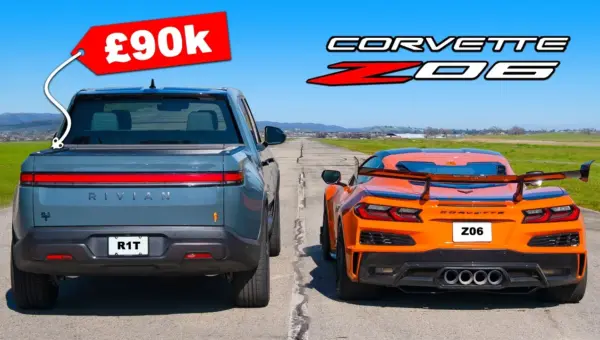
Electric Truck Beats Supercar in Shocking Drag Race
A massive electric truck, the Rivian R1T, surprisingly beat a Chevrolet Corvette Z06 in a quarter-mile drag race. Despite the Corvette's performance pedigree, the Rivian's immense power and advanced traction control settings allowed it to achieve a stunning victory.