Beyond Opposition: Gavin Newsom Lays Out a Progressive Vision for America Rooted in Pluralism and Innovation
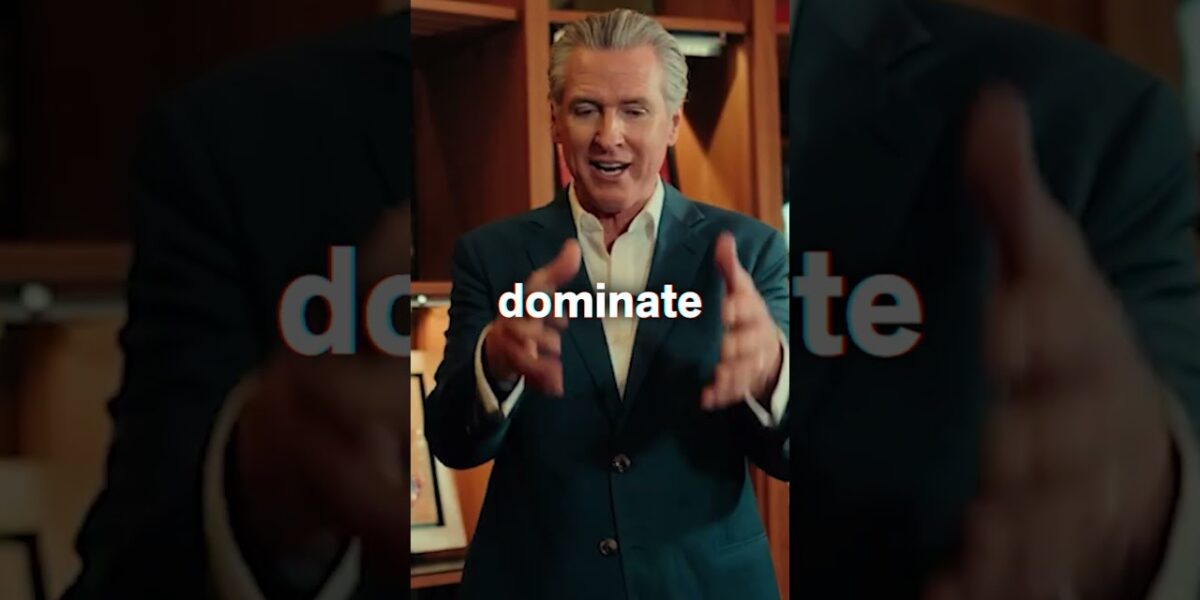
California Governor Gavin Newsom offers a compelling vision for the Democratic Party, defining its identity beyond opposition to Donald Trump. He champions pluralism, technological innovation, and inclusivity, drawing on California's diverse and dynamic economy as a blueprint. Newsom predicts AI will define future elections and emphasizes the need to unite a fractured nation around shared American values.

Beyond Opposition: Gavin Newsom Lays Out a Progressive Vision for America Rooted in Pluralism and Innovation
In a time of deep political polarization, where the national discourse often revolves around opposition rather than aspiration, California Governor Gavin Newsom has articulated a compelling and expansive vision for the Democratic Party and, by extension, for America itself. Moving beyond the immediate political imperative of countering former President Donald Trump, Newsom’s remarks underscore a proactive strategy centered on celebrating diversity, fostering innovation, and uniting a fractured nation. His insights, drawn from California’s unique experience, offer a blueprint for a progressive future that he believes embodies uniquely American values.
The core challenge Newsom addresses is fundamental: How does the Democratic Party define itself and the nation it seeks to lead, once the immediate political battle against a specific opponent is set aside? His answer is complex, yet coherent, weaving together demographic realities, economic dynamism, and a forward-looking embrace of technological change, all anchored in a commitment to inclusivity and repair.
The California Blueprint: Pluralism as a Pillar of American Identity
At the heart of Newsom’s vision is the concept of ‘pluralism’ – a term he notes many might need to look up, but which he sees as central to California’s success and America’s future. “Many parts, one body,” he posits, describing California as “the most diverse state in the world’s most diverse democracy.” He highlights key statistics: 27% of his state’s population is foreign-born, and it is a majority-minority state. This demographic reality, far from being a challenge to be merely tolerated, is presented as a profound asset to be actively celebrated.
Pluralism, in this context, signifies more than just the coexistence of diverse groups; it implies an active engagement in, and celebration of, that diversity. It suggests a societal model where various ethnic, cultural, religious, and political groups maintain their distinct identities while contributing to a common national purpose and participating equally in public life. This stands in stark contrast to assimilationist models that demand conformity or nationalist ideologies that seek to exclude or marginalize difference.
Newsom argues that this commitment to pluralism is not merely a moral stance but a practical engine for progress. He directly links it to California’s economic prowess, stating, “It’s the reason Silicon Valley is Silicon Valley, not just the Central Valley.” This connection is crucial. Silicon Valley, the global epicenter of technological innovation, thrives on a constant influx of diverse talent, ideas, and perspectives from around the world.
Immigrants and individuals from varied backgrounds bring different problem-solving approaches, cultural insights, and entrepreneurial drives that are essential for groundbreaking discoveries and disruptive technologies. This intellectual and cultural cross-pollination fosters creativity, resilience, and a competitive edge that homogeneous environments often lack.
Historically, the United States has grappled with its identity as a nation of immigrants. From the initial waves of European settlers to the forced migration of enslaved Africans, and successive waves of immigration from Asia, Latin America, and beyond, diversity has been an inherent, albeit often contentious, feature of the American experiment.
Newsom’s call for active celebration rather than mere tolerance represents an evolution of the traditional ‘melting pot’ metaphor, moving towards a ‘salad bowl’ concept where distinct identities are valued and contribute to the richness of the whole. This perspective challenges historical prejudices and current anti-immigrant sentiments, positioning diversity as a core strength rather than a source of division.
Innovation and Economic Dynamism: The Engine of Progress
Newsom does not limit his vision to social cohesion; he seamlessly transitions to economic and technological leadership, presenting California as a global powerhouse. He notes the state’s “most abundant” status in agriculture, boasting a staggering $62.1 billion industry. This agricultural dominance extends beyond sheer volume, encompassing a wide array of specialty crops, advanced farming techniques, and a significant contribution to the nation’s food supply.
However, it is in advanced technology and research and development (R&D) where Newsom truly positions California as a harbinger of the future. He asserts that the state “dominates in quantum and artificial intelligence and robotics and space new technologies R&D.” These are not just buzzwords but represent the bleeding edge of global innovation, sectors that are poised to redefine economies, industries, and daily life in the coming decades.
- Artificial Intelligence (AI): California, particularly Silicon Valley, is home to many of the world’s leading AI research labs, startups, and tech giants. Its ecosystem fosters the development of machine learning, natural language processing, computer vision, and autonomous systems, driving advancements that impact everything from healthcare to transportation.
- Quantum Computing: While still nascent, quantum computing promises to revolutionize fields like medicine, materials science, and cryptography. California universities and tech companies are at the forefront of this highly complex and strategic area of research.
- Robotics: From industrial automation to consumer robots and advanced prosthetics, California is a hub for robotics innovation, integrating AI and advanced manufacturing techniques.
- Space Technologies: Beyond traditional aerospace, California is a leader in the burgeoning commercial space industry, with companies developing reusable rockets, satellite constellations, and new forms of space exploration and utilization.
Newsom highlights the sheer scale of this innovation by stating that California is the “third largest capital in the world in R&D research and development.” This immense investment in R&D is not accidental; it is a direct consequence of the state’s unique blend of world-class universities, a robust venture capital ecosystem, a culture of entrepreneurial risk-taking, and, crucially, its diverse talent pool. These factors create a virtuous cycle where innovation attracts talent, which in turn fuels further innovation.
He attributes these achievements to “those values that are part of our DNA,” suggesting a deep-seated connection between the state’s commitment to pluralism and its capacity for discovery and entrepreneurialism. This implies that an open, inclusive society is not just more equitable but also more dynamic and economically robust, better equipped to push the boundaries of human knowledge and solve complex global challenges.
Navigating the AI Frontier: The Future of Politics and Society
Perhaps one of Newsom’s most striking predictions concerns the future of elections. He boldly declares, “AI is going to define our future profound ways. I think that 2028 election is going to be an AI election every way, shape, or form. 2026 will be.” This statement elevates AI from a mere technological trend to a central political force, signaling a profound shift in how campaigns are run, information is disseminated, and public opinion is shaped.
The implications of AI permeating the electoral process are vast and complex:
- Disinformation and Deepfakes: AI can generate highly realistic but fabricated images, audio, and video (deepfakes), making it increasingly difficult for voters to distinguish truth from fiction. This poses a significant threat to democratic integrity and public trust.
- Targeted Messaging and Micro-targeting: AI algorithms can analyze vast amounts of voter data to create highly personalized and persuasive political messages, potentially influencing individual voters in unprecedented ways.
- Campaign Operations: AI can optimize everything from voter outreach and fundraising to scheduling and logistical planning, giving campaigns a data-driven edge.
- Economic Disruption: As AI advances, it will inevitably lead to job displacement and economic restructuring in various sectors. How political parties address these disruptions – through retraining programs, social safety nets, or new economic models – will be central to their platforms.
- Ethical and Regulatory Challenges: The rapid development of AI outpaces regulatory frameworks, raising urgent questions about data privacy, algorithmic bias, accountability, and the potential for autonomous weapons systems. These will be critical policy debates.
Newsom’s foresight suggests that political leaders must not only understand AI but actively engage with its policy implications. For Democrats, this could mean advocating for ethical AI development, ensuring equitable access to AI’s benefits, protecting workers from displacement, and combating AI-powered disinformation. The party’s ability to articulate a clear and responsible vision for the AI era will be crucial to its electoral success and its capacity to govern effectively.
A Collective Journey: Inclusivity, Opportunity, and Repair
Beyond technology and economics, Newsom returns to the fundamental human element of governance: creating a society where everyone belongs. He emphasizes the need to “paint a picture of a journey where everyone feels included and we can go on the journey together.” This rhetoric evokes a sense of shared destiny and collective responsibility, moving away from divisive identity politics towards a unifying national narrative.
He explicitly connects this vision to the “vernacular of the 60s,” a period in American history marked by profound social movements and legislative achievements aimed at expanding civil rights, fighting poverty, and addressing systemic inequalities. This reference implicitly links contemporary Democratic ideals to historical struggles for justice and progress, such as the Civil Rights Movement, the Great Society programs, and efforts to address poverty and disease.
For Newsom, the goal is to “solve for ignorance and poverty and disease.” These are not mere aspirations but concrete policy objectives that align with traditional Democratic platforms:
- Ignorance: Investing in education, from early childhood to higher education and vocational training, to ensure all citizens have the knowledge and skills to thrive in a rapidly changing world. This includes addressing educational disparities and promoting critical thinking in an age of misinformation.
- Poverty: Implementing robust social safety nets, promoting living wages, expanding affordable housing, and creating economic opportunities that lift people out of poverty and reduce income inequality.
- Disease: Ensuring universal access to affordable, quality healthcare, investing in public health initiatives, and supporting medical research to combat prevalent illnesses and future pandemics.
The underlying philosophy is that “we’re all better off” when society addresses these fundamental challenges for all its members. This echoes the concept of collective well-being and the idea that a society’s strength is measured by how it treats its most vulnerable, not just its most privileged.
Crucially, Newsom also addresses the current state of political division, acknowledging the need to be “repairers at the same time of this breach.” He speaks of the imperative to “knit back that fabric of what defines the best of America that Trump in daily is trying to analyze.” The word “analyze” here, likely used in the sense of ‘dissect,’ ‘dismantle,’ or ‘undermine,’ points to the perception that the previous administration’s rhetoric and policies have exacerbated national divisions and eroded shared civic values.
Repairing this breach involves more than just policy; it requires a conscious effort to restore trust, promote civil discourse, and reaffirm shared democratic norms and institutions. It means emphasizing common ground, fostering empathy, and reminding Americans of the values that historically have bound them together, even in times of profound disagreement. This task of national healing is presented as a parallel and equally vital undertaking to the pursuit of progressive policy goals.
Uniquely American Values: A Democratic Reaffirmation
Newsom culminates his argument by asserting that the values he champions – pluralism, innovation, inclusivity, and the drive for collective well-being – are “uniquely American values.” This is a powerful rhetorical move, aiming to reclaim and redefine patriotism from a progressive standpoint. It suggests that true American exceptionalism lies not in isolation or homogeneity, but in its capacity to embrace diversity, foster ingenuity, and strive for a more perfect union where opportunity is extended to all.
By framing these as fundamental American values, Newsom seeks to broaden the appeal of the Democratic platform beyond its traditional base, positioning it as the custodian of core national ideals. This narrative challenges the notion that progressive policies are somehow un-American or antithetical to the nation’s founding principles. Instead, it argues that they are a natural evolution of those principles, adapting them to the complexities of the 21st century.
The Democratic Party, throughout its history, has often been the champion of expanding rights and opportunities for marginalized groups, from the New Deal to the Civil Rights Act. Newsom’s articulation of a future-focused vision aligns with this historical trajectory, advocating for a nation that continues to push the boundaries of discovery and social justice.
Conclusion
Gavin Newsom’s remarks offer a comprehensive and optimistic vision for the Democratic Party and the nation, moving beyond reactive opposition to proactive aspiration. By leveraging California’s experience as a diverse, innovative, and economically dynamic state, he provides a concrete example of how pluralism and technological leadership can converge to create a prosperous and inclusive society. His focus on the impending “AI election” highlights the urgency of addressing future challenges, while his call to “knit back the fabric” of America highlights the enduring need for national unity and repair.
In a political landscape often dominated by cynicism and division, Newsom’s message is a powerful reminder that defining a positive, forward-looking identity is not just a strategic necessity for a political party, but a fundamental requirement for a nation seeking to fulfill its promise. His vision, rooted in what he proudly asserts are “uniquely American values,” presents a compelling case for a future where diversity is celebrated, innovation is harnessed for good, and everyone is included in the journey towards a more equitable and prosperous society.
Source: Gavin Newsom on What Democrats Should Stand For #politics #fyp #new (YouTube)

Related Articles


Dems Weigh Embracing MAGA Voters: Omar Says Yes, Data Mixed
Democrats are debating whether to welcome voters who previously supported the MAGA movement. Strategists weigh the potential benefits of appealing to these voters against the risks of association with polarizing figures. Data shows shifts in the electorate, with some voters crossing party lines.

Omar Urges Democrats to Welcome Ex-MAGA Figures
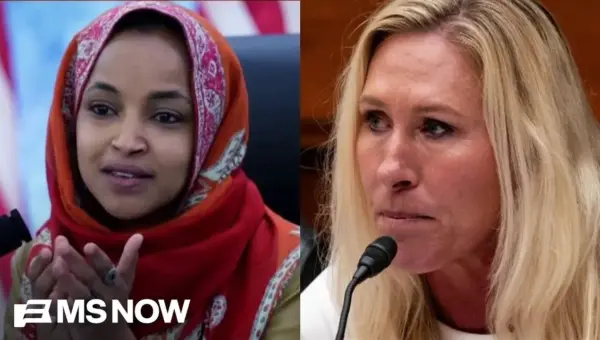
Rep. Ilhan Omar is urging Democrats to embrace former Trump allies like Marjorie Taylor Greene who are now breaking with the former president. Omar believes these individuals deserve credit for their "wake-up call" and should be welcomed to help save the country. This call comes as Democrats explore strategies to broaden their coalition and appeal to disillusioned Republicans.


Iran Tensions Rise as US Blockades Ports
The US has imposed a naval blockade on Iran to cut off its funding, a move supported by most Americans in principle but not in practice due to economic costs. Meanwhile, internal Democratic Party struggles and a major scandal in California's gubernatorial race add to the political turbulence.