Pentagon Hints at Iran Ground Troops: ‘Go As Far As We Need’
Defense Secretary Pete Hegseth has refused to rule out deploying U.S. ground troops into Iran, stating "We'll go as far as we need to go." The ambiguous comment from the Pentagon raises concerns about potential military escalation in the volatile Middle East region.

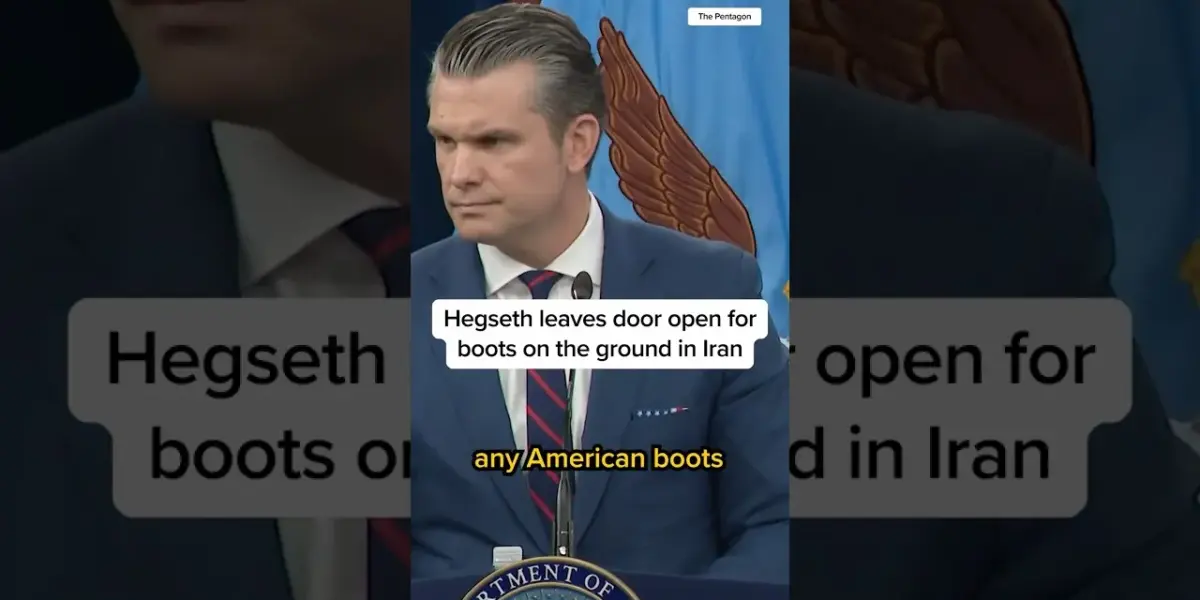
Pentagon Declines to Rule Out US Boots on the Ground in Iran
In a significant development from the Pentagon, Defense Secretary Pete Hegseth has refused to rule out the possibility of deploying U.S. ground troops into Iran. Speaking at a press briefing, Hegseth stated, “We’ll go as far as we need to go,” a remark that has ignited speculation and concern regarding potential U.S. military escalation in the Middle East.
Ambiguous Stance on Future Military Action
The Defense Secretary’s comments, made during a routine press briefing, were in response to questions about the U.S. strategy and potential involvement in the region. While Hegseth did not explicitly state that boots on the ground were being considered or planned, his refusal to exclude the option leaves a wide aperture for future military actions. This ambiguity is particularly noteworthy given the already volatile geopolitical landscape of the Middle East, where Iran plays a central role.
The strategic implications of such a statement are far-reaching. Historically, the deployment of ground troops into a country like Iran, which possesses a significant military and a complex political structure, would represent a major escalation of conflict. It would likely involve substantial risks, including potential casualties, prolonged engagement, and broader regional destabilization. The U.S. has historically avoided direct large-scale ground operations in Iran, opting for sanctions, diplomatic pressure, and support for regional allies.
Regional Context and Precedents
Iran’s strategic importance cannot be overstated. It borders several key nations, controls vital shipping lanes, and has been a significant actor in regional conflicts, including those involving proxies and influence in countries like Syria, Iraq, and Yemen. The U.S. has had a complex and often adversarial relationship with Iran since the 1979 revolution. Recent years have seen heightened tensions, particularly concerning Iran’s nuclear program, its ballistic missile development, and its support for various militant groups.
The U.S. military has been involved in extensive operations in neighboring Iraq and Afghanistan for decades. The lessons learned from those protracted engagements, marked by significant human and financial costs, often inform current defense policy discussions. The prospect of a new ground campaign in Iran, a nation with a different terrain, population, and political dynamics than Iraq or Afghanistan, raises questions about the strategic objectives, exit strategies, and long-term consequences.
Expert Analysis and Potential Interpretations
Military analysts suggest that Hegseth’s statement could be interpreted in several ways. It might be a deliberate signal to Iran, intended to deter specific actions or to signal U.S. resolve. Alternatively, it could be a standard, albeit potentially alarming, precautionary statement designed to maintain strategic flexibility in the face of unpredictable events. In the absence of further clarification, the remark leaves room for a wide range of interpretations by allies, adversaries, and the international community.
The phrase “go as far as we need to go” is often employed in military contexts to convey a commitment to achieving objectives, whatever the cost. However, when applied to a potential ground intervention in a nation as significant as Iran, it carries a particularly weighty implication. It suggests a willingness to commit substantial resources and personnel if deemed necessary to address perceived threats or achieve strategic goals.
Broader Geopolitical Ramifications
The international community will be closely monitoring any further statements or actions from the Pentagon regarding Iran. Allies in the Middle East, such as Israel and Saudi Arabia, who view Iran as a primary security threat, may welcome such a strong stance. However, other nations, including European allies, may express concern over potential escalation and the risks of a wider regional conflict. The United Nations and other international bodies will likely call for de-escalation and adherence to international law.
The economic implications of potential U.S. military involvement in Iran could also be substantial, particularly concerning global oil markets, given Iran’s position as a major oil producer. Any significant disruption could lead to price volatility and impact economies worldwide. The U.S. stock market and global financial markets often react sharply to news of potential military conflicts in the Middle East.
What to Watch Next
The coming days and weeks will be crucial for understanding the true intent behind Secretary Hegseth’s remarks. Any further pronouncements from the Defense Department, the White House, or diplomatic channels will be scrutinized for clues about U.S. policy toward Iran. Diplomatic efforts, regional security dialogues, and intelligence assessments will all play a role in shaping the future course of U.S.-Iran relations and the broader security architecture of the Middle East. The world watches to see if this statement signals a shift towards a more interventionist U.S. policy or remains a strategic signal within a broader diplomatic and economic pressure campaign.
Source: Hegseth leaves door open for boots on the ground in Iran (YouTube)

Related Articles

GOP Senators Show Weariness With Trump’s Iran Stance
Republican lawmakers are showing signs of frustration with President Trump's prolonged engagement in Iran. Diplomatic talks continue, with a potential ceasefire extension being considered, while the U.S. bolsters its military presence. Meanwhile, domestic economic pressures and battles with the Federal Reserve chair add to the political complexities.
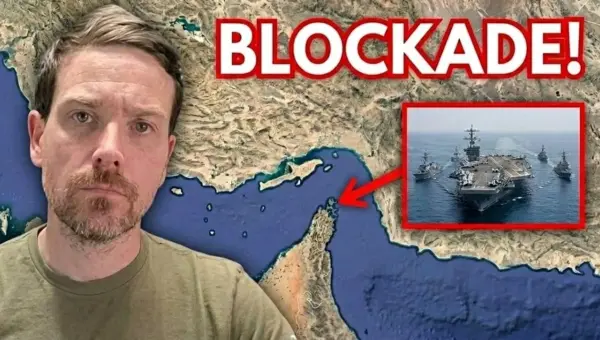
US Navy Blockade Tightens Grip on Iran’s Oil
The US Navy has imposed a strict blockade on Iranian ports, aiming to cripple the nation's oil exports and economy. With warships enforcing the closure, Iran faces significant financial pressure. The long-term effectiveness and potential for escalation remain key concerns.
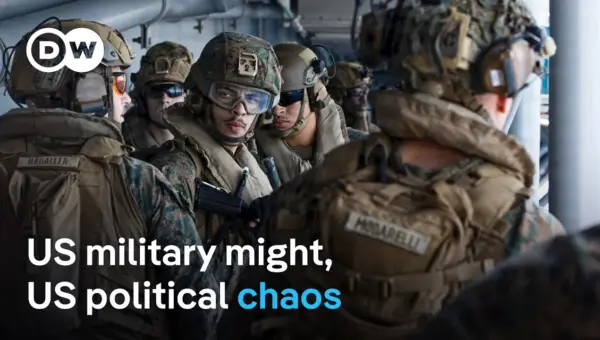
US Military Strength: Tactical Wins, Strategic Gaps?
The U.S. military demonstrates incredible tactical skill, capable of executing complex missions. However, this prowess is often undermined by unclear political goals and shifting strategies set by civilian leadership. Experts argue that holding elected officials accountable for these decisions is crucial, as the military cannot compensate for flawed governance.