Obama’s Redistricting Push Fuels Trump’s Impeachment Fears
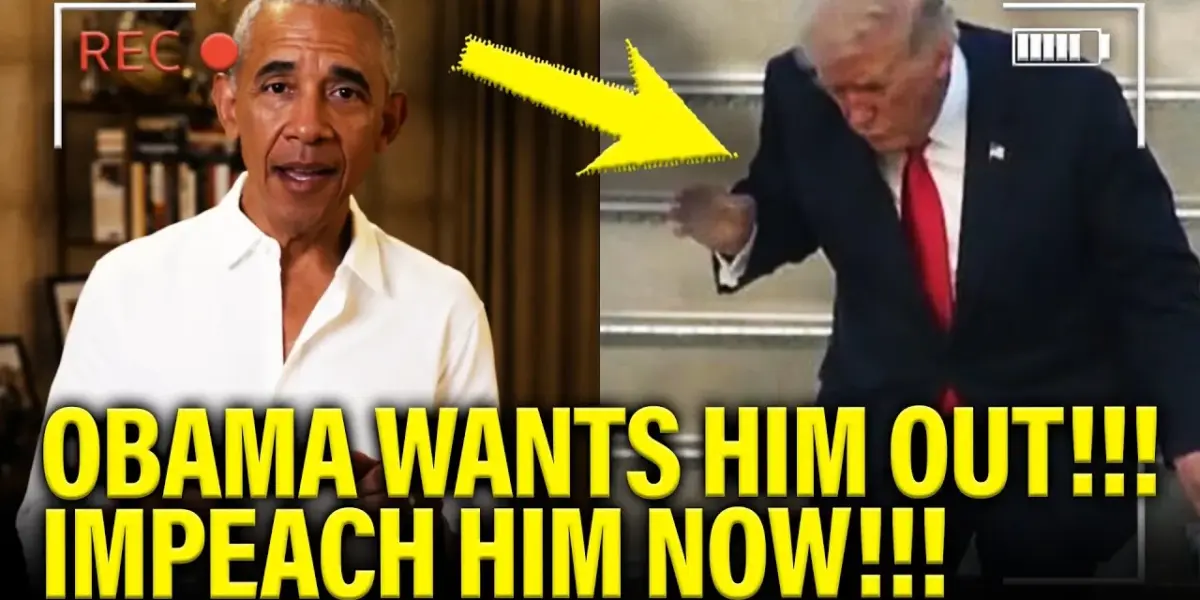
Former President Barack Obama's support for a Virginia redistricting referendum has ignited fears in Donald Trump, who believes it's a plot to impeach him. The Virginia measure aims to create a significant Democratic advantage in congressional districts. Trump views this as a direct attack, while Obama's campaign calls it a necessary step to level the electoral playing field.

Obama’s Redistricting Push Fuels Trump’s Impeachment Fears
Former President Barack Obama’s active involvement in a Virginia redistricting campaign has sparked significant alarm in Donald Trump, who believes it’s a direct effort to impeach him and end his political influence. The core of Trump’s concern lies in a Virginia ballot measure aimed at temporarily altering congressional district maps. This measure, if passed, would significantly shift the balance of power, giving Democrats a substantial advantage.
The proposed change in Virginia’s congressional map is designed to create a 10-to-1 advantage for Democrats, a stark contrast to the current 11-seat district split of six Democrats and five Republicans. Trump sees this redistricting effort as orchestrated by Obama, who is reportedly leading the “Vote Yes” campaign. This move is framed by Trump as a direct response to Republican-led gerrymandering in other states, a tactic he himself has been accused of employing.
During a call-in to a right-wing radio show, Trump voiced his fears, stating, “They’re going to impeach me if the yes vote wins in Virginia. I’m going to get impeached.
Obama’s going to want to impeach me.” He characterized the situation as “terrible” and expressed disbelief at the fairness of the redistricting attempt, despite acknowledging that similar tactics have been used by Republicans. This sentiment echoes his past experiences, recalling his previous impeachment by the House of Representatives.
Trump’s criticism extended to Virginia’s current governor, whom he described as “horrible” and responsible for numerous problems, including tax increases on everyday items. He linked these state-level issues to broader national concerns, suggesting that if Democrats gain more seats in the House, they will enact policies he opposes, such as tax hikes and increased regulations. He also voiced strong opposition to policies regarding transgender rights and children’s issues, painting a grim picture of a future under Democratic control.
Obama’s Counter-Campaign
In contrast to Trump’s anxieties, former President Obama has been actively campaigning for the “Vote Yes” initiative in Virginia. He has released advertisements urging voters to support the referendum, emphasizing its role in pushing back against Republican efforts to gain an unfair advantage in elections. Obama highlights the measure as a temporary step to “level the playing field” and empower voters to have the final say on district maps.
Obama’s campaign materials, distributed through platforms like iwillvote.com/Virginia, provide clear instructions for early voting and Election Day participation. The message is consistent: voting “yes” is a crucial action to prevent the diminishing of voting power through Republican-driven redistricting. He frames it as a responsible step towards fairer representation, noting that the system is intended to revert to a bipartisan commission after the 2030 census.
During this period, Obama was also seen engaging with children in New York, an image presented as a contrast to Trump’s more combative political style. This juxtaposition of public appearances highlights the different approaches the two former presidents are taking in the current political climate.
Broader Political and Environmental Context
The political maneuvering around redistricting occurs against a backdrop of significant environmental concerns. New data indicates that over 61% of the lower 48 states are experiencing moderate to exceptional drought, with the Southeast and West being particularly affected. This drought level is the worst recorded for this time of year since tracking began in 2000, with March being one of the driest months ever.
Record heat and low snowpack in the West are contributing to increased wildfire risks and water shortages, while a separate weather pattern is exacerbating drought conditions across the South. The transcript notes that some areas would need over a foot of rain to recover, highlighting the severity of the situation. This climate instability is presented as occurring while political leaders, including Donald Trump, reportedly reject climate science and ignore its consequences.
Foreign Policy Debates and Economic Claims
Trump has also used his platform to attack Obama’s foreign policy, particularly the Iran nuclear deal. He claims the deal was one of the worst ever made for national security and disputes claims about financial transactions related to it. Trump asserts that his administration’s approach to Iran has been more effective, leading to military and economic pressure that he believes will prevent Iran from obtaining nuclear weapons.
Conversely, Democratic figures like Representative Ro Khanna have defended Obama’s foreign policy record, contrasting it with Trump’s approach. Khanna argued that Obama’s administration secured international agreement on Iran’s nuclear program and removed a significant amount of enriched uranium. He criticized Trump’s foreign policy as being influenced by Israeli Prime Minister Netanyahu rather than American interests, and suggested that Trump’s actions have led to increased conflict and instability.
During his radio interview, Trump also discussed his economic policies, claiming credit for record-high economic indicators like the Dow Jones Industrial Average and the S&P 500. He warned that Democratic policies would destroy these gains, negatively impacting 401(k)s and the overall economy. He specifically linked these economic concerns to Virginia, suggesting that the state would suffer under current leadership.
The Virginia Referendum’s Stakes
The Virginia redistricting referendum is presented as a critical battleground with national implications. Supporters, including Governor Abigail Spanberger and state lawmakers like Louise Lucas and Speaker Don Scott, urge voters to “Vote Yes” to counter what they see as an attempt by Republicans to rig elections and consolidate power. They view the measure as a temporary step to level the playing field and ensure fairer representation.
The “Vote Yes” campaign argues that the referendum is a direct response to a president who claims entitlement to more Republican seats and to efforts in other states to achieve this. They emphasize that the measure is temporary and preserves Virginia’s fair redistricting process for the future. The election, with early voting underway and Election Day on April 21st, is positioned as a crucial moment for voters to assert their power and push back against what they describe as a “Trump power grab.”
Ultimately, the narrative surrounding the Virginia vote highlights a deep political divide. While Trump views Obama’s involvement as a personal threat and a politically motivated attack, Obama and his allies see the referendum as a necessary measure to protect democratic principles and ensure fair elections. The outcome in Virginia is framed not just as a state-level decision, but as a significant indicator of the broader political battles shaping the nation.
Source: Trump LOSES IT as Obama TRIES TO END HIS TERM!!!! (YouTube)

Related Articles

Trump’s “Hyper-Masculinity” Hinders Iran Compromise
Former President Donald Trump believes a new deal with Iran is achievable, but "hyper-masculinity" and past actions like withdrawing from the JCPOA complicate negotiations. Meanwhile, the BBC is considering relaxing rules on mobile phone use at the Proms to attract younger audiences, sparking debate about tradition versus modern engagement.
Trump Claims Iran Blockade Success Amidst Talks Uncertainty
President Trump asserted that the U.S. blockade on Iran has been a "tremendous success" amid uncertainty surrounding potential peace talks. While claiming Iran has violated a ceasefire and that the U.S. has militarily "won the war," intelligence assessments and actions on the ground suggest a more complex reality.
Senate Hearing Uncovers ‘Arctic Frost’ Allegations
A Senate Judiciary Committee hearing delved into allegations of 'Operation Arctic Frost,' a supposed government campaign targeting former President Trump and the Republican party. New documents and witness testimony fueled claims of lawfare and the weaponization of federal powers, while opposing views defended the investigations as legitimate responses to election-related events.