
Tag

#astrophysics

36 articles

Politics

Universe’s End Time Shrinks Dramatically

New research suggests the universe's end may arrive much sooner than previously thought, with a revised timeline of 10 to the power of 78 years. This 'heat death' theory posits that all matter will decay, not just black holes. While still an immense duration, it's a significant shift from earlier predictions.

22 hours ago
Politics

Loeb Challenges Musk’s Mars Dream, Eyes Space Habitats

Astrophysicist Avi Loeb criticizes Elon Musk's Mars colonization plans, calling the planet uninhabitable. He proposes building large, city-sized space platforms instead, arguing this is a more scientifically sound and achievable goal for humanity's future in space.

1 week ago
Science & Space

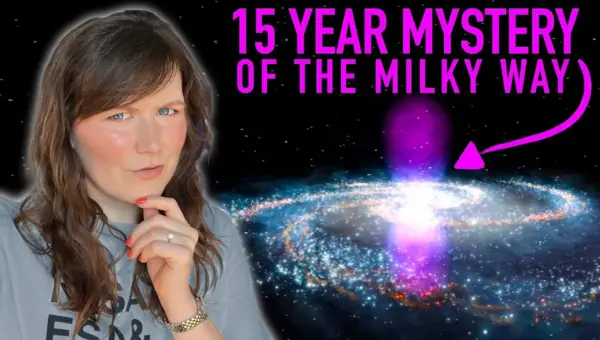
New Research Challenges Fermi Bubble Origins

Scientists have long debated the origin of the giant gamma-ray-emitting Fermi bubbles above and below the Milky Way. While a supermassive black hole was the leading suspect, new simulations suggest supernovae activity alone might be responsible, reopening the mystery.

2 weeks ago
Science & Space

Our Sun Might Be a Cosmic Anomaly

New research suggests our Sun, long considered a typical star, might be more unusual than previously thought. This finding impacts our understanding of life's prevalence in the universe and the search for habitable exoplanets.

2 weeks ago
Science & Space

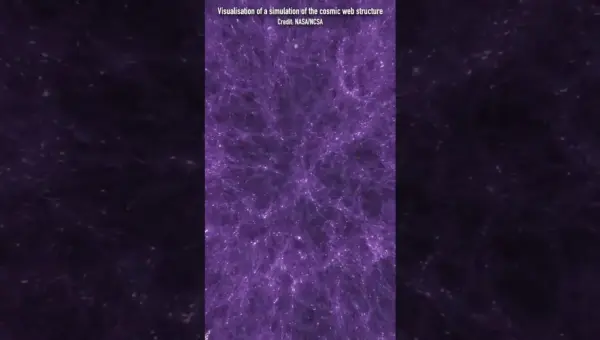
Dark Matter Weaves Cosmic Web Across Universe

Dark matter forms an invisible cosmic web, connecting galaxies with vast filaments. Computer simulations predicted this structure decades ago, and recent observations confirm its existence. The cosmic web provides crucial evidence for dark matter and helps us understand the universe's evolution.

2 weeks ago
Science & Space

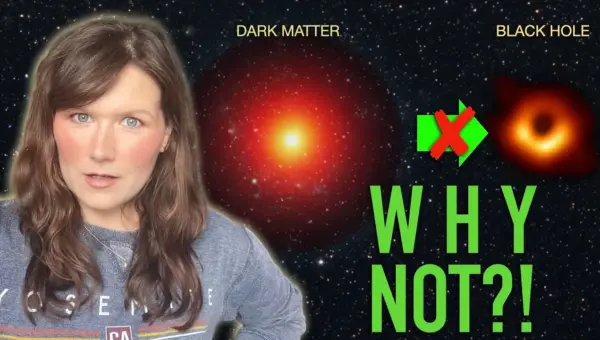
Dark Matter’s Mystery: Why It Resists Collapse Into Black Holes

Dark matter, unlike normal matter, does not collapse into stars or black holes because it cannot radiate energy away as heat. Its inability to interact with the electromagnetic force prevents the cooling necessary for gravity to overcome particle pressure. This unique property leads to the formation of vast, diffuse structures like galactic halos and the cosmic web.

3 weeks ago
Science & Space

Cosmic Rays Reveal Universe’s Most Powerful Accelerators

Scientists have discovered incredibly powerful cosmic accelerators, dubbed PeVatrons, within our Milky Way galaxy. These sources are responsible for the highest-energy cosmic rays ever detected, some reaching energies of 10 peta-electron-volts. The discovery, driven by observatories like LHAASO, is revolutionizing our understanding of our galaxy's violent and energetic nature.

3 weeks ago