Russia Pushes Ukraine for Donbas Control
Russia is reportedly pushing for control of the entire Donbas region, employing negotiation tactics to achieve this goal. While peace talks show some progress, the United States' role is seen as crucial for bridging gaps. Internal pressures in Russia and Ukraine's strikes on energy infrastructure add complexity to the ongoing conflict.

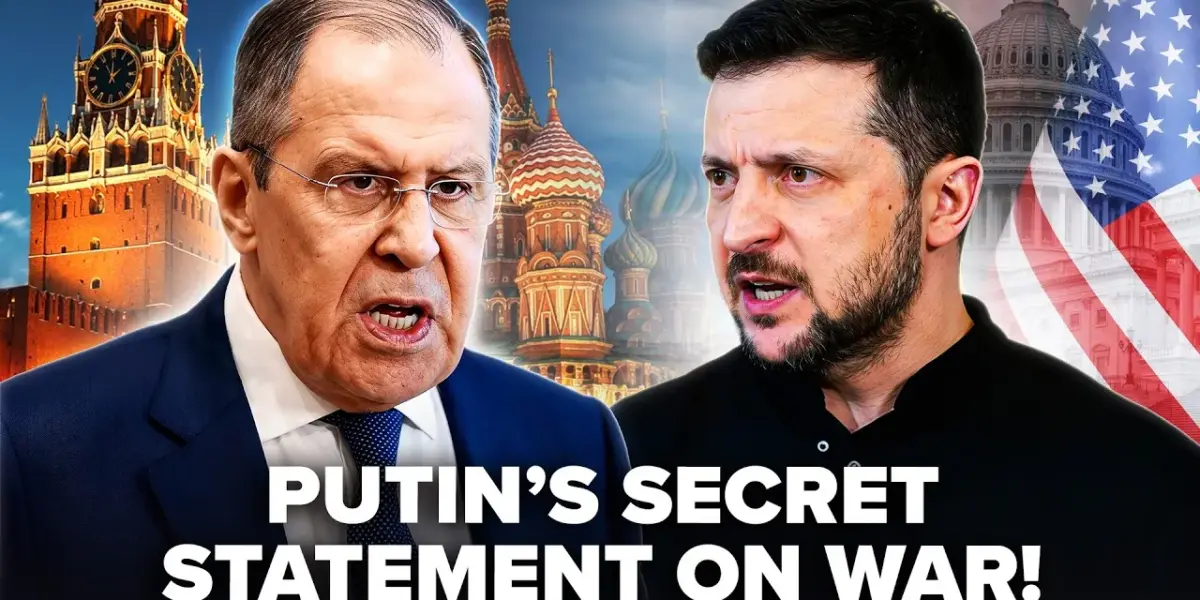
Russia Pushes Ukraine for Donbas Control
Recent statements from Russian officials suggest Moscow is focused on securing the entire Donbas region. Dmitry Peskov, a Kremlin spokesperson, has indicated that Kyiv and Moscow are currently contesting only a few kilometers of territory in eastern Ukraine. This rhetoric, echoed by Russian Foreign Minister Sergey Lavrov, appears to downplay the broader issues at stake in the ongoing conflict.
However, experts suggest this is part of a larger negotiation tactic. “From Moscow, of course, Peskov is reiterating Putin’s own sentiment that Moscow should control all of the Donbas region,” explained Dr. Thomas Graham, a foreign policy expert. He believes the issues are much wider than just territory, impacting Ukraine’s security and European stability.
Peace Talk Progress and Hurdles
Despite the focus on Donbas, there are indications of potential progress in peace talks. Andriy Yermak, head of President Zelenskyy’s office, recently told Bloomberg that significant strides have been made. Both sides are reportedly moving away from maximum demands and getting closer to a compromise, though specific details remain undisclosed.
Dr. Graham, while acknowledging Yermak’s insights as someone involved in negotiations, noted that momentum has slowed. “The United States is no longer directly engaged,” he stated, pointing to a shift in focus toward other geopolitical issues. He believes the battlefield line of contact will likely become the dividing line in any eventual agreement.
Russia’s Internal Pressures
Several internal factors may be pushing Moscow toward a resolution. Russia’s economy is reportedly suffering more than previously anticipated, with significant budgetary problems. The Kremlin is also struggling to recruit enough soldiers to replace battlefield losses.
Russia’s long-term strategic goals are being hampered. “The longer this conflict continues, the farther Russia falls behind other great powers, particularly China and the United States,” Graham observed. This suggests that continued fighting is a losing proposition strategically, even if small tactical gains are made.
US Role in Negotiations
The United States is seen as crucial to bridging the remaining gaps between Russia and Ukraine. Dr. Graham emphasized the need for renewed US engagement in trilateral discussions. He believes the outlines of a compromise are visible but require detailed negotiation.
He also anticipates a US negotiating delegation visiting Kyiv after Easter. “The expectation I would have from the meeting is a show of support for Ukraine,” Graham said. He stressed the importance of a senior US official visiting Kyiv to demonstrate support and Washington’s evenhanded approach to the negotiations.
Territorial Demands and Negotiating Tactics
Reports suggest Russia has set a deadline for Ukraine to withdraw troops from Donbas, aiming to seize the region within two months. Dr. Graham views this as a negotiating tactic rather than a genuine threat. “Everything I have seen up to this point suggests that the current Russian offensive is not making significant gains on the ground,” he commented.
He remains skeptical of Russia’s ability to rapidly seize the remaining Donbas territory within that timeframe. “It’s very difficult for me to see President Zelenskyy agreeing to giving up that territory at the negotiating table if Moscow is incapable of seizing it on the battlefield,” Graham added.
Lavrov’s Call for US Pressure
Foreign Minister Lavrov has urged the United States to pressure Kyiv into negotiations. Dr. Graham interprets this as a desire for Washington to halt military equipment and intelligence support to Ukraine. “I don’t think that’s going to happen at this point,” he stated, asserting that the US will continue its support.
He believes Washington is prepared to support Ukraine without demanding a withdrawal from territory not yet lost on the battlefield. The US has not shown willingness to exert such pressure over the past months, despite discussions of security guarantees being linked to a resolution, not specific territorial concessions.
Ukrainian Strikes on Russian Infrastructure
Ukrainian deep strikes on Russian oil and gas infrastructure are changing the nature of the conflict. These attacks target Russian assets at increasing distances from front lines and Ukrainian territory, a cause for concern in Moscow.
The effectiveness of Russian air defenses around these facilities is questionable. This raises the possibility of an “energy ceasefire,” where Moscow stops attacking Ukrainian energy infrastructure in exchange for a Ukrainian agreement not to strike Russian infrastructure. However, such a truce would require detailed negotiations, not just rhetorical statements.
Response to Foreign Airspace Use
Dmitry Peskov has warned of a Russian response if Ukraine uses foreign airspace for strikes. While it’s unclear if Ukraine is currently doing so, Russia might employ covert or hybrid tactics. A direct “kinetic response” against a third country is considered unlikely due to the potential invocation of NATO’s Article 5.
European allies have reportedly signaled a potential scaling back of long-range strikes on Russia’s oil sector due to rising global energy prices. This presents a dilemma: stabilizing markets versus allowing Russia to continue financing the war. European leaders are urged to explain the stakes to their publics and prepare for necessary sacrifices.
Broader Geopolitical Context
The conflict’s impact extends beyond Ukraine. Dr. Graham noted that Russia’s prolonged involvement is hindering its ability to develop cutting-edge technologies and maintain its status as a great power, especially compared to China and the United States.
In Europe, despite losing an ally in Viktor Orbán, Moscow may seek to work with figures like Robert Fico in Slovakia. Russia also continues efforts to influence domestic politics in Europe through various means, particularly targeting prominent right-wing populist parties.
Regarding the US-Israel-Iran confrontation, the worst-case scenario involves widespread hostilities. The best outcome would be for US pressure to lead to serious negotiations and a compromise. The conflict’s impact on upcoming US midterm elections is uncertain, likely turning more on socioeconomic issues than the Middle East situation.
Source: ⚡️Putin issued a WILD ULTIMATUM to Zelenskyy! Lavrov let slip. Unexpected about talks in US (YouTube)

Related Articles


Orphaned Bear Cub’s Fight for Survival Warms Hearts
A bear cub named Dynka was found alone and in need of medical care in Russia. Rescued by an animal shelter, Dynka is now receiving treatment, highlighting the critical role of wildlife rescue in protecting vulnerable animals and maintaining ecological balance.
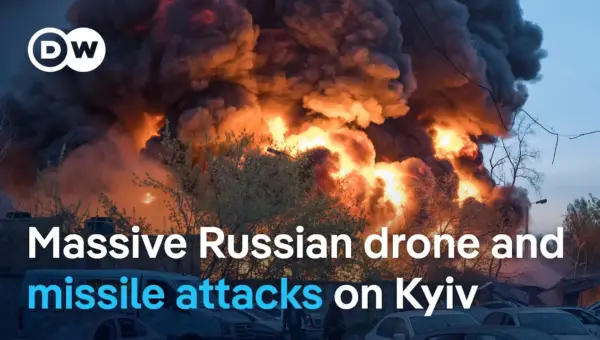
Russia Unleashes Deadliest Strikes on Ukraine This Year
Russia launched its deadliest assault of the year on Ukraine, killing at least 16 people with widespread drone and missile strikes. Kyiv, Odesa, and Dnipro were heavily targeted. Ukraine retaliated with strikes on Russian-held Crimea, while concerns grow over critical air defense missile shortages.

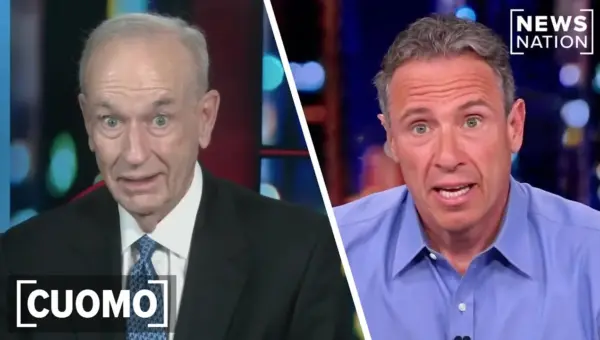
US Naval Action in Hormuz Could Force Iran to Negotiate
Bill O'Reilly argued that US control of the Strait of Hormuz could economically pressure Iran into negotiations. Chris Cuomo questioned the narrative, highlighting differing interpretations of strategic moves and the influence of political bias on analysis. The discussion explored the geopolitical significance of the Strait and the complex motivations behind international relations.