Oil Tensions Spike: Airfares Soar as Iran Deal Falters
President Trump has ordered a naval blockade of the Strait of Hormuz following failed negotiations with Iran, disrupting oil exports and driving up jet fuel prices. This is leading to higher airfare and increased baggage fees for travelers, with experts warning prices may not fall soon.


Oil Tensions Spike: Airfares Soar as Iran Deal Falters
President Trump announced a naval blockade of ships entering the Strait of Hormuz after last night’s failed negotiations with Iran. The President stated on Truth Social that while most points were agreed upon, the crucial nuclear issue remained unresolved. This move by the U.S. Navy aims to block any vessels attempting to enter or leave the vital global waterway, through which a significant portion of the world’s oil supply passes.
With no peace deal in place between the U.S. and Iran, airlines are already feeling the pressure. Jet fuel exports from the Middle East are being disrupted, leading to increased costs that are being passed on to travelers. This situation is particularly impactful during peak travel times like spring break and the upcoming summer vacation season.
Rising Ticket Prices and Fees
The average domestic airfare has climbed to about $350, a jump of roughly $40 compared to this time last year. This increase isn’t the only financial blow to travelers.
Major airlines such as Delta, JetBlue, United, and American have also raised their baggage fees. Some airlines have added $50 or more to the cost of checking second and third bags.
Beyond these price hikes, airlines are also cutting back on flights they deem unprofitable. United’s CEO commented that there’s no sense in losing money in the short term by flying flights that cannot absorb the higher fuel costs. Travel experts warn that these elevated prices might persist for some time.
Why This Matters
The Strait of Hormuz is a critical chokepoint for global oil transport. Any disruption there directly impacts the price of oil and, consequently, the cost of jet fuel.
When jet fuel prices go up, airlines face higher operating expenses. They typically pass these costs onto consumers through increased ticket prices and additional fees.
Historically, periods of geopolitical instability in the Middle East have often led to spikes in oil prices. The current situation echoes past events where tensions in the region have had ripple effects on global energy markets. The lack of a resolution with Iran adds a layer of uncertainty that directly affects the cost of travel.
Trends and Future Outlook
Typically, if lower fuel prices are sustained, travelers might see a reduction in airfare within a few weeks to a couple of months. However, when demand is strong, such as during busy summer travel periods, airlines often maintain higher prices because consumers are still willing to pay. The current geopolitical climate suggests that sustained high fuel prices are likely.
The naval blockade announced by President Trump offers no immediate relief for jet fuel prices. This lack of easing means that travelers in the United States can expect higher ticket prices to continue. The connection between international relations and everyday travel costs is becoming increasingly clear.
For those planning trips, it is advisable to book flights in advance and be prepared for potentially higher costs. The situation at the Strait of Hormuz will be a key factor to watch in the coming weeks as it directly influences fuel prices and airfare. Travelers should monitor news updates closely as the situation develops.
Source: Jet fuel prices stay high amid no deal with Iran | NewsNation Live (YouTube)

Related Articles
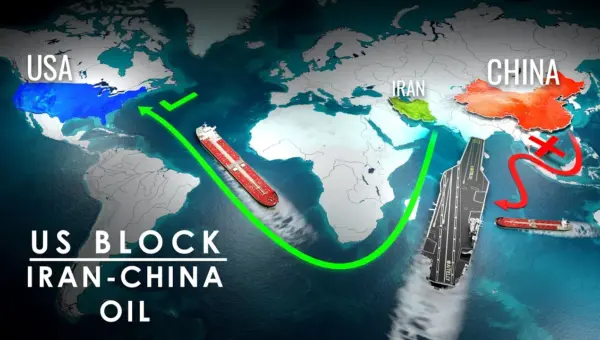
AI Tracks Oil Tankers, Aiding US Strategy Against China
The US is employing advanced AI to track oil tankers, aiming to counter China's reliance on foreign oil. This strategy uses AI to monitor ships, identify sanctioned cargo, and influence global energy markets by disrupting supply chains. The goal is to assert energy dominance and shape international economic outcomes.

China’s Economy Faces Strain as Trump Prepares for Beijing Visit
China's economy shows signs of strain with weak retail sales and exports, despite strong industrial output figures. Experts question the official growth numbers, pointing to a growing inventory glut and thin factory margins that limit price cuts. Geopolitical factors, including President Trump's upcoming potential visit to Beijing, add another layer of uncertainty.

Iran, US Near Deal Framework, But Full Agreement Looms
Iran and the U.S. are reportedly close to a framework agreement on critical issues, including Iran's nuclear program. While a breakthrough is anticipated, experts warn that a comprehensive deal will be a long and difficult process. Meanwhile, a fragile 10-day ceasefire in Lebanon, brokered with U.S. pressure, shows signs of strain.