US Threatens China Banks with Sanctions Over Iran Ties
The U.S. Treasury has warned Chinese banks of severe secondary sanctions if they are found to be facilitating financial transactions with Iran. This action comes amid reports of China providing Iran with military-grade satellite technology, raising concerns about Beijing's support for Tehran's activities. The U.S. is employing strong financial measures to pressure Iran and its financial enablers.

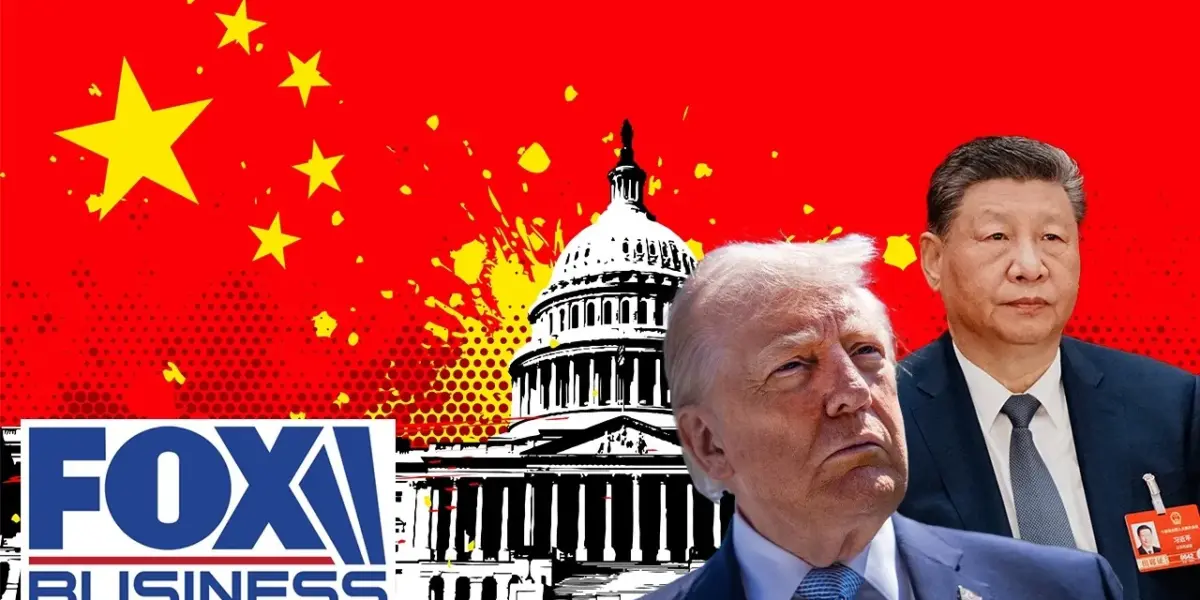
US Threatens China Banks with Sanctions Over Iran Ties
The United States is taking a firm stance against Chinese banks suspected of funneling money to Iran. Treasury Secretary Scott Bessent has warned these institutions that they could face severe penalties, known as secondary sanctions, if any financial dealings with Iran are detected. This move signals a significant escalation in U.S. efforts to pressure Iran and its financial enablers.
These secondary sanctions are a powerful tool. They mean a targeted bank could be cut off from doing business in U.S. dollars anywhere in the world.
This is often described as the financial equivalent of a nuclear weapon, effectively freezing a bank out of the global financial system. U.S. officials believe this threat is necessary because China has been using its banks to move money to Iran.
China’s Suspected Role in Aiding Iran
Reports suggest China has been more deeply involved with Iran than previously admitted. Leaked documents indicate that Iran acquired a spy satellite from China in 2024.
This satellite, launched by China, allowed Iran to capture images of major U.S. military bases in the Middle East. These bases are located in Saudi Arabia and Jordan.
The satellite’s capabilities were reportedly used to target U.S. facilities. One key target was the base in Kuwait where a Chinese drone, operated by Iran, killed six American service members. This information raises serious concerns about China’s actions and their direct impact on U.S. security interests.
Diplomatic Exchanges and Conflicting Accounts
Despite these reports, President Trump stated he received a letter from Chinese President Xi Jinping. In this letter, Xi Jinping reportedly denied that Beijing is aiding Iran. President Trump mentioned this during a recent interview, highlighting a direct communication between the two leaders.
However, U.S. officials like Gordon Chang, a senior fellow at the Gatestone Institute, believe China’s denials are not credible. Chang stated that China has indeed been using its banks to funnel money to Iran. He emphasized that the U.S. must use strong measures to counter this behavior.
The Strait of Hormuz Blockade and U.S. Response
The situation is further complicated by actions in the Strait of Hormuz. Reports indicated that a Chinese oil tanker was forced to turn back to Iran after attempting to cross the strait. This suggests that China may not be happy with the U.S. efforts to control passage through this vital waterway.
President Trump has asserted that China is benefiting from the U.S. keeping the Strait of Hormuz open. He stated his administration is permanently opening the strait for the world. This implies a commitment to ensuring freedom of navigation, which benefits major oil importers like China.
Gordon Chang views the U.S. blockade of Iranian ships in the Strait of Hormuz as a powerful and responsible move. He explained that if Iran blocks ships, the U.S. will block Iranian ships.
No ship has successfully run the blockade since it was put in place. Chang believes this action has the potential to end conflicts quickly by creating fairness in the strait.
Russia’s Potential Role and Congressional Scrutiny
Russia is also reportedly assisting Beijing with domestic energy shortages. This suggests a growing partnership between Russia and China, potentially in response to U.S. actions. The Russian Foreign Secretary recently met with President Xi Jinping to discuss these matters.
Meanwhile, Congress is also looking into China’s activities. Chairman John Molnar of the China Select Committee is actively questioning China’s actions and ensuring accountability. This bipartisan focus indicates a strong desire in Washington to address the challenges posed by China’s global behavior.
China’s Countermeasures and International Law
In response to U.S. pressure, Beijing is reportedly preparing new legal measures against foreign companies operating in China. President Xi Jinping has also spoken out, stating that the world cannot return to a state where superpowers ignore international law. He believes the U.S. is violating international rules.
However, figures like Gordon Chang argue that China itself has been ignoring international law. He believes the U.S. must change the system and not adhere to rules set by China. The upcoming meeting between President Biden and President Xi next month will be crucial in observing how these tensions play out on the global stage.
Market Impact and Investor Considerations
What Investors Should Know: The U.S. Treasury’s threat of secondary sanctions against Chinese banks is a significant development. It highlights the risks associated with financial institutions that facilitate transactions for sanctioned entities like Iran. Investors should monitor any actual imposition of these sanctions, as they could disrupt global financial flows and impact companies with exposure to affected Chinese banks or Iranian trade.
The use of Section 311 of the Patriot Act, which allows the Treasury to force U.S. banks to sever ties with foreign financial institutions deemed a primary money laundering concern, is a potent tool. Its invocation could have far-reaching consequences for international banking relationships.
The ongoing geopolitical tensions surrounding Iran, the Strait of Hormuz, and the broader U.S.-China relationship create uncertainty. These factors can influence energy prices, global trade, and the performance of companies involved in international commerce. Investors should stay informed about diplomatic developments and potential policy shifts that could affect these markets.
Source: Gordon Chang: We CANNOT adhere (YouTube)

Related Articles
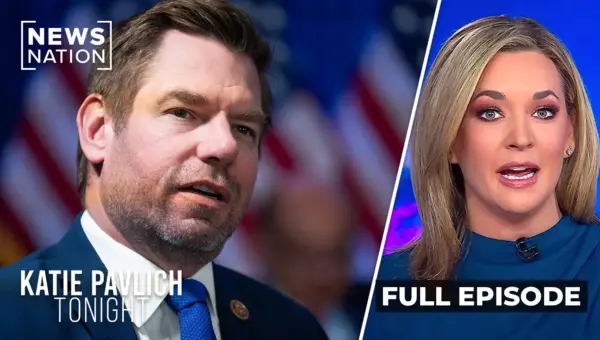
US Oil Dominance Surges Amidst Global Tensions, Swalwell Resigns
The US is experiencing a surge in oil exports and implementing a blockade on Iranian ports, signaling a potential return to energy dominance. This comes as Congressman Eric Swalwell resigns amid serious misconduct allegations and faces criminal investigation. The dual developments highlight significant shifts in both global strategy and domestic politics.
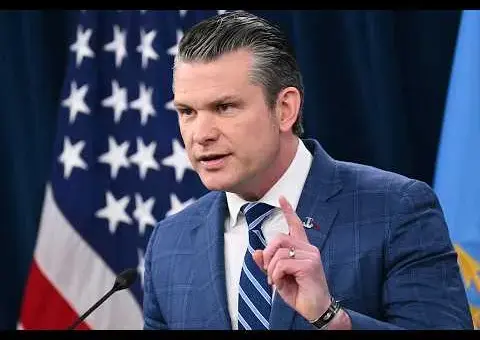
US Tightens Grip: Iran Faces Blockade and Economic Fury
The U.S. has implemented a naval blockade against Iran, crippling its energy exports and intensifying economic pressure. Officials state Iran's military is depleted, while the U.S. is stronger with superior intelligence. The operation aims to force Iran to choose between a diplomatic resolution or severe consequences.
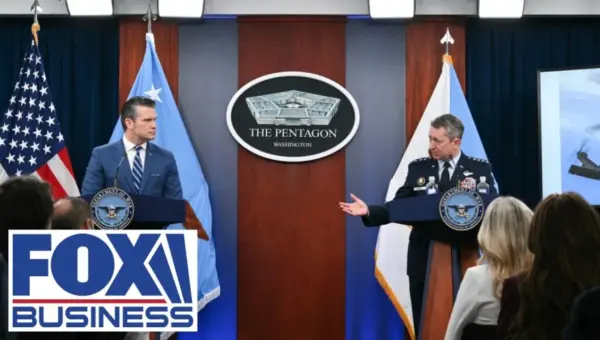
US Navy Maintains Ironclad Blockade on Iran
The U.S. Navy has implemented a strict blockade on Iran's ports, restricting all ship traffic to and from the country. This move is part of Operation Epic Fury, aimed at pressuring Iran to agree to a deal. Military officials emphasized readiness to resume combat operations if necessary and highlighted the strength of U.S. naval power and regional partnerships.