Hegseth’s War Spin: A Desperate Defense of a Flawed Strategy
Secretary of Defense Pete Hegseth's defense of the current Middle East conflict has been met with sharp criticism, accused of being a desperate performance masking a flawed strategy. The analysis questions the administration's narrative on the war's origins, highlights perceived missteps, and warns of escalating chaos and human cost.

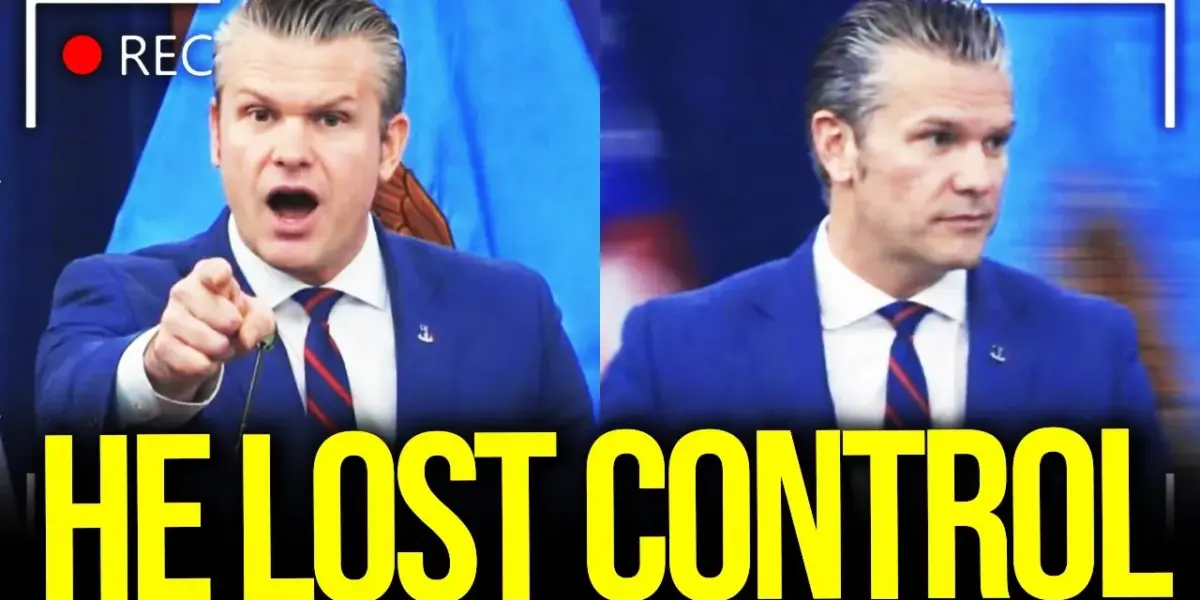
Hegseth’s War Spin: A Desperate Defense of a Flawed Strategy
In the volatile landscape of Middle Eastern conflict, the pronouncements of key figures often carry immense weight. When Secretary of Defense Pete Hegseth recently addressed the escalating tensions, his performance, as captured in a viral video, has drawn sharp criticism and raised significant questions about the administration’s strategy and transparency. Far from offering clarity, Hegseth’s remarks have been characterized by a defensive posture, a deflection of responsibility, and a reliance on what critics describe as jingoistic platitudes, all while the human cost of the conflict mounts.
The Genesis of Conflict: Who Started the Fire?
A central point of contention is the administration’s narrative regarding the war’s origins. Hegseth stated, “We didn’t start this war, but under President Trump, we are finishing it.” This assertion has been met with strong refutation. The argument presented is that the coordinated strikes, unilaterally launched by President Trump and Israeli Prime Minister Netanyahu, were the direct catalyst for the current regional conflict. This perspective posits that the United States and Israel initiated the hostilities, effectively sparking a wider conflagration that Iran is now responding to with significant force.
The transcript highlights a stark contrast between the administration’s claims and the perceived reality on the ground. The narrative suggests that Iran’s current actions, including strikes on multiple countries, are a direct response to what they view as a pattern of weak retaliations from the U.S. This strategy, according to Iranian officials cited in the analysis, aims to inflict maximum damage on U.S. bases to deter future strikes.
A Performance of Panic?
Critics argue that Hegseth’s public appearances are not genuine attempts at communication but rather a calculated performance designed to mask the administration’s perceived panic. The analysis points to Hegseth’s interaction with a reporter, where he is accused of patronizingly asking, “Did you not hear my remarks?” The response from the video’s narrator is blunt: “They were just incredibly dumb.” This exchange exemplifies the frustration felt by those who believe the administration’s messaging is disingenuous and lacking substance.
The core of the criticism lies in the perceived lack of a clear plan and the administration’s contradictory statements. For instance, Hegseth’s assertion that “the regime did change and the world is better off for it,” made in the context of the swift removal of Iran’s Supreme Leader, is questioned. The analysis draws parallels to the intervention in Libya, where the removal of Gaddafi led to prolonged civil war and the emergence of open-air slave markets. The argument is that declaring a situation “better” mere hours after a significant event is premature and ignores the potential for unforeseen negative consequences.
Mistakes and Miscalculations: A Trail of Errors
The unfolding events are presented as a cascade of errors. The initial attack, intended to decapitate Iran’s leadership, is reported to have inadvertently killed potential successors, including the top two candidates. This has led to a situation where, according to the transcript, Trump himself noted, “they are all dead.” This detail is used to underscore the argument that there was “no good plan” and that the operation has gone awry at every step.
Further compounding the situation are reports of friendly fire incidents. The transcript details three U.S. F-15s being shot down by Kuwaiti air defenses during Operation Epic Fury. While the pilots were unharmed, this incident is presented as evidence of the “chaos” and disarray characterizing the U.S. military’s operations in the region, especially when conducted amidst active combat involving Iranian aircraft and drones.
The Vacuum of Leadership and Strategy
A recurring theme is the perceived lack of strategic direction and clear objectives. President Trump himself has reportedly been in contact with various journalists to workshop different timelines and goals for the war, offering conflicting statements about the aims – from liberating the people of Iran to a swift resolution through a deal. This apparent indecisiveness and shifting narrative lead to the conclusion that the administration is “throwing spaghetti at the wall” with no coherent strategy.
The phrase “no stupid rules of engagement,” uttered by Hegseth, has also become a focal point of criticism. Critics interpret this as a potential endorsement of less restrained military actions, such as “executing, massacring, and torturing citizens.” This, coupled with the stated objective of not engaging in “nation building” or “democracy building,” raises concerns about the nature of the military objectives and the potential for increased civilian casualties and human rights abuses.
The Human Cost: More Than Just Platitudes
The analysis continually returns to the human cost of this conflict. The deaths of four U.S. service members are highlighted as a tragic consequence of decisions made by the administration. The narrator expresses weariness with Hegseth’s “jingoistic platitudes” and “clever quips,” arguing that these are inadequate responses to the real-life deaths occurring. The statement that “the effort of this scope will include casualties” is contrasted with the idea that “we don’t waste lives,” framing the current situation as a “waste” of lives in a conflict that was not necessary.
The historical context of public aversion to American casualties in the Middle East is invoked. For decades, injuring or killing U.S. service members has been a significant political liability. The current administration’s perceived callousness in brushing off these deaths, even predicting more, is seen as a potentially disastrous political miscalculation, especially with mid-term elections on the horizon.
Why This Matters
The events and rhetoric surrounding this conflict are critical for several reasons. Firstly, they highlight the profound consequences of initiating military action without clear objectives or a robust strategic plan. The potential for regional escalation, increased U.S. casualties, and prolonged instability are significant concerns. Secondly, the perceived lack of transparency and the reliance on defensive, often contradictory, messaging from officials like Pete Hegseth erode public trust and make informed debate difficult. The analysis suggests that the administration is not only failing to achieve its stated goals but is also creating a quagmire of its own making, an “unforced error” that could have long-lasting repercussions for U.S. foreign policy and its standing in the world.
Implications, Trends, and Future Outlook
The current situation suggests a trend towards more aggressive, less constrained military interventions, possibly driven by a desire to project strength and a rejection of previous foreign policy approaches. The “no stupid rules of engagement” rhetoric, if indicative of a broader policy shift, could lead to a significant increase in the brutality of conflict and a disregard for international norms. The future outlook is one of increased uncertainty and potential for further escalation. The administration’s insistence on framing the conflict as swift and decisive, while evidence points to ongoing casualties and regional expansion, suggests a disconnect between rhetoric and reality. This disconnect could lead to a protracted conflict that mirrors the “endless wars” the administration claims to oppose, potentially trapping the U.S. in another costly and destabilizing engagement.
Historical Context
The current situation echoes historical debates about U.S. interventionism in the Middle East. The post-9/11 era saw extensive military engagements in Afghanistan and Iraq, characterized by nation-building efforts and significant human and financial costs. The current administration’s rhetoric, particularly its dismissal of “nation building” and “politically correct wars,” suggests a departure from these previous approaches. However, the analysis warns that this departure, if not guided by a clear and achievable strategy, could lead to even more disastrous outcomes, as seen in the examples of Libya and the ongoing instability in the region. The history of U.S. foreign policy in the Middle East is replete with examples of unintended consequences, and the current events appear to be adding another chapter to this complex narrative.
Source: Pete Hegseth TERRIFIED as it SPINS OUT OF CONTROL (YouTube)

Related Articles
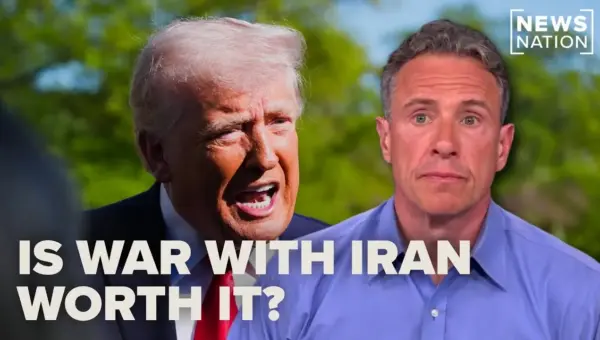
Iran War Costs Mount, Deal Prospects Dim
The war in Iran is costing the U.S. billions daily, impacting inflation and healthcare costs. While military gains are noted, concerns remain about Iran's nuclear ambitions and the lack of a clear diplomatic path. A "grand bargain" is sought, but the economic and human costs at home are rising.
Iran Ceasefire Risks Spiraling Out of Control Amid Talks
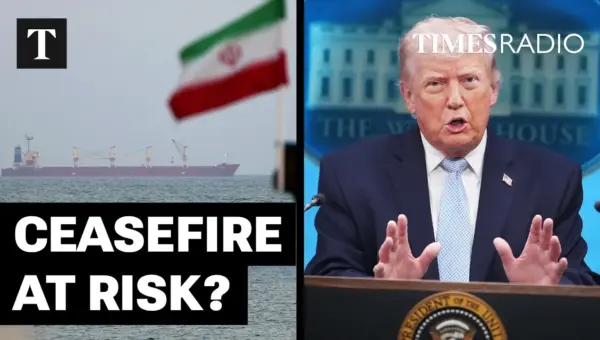
A fragile ceasefire between Iran and the US, expiring in two weeks, faces major risks of collapse. Ongoing back-channel talks are attempting to bridge gaps, but experts warn that even minor incidents could easily escalate. The US naval blockade adds another layer of tension, with China watching closely but appearing hesitant to intervene.
China’s Iran Gambit: Deception or a New World Order?
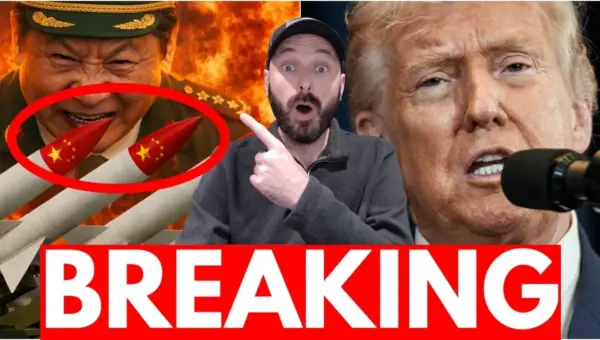
President Trump claims China will stop sending weapons to Iran, but deep skepticism remains due to China's past support and use of spy satellites to aid Iran. This move could be a strategic ploy to weaken the US military.